

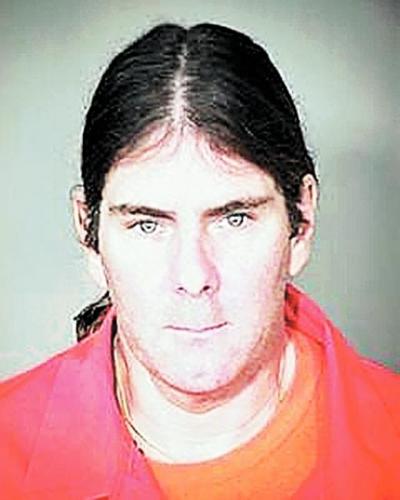
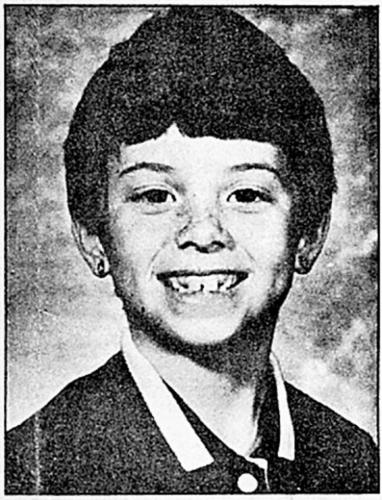
Pima County sheriff's deputies faked key photographic evidence that helped put convicted child killer Frank Jarvis Atwood on death row, defense attorneys charged this week.
Computer-enhanced enlargements unavailable at trial 20 years ago show the most incriminating photographs were faked and reveal for the first time the sequence of the misconduct that occurred, Atwood's lawyers said in a memorandum filed Monday in Pima County Superior Court.
Sheriff's officials on Wednesday dismissed the allegation of misconduct as absurd.
"The lawyers for Mr. Atwood have stooped to a new low," Criminal Investigations Bureau Chief Rick Kastigar told the Arizona Daily Star. "The premise that law enforcement planted any evidence is preposterous."
The jury convicted Atwood of kidnapping and slaying 8-year-old Vicki Lynne Hoskinson, who disappeared while riding her bike Sept. 17, 1984, near Homer Davis Elementary School.
People are also reading…
The Sheriff's Department and FBI launched an intense investigation, issuing daily reports as the Tucson community rallied over the missing child.
Three days after she disappeared, authorities arrested Atwood as he was having his car repaired in Kerrville, Texas. His Datsun 280-Z had been seen in the Tucson neighborhood at the time of the girl's disappearance, and a check showed Atwood was a paroled child-molester.
The strongest physical evidence against him was a smear of pink paint on the bumper of his car that matched the paint on Vicki Lynne's bike. Her decomposed remains turned up later in the desert near the west end of Ina Road.
Atwood's trial attorney, Stanton Bloom, had serious doubts about the authenticity of the pink paint, but did not discover it had been planted, defense attorneys Larry A. Hammond and Daniel F. Davis said in the memorandum filed Monday.
Likewise, when Davis began representing the convicted killer in 1995, Davis "studied the photographs of the car with care, often with a hand-held magnifying glass."
"The degree of enlargement reflected in the photographs (now) was made possible by use of a powerful scanner which produced very large graphic files that could be viewed using new software and very powerful computers," the attorneys wrote.
They say that analysis shows that a series of photos identified at trial as having been taken in Kerrville included fakes that were actually taken days later.
Although there is no record that the bumper was removed from the car, photos show it turned up at the Pima County evidence facility in Tucson, along with the bicycle. There the defense alleges paint from the bike was scraped onto the bumper before it was sent back to Texas and reattached to the car.
"It is conceivable that when representatives of the Pima County Sheriff's Department went into … court and provided the false testimony of the pink paint, they may have held a personal belief — unsupported by evidence — that they had 'the right man,' " defense attorneys wrote in Monday's memo.
"They may also have believed that more evidence would later emerge. They may even have harbored the hope that they would never have to testify under oath in a trial to continue the utilization of the false evidence they had created to hold Mr. Atwood."
But the evidence never materialized, and without it Atwood would not have been found guilty beyond a reasonable doubt, they wrote.
Kastigar, who was the sheriff's public information officer at the time of the kidnapping investigation, said he and Sheriff Clarence Dupnik believe detectives working with FBI agents solved the case honestly through "really dogged investigation."
Atwood's attorneys earlier tried to get the claim of law enforcement misconduct heard in federal court.
But the Arizona Attorney General's Office argued that because the claim relied on evidence never presented in state court, it should not be heard under the federal Antiterrorist and Effective Death Penalty Act until it had been exhausted in Pima County Superior Court. A federal judge refused to dismiss the case and sent it back to Superior Court.
Atwood, now 51, is asking that the court hold a hearing at which his attorneys can give a fuller presentation of any evidence of misconduct and have his conviction and death sentence set aside.
Andrea Esquer, a spokeswoman for the Attorney General's Office, said the office is reviewing Atwood's memorandum and that any response will be made in court.
The Arizona Supreme Court upheld Atwood's conviction and death sentence in 1992.
On StarNet: Watch a multimedia presentation about Arizona's death row inmates in the online version of this story at azstarnet.com/crime.
"The premise that law enforcement planted any evidence is preposterous."
Rick Kastigar, Criminal Investigations Bureau chief


