

Since that day in March of 2020 when schools were forced to close and remote learning was instituted, educators have been trying to figure out how to keep children healthy and in school. That meant getting as many teachers and staff, and then children, vaccinated as possible.
A class can go on if a few children are absent, but what happens when growing numbers of teachers and staff are out as the spike in Covid-19 cases continues?
It is a dilemma that has become reality across the region as climbing Covid-19 cases are putting teachers and school support personnel out of commission.
"We’re preparing for a bumpy January, but I don’t think it’s going to be so bumpy that it’s going to knock us off the path and put us into a remote setting," Cleveland Hill Superintendent Jon MacSwan said. "The social, emotional, behavioral concerns that we have for our student population are much more of a significant concern to us right now than what we’re seeing from what Covid has been presenting to us."
People are also reading…
The surge of cases brought on by the Omicron variant is unlike anything that has been seen since the pandemic began. The number of positive cases among children, teachers and staff in public schools in Erie and Niagara counties doubled from Dec. 1 to Jan. 1, with a total 2,500 new cases reported on Tuesday and Wednesday, according to the New York State School Covid-19 Report Card.
The number of teachers and staff contracting the Covid-19 virus is increasing, too. Starpoint Central reported to the state that more than 11% of teachers and staff have tested positive over the past two weeks. Frontier Central reported 10.5% of teachers and staff tested positive. Districts in the two counties had an average of just over 4% of teachers and staff testing positive in the past two weeks, which included the winter recess.
Districts are getting creative in increasing the number of substitutes to deal with the shortage of subs. That means increasing the pay, when possible, as Clarence Central did, and being creative with the pool of substitutes.
"We have support staff that, at times, are able to step in and cover different classes or instructional programs," said Clarence Superintendent Matt Frahm. "We also have teachers and administrators that are covering classes on free periods and free time."
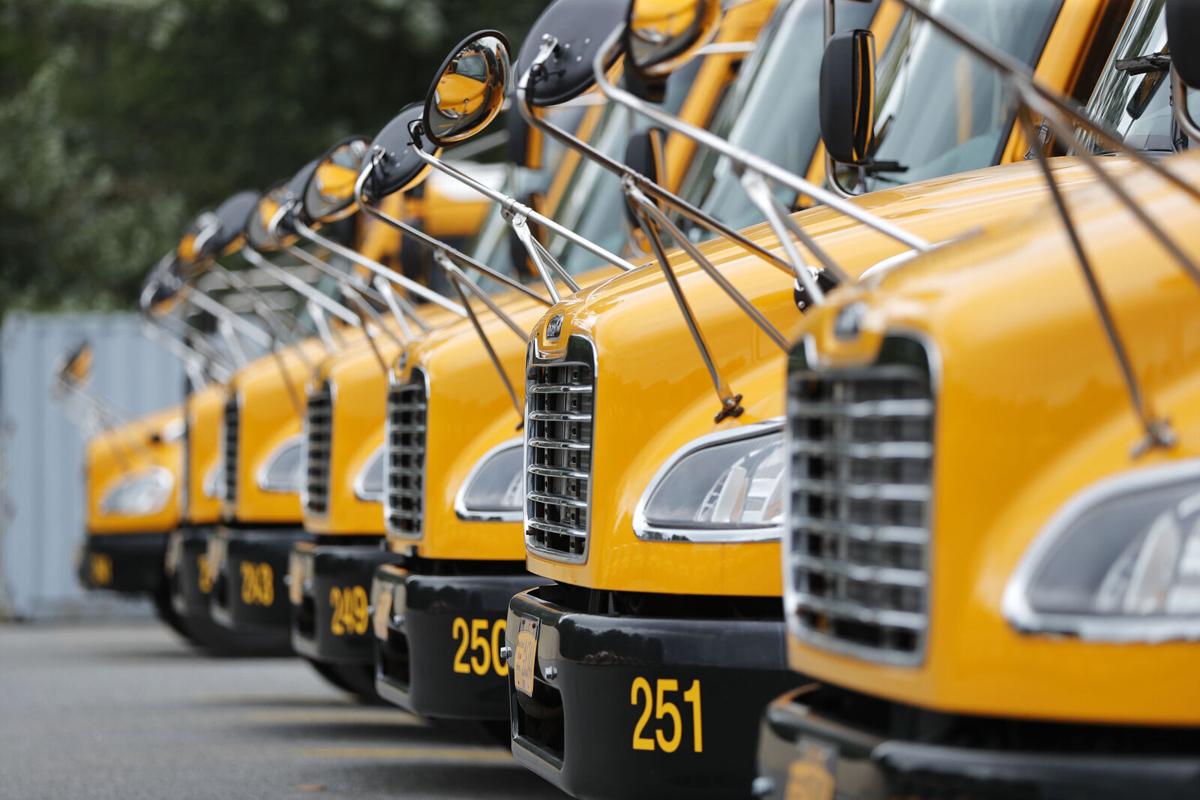
Buffalo Public Schools is feeling the nationwide shortage of bus drivers again this week. The district's transportation contractor, First Student, hired more drivers since school started in September with a shortage. But on Monday, 40 drivers were out due to Covid-19. That meant longer waits for buses in frigid temperatures.
"While the absences caused some morning and afternoon delays, there were no route cancellations. The district 'doubled-up' runs to ensure all students were able to be transported to and from school," Nathaniel J. Kuzma, general counsel for Buffalo Public Schools, said in an email.
Some parents, following buses' progress on an app and seeing it would not get there in time, were able take their children to school or find someone who could drive them. Some children undoubtedly stayed home.
Monday afternoon, the district implemented its early release plan, which calls for the early release of two elementary schools each day. That allows First Student to free up 18 to 25 drivers for the bus runs at 3 p.m. and 4 p.m. The schedule will rotate, with each elementary school having two half-days, a few weeks apart, through March 13.
The district earlier in the school year reduced the number of routes from 670 to 470.
Kuzma said the early release plan helped reduce the length of delays in the afternoon.
"This morning, there was improvement in the absenteeism number, making for a smoother morning commute," Kuzma said Tuesday. "The district is monitoring this matter daily so it can best ensure it is able to safely and timely transport students to and home from school."
Suburban schools are keeping an eye on the bus driver, cleaning and food service staff as well.
"We're hopeful we'll get through this tough period in time," Frahm said. "It's trying to minimize the impact on kids, rather than say, 'Well, we couldn’t find a sub so we’re going to have everybody learn remotely for one particular day.' "
Superintendents and principals are hoping they can get through the month keeping schools open.
"From the transitioning in and out of remote, hybrid, full in-person that we’ve done over the past two years, I think most school districts are well prepared to make a shift if needed," MacSwan said.
But it's safe to say no one wants to.
"It pains me to see even the thought of these kids being disconnected again from school," MacSwan said. "We’re just starting to see some of those relationships being forged again with our counselors, our social workers, our teachers, our administrators, with kids where they’re willing to open up and work with us over some of the challenges they’re having both in school and out of school."


