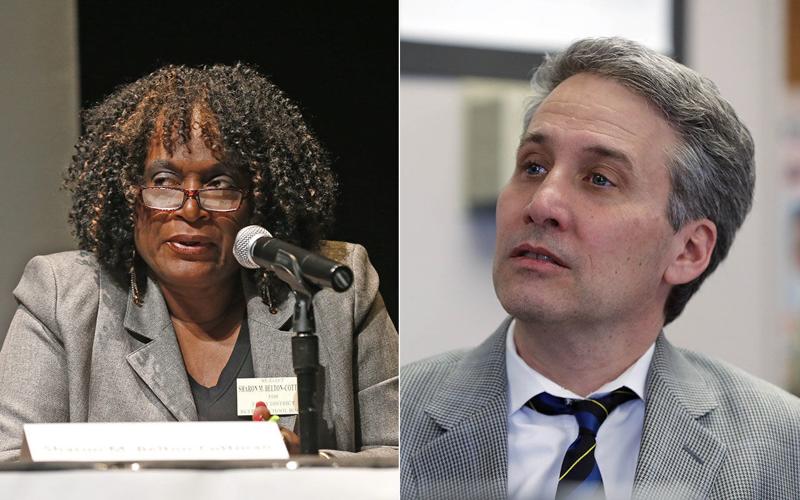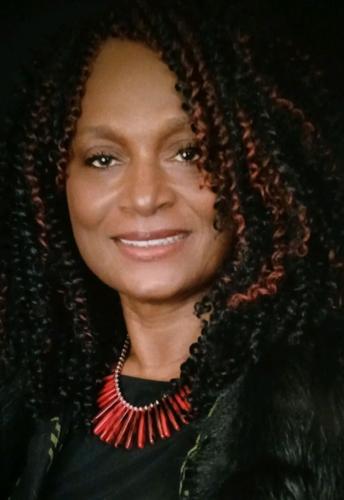
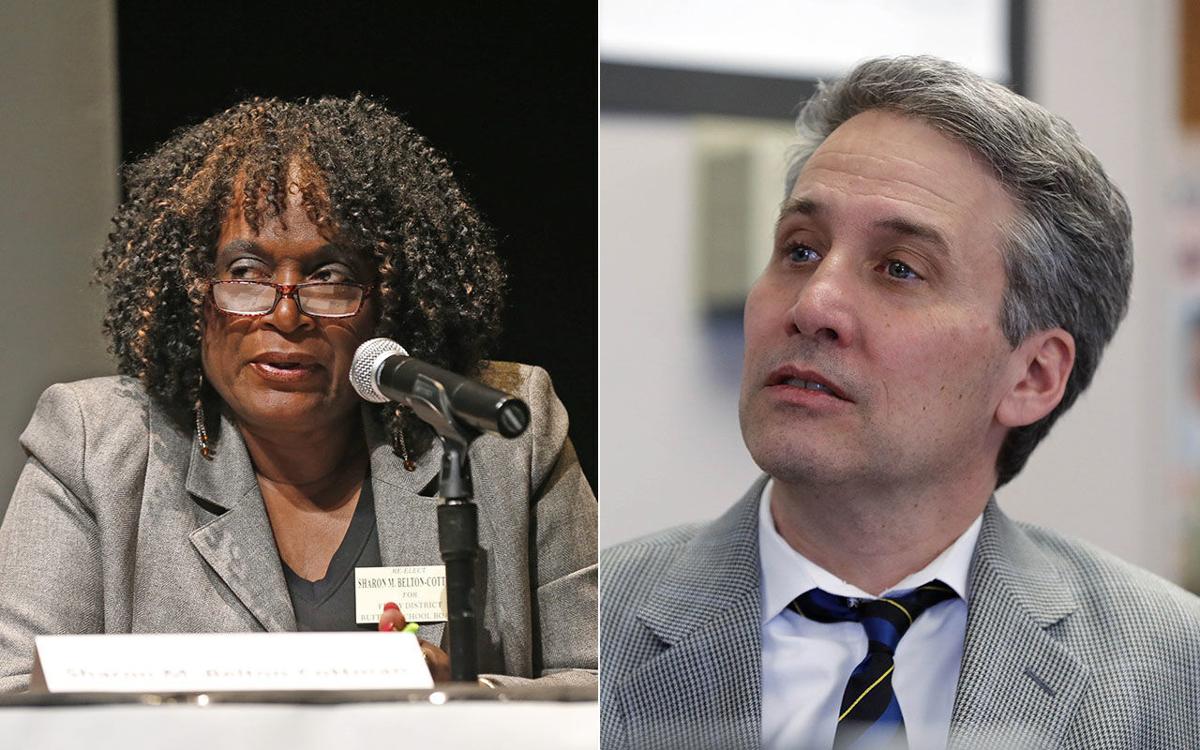
A long-serving Buffalo Public Schools board member and former board president has earned a platform to advocate for funding and support for New York's urban school districts.
In July, Sharon Belton-Cottman assumed the role of chairperson for the Conference of Big 5 School Districts, a lobbying organization representing the needs of urban school districts before state and federal entities. Leadership within the Big 5 rotates each year. Belton-Cottman served as vice chair last year.
Buffalo, Rochester, New York City, Yonkers and Syracuse are the original members of the 60-year-old group, with Albany, Utica and Mount Vernon joining in 2014. Even though they number just eight of the 770 school districts in the state, they enroll 46% of the state's public school students. More than half of the state's special education students are in the member districts, Belton-Cottman said.
People are also reading…

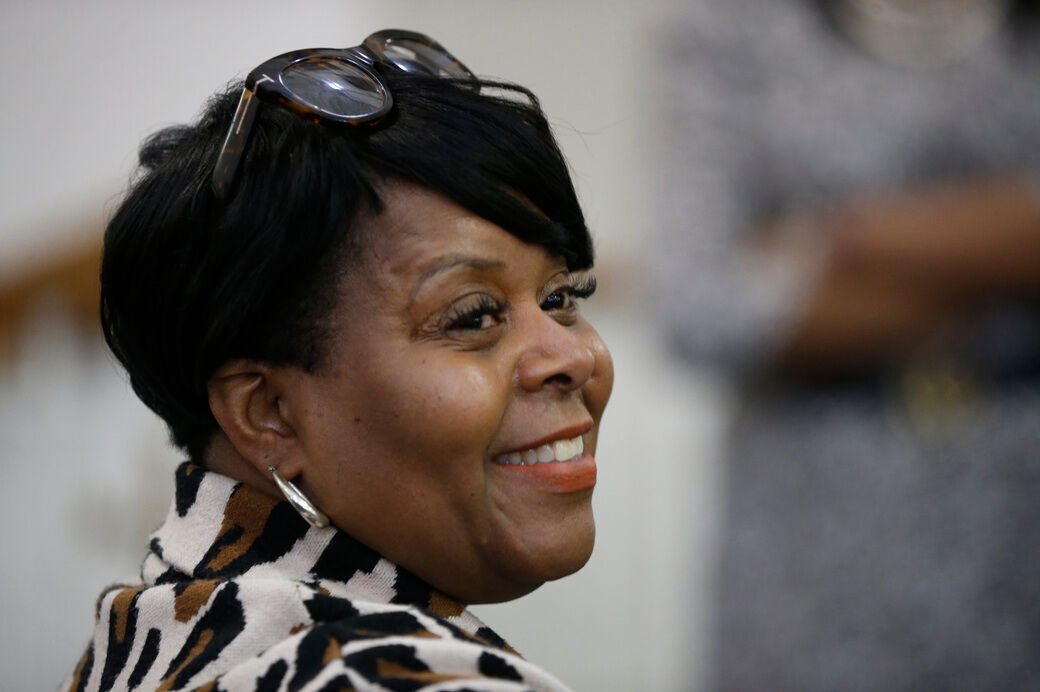
Sharon Belton-Cottman is a Buffalo Public Schools' board member with great responsibility outside the bounds of Buffalo this fall and winter.
The Big 5's general aim is to improve the quality of education for its members but, more specifically, identify the needs and strengths of urban education while advocating for fairness in resource allocation and opportunities for lower-income schools. The chief means are policy and budget recommendations to state politicians.
"When it comes budget time, we lobby," Belton-Cottman said. "We go to Albany. It's poetic how it's done. We train and then we go out, each of us has a speaking point and we go before our legislators."
While Belton-Cottman speaks for all eight districts, her new position has local value, too, said Louis Petrucci, Buffalo's school board president and Big 5 chairperson in 2010-2011.
"She has the opportunity to advocate for the Buffalo Public Schools," Petrucci said, noting that Belton-Cotman's work with the Big 5 will "dovetail" with her efforts with the New York State School Boards Association.
Belton-Cottman said the Big 5 and NYSSBA are closely connected and have each broadened the reach of her advocacy, especially in her push for more diversity, equity and inclusion initiatives, which are integral to new Buffalo Public Schools Superintendent Tonja M. Williams' strategic plan.
"It takes a while to build relationships and until people are comfortable and trust you, certain things just don't happen," said Belton-Cottman, the longest-serving member on the Buffalo School Board.
Lobbying in Albany last year focused on foundation aid, a formula to direct funds to the neediest students. Gov. Kathy Hochul in her state budget in January increased the fund by $1.6 billion.
Career technical education was another focus, leading to the Woz ED pathway being introduced to Buffalo Public Schools. A career pathway developed by Apple co-founder Steve Wozniak, Woz ED aids instruction in fields such as data science, drone technology, app development, cybersecurity and more.
Superintendent Tonja Williams unveiled the tenets of her Strategic Plan for 2022-25, accompanied by the slogan "Equity For All In All That We Do."
Belton-Cottman said she has an ongoing passion for holding charter schools to the same standards as other schools in the district, specifically in how they report incidents and student populations.
"I'm trying to get them to play fair in the sandbox," she said.
She is proud of last year's successes but remains measured in her expectations for a bigger role this year.
"It gives me a chance to be more vocal and have a little bit more weight attached to it," said Belton-Cottman. "We're not going to fix the problems of education without help – we're just not – especially urban education because we're dealing with systems."
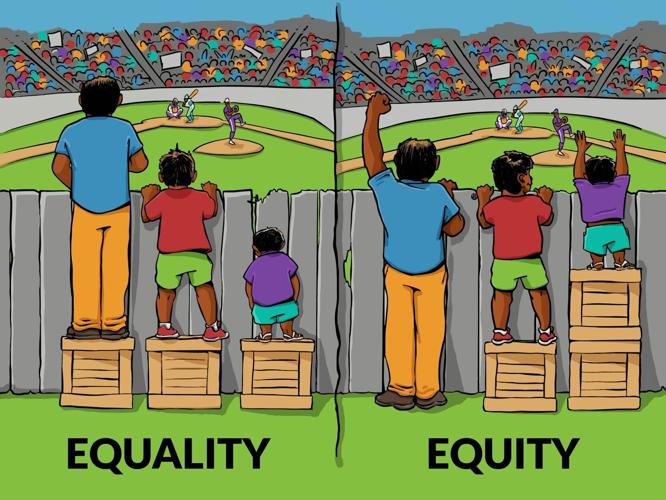
To explain her use of "systems," Belton-Cottman cites the popular illustration of three kids of different heights standing behind an outfield fence attempting to watch a baseball game, which in the metaphor represents a quality education. The fence represents systemic and social barriers.
The equality of education image shows each of the three kids standing on one box, and only the tallest child can see over the fence. The equity example shows one kid looking over the fence without a box. The second child needs one box to see over the fence, while the third child needs two boxes to stand on to see the game. But all three see the game.

Cartoon showing equality vs. equity in regards to education.
The gist of the illustration is that to receive an equitable or fair education, kids of different abilities or backgrounds may require more or less to help to reach the goal. Equality, or giving each child the same level of help, leaves two of the three children blocked by the fence, in this example.
"If you really do equity, the fence don't exist," Belton-Cottman said. "That's the level we want to get to. But right now we're trying to get the kids to at least look over."
Belton-Cottman, who has represented the Ferry District on the school board since 2011, is running unopposed for re-election in November.
Ben Tsujimoto can be reached at btsujimoto@buffnews.com, at (716) 849-6927 or on Twitter at @Tsuj10.