

In October, the University of Arizona’s Emergency Medical Services responded to 112 911 calls. Also known as UAEMS, the organization works 24 hours a day, 365 days a year to respond to emergency calls from students, staff and community members on campus.
The agency is run by students.
“Some people see it from the outside of like, this is just a bunch of college kids, like we’ve gotten that comment plenty of times,” said Becca Doucette, a senior who joined UAEMS in the spring semester of 2024. “But in reality, it’s been really special to see how much we can truly help people.”
On Oct. 17, Doucette helped in an immobilization and minor trauma training for all UAEMS members.
She and other members respond to students in emergency situations. They also train each other to improve their EMT skills.
People are also reading…
“It’s also a really cool teaching opportunity for our veteran members, just being able to help each other out and kind of help them grow in that process,” Doucette added.
Jake Herbert, a public information officer for UAEMS, helped assist with the training. He has experienced firsthand the impact the agency has on students.
Herbert remembers one call where he and his team responded to a student who had attempted suicide.
“Being there and giving that person a hug and just staying with that person until we can get them to the hospital,” Herbert recalled. “That was a call that’s probably had the biggest impact on me.”
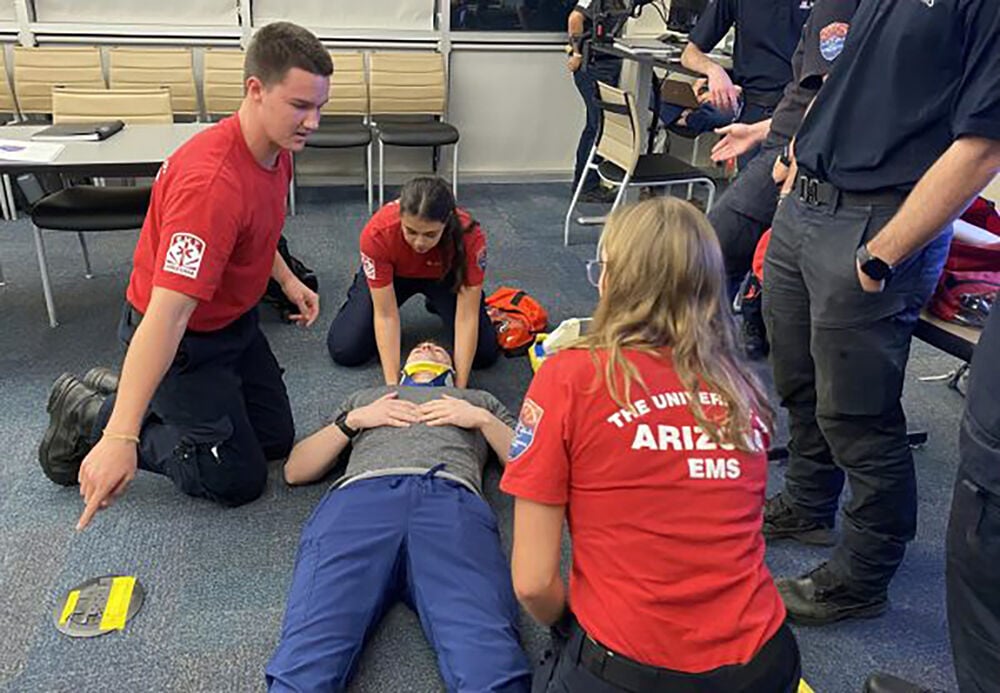
Probationary members of the University of Arizona's EMS service practice performing a spine check.
Members of UAEMS are all EMT certified. The students rotate through shifts at the EMS station located on the south side of campus.
On shift, they go through a series of operations that include debriefing with the crew from the shift before, doing a bag check in their emergency vehicles and talking with one another while they wait for a 911 call.
A large part of UAEMS services is responding to emergency calls. But they also educate the community.
The organization offers public courses such as CPR certification, Narcan training and how to stop bleeding.
Cassie Medina is a lead public information officer. Part of her job is to help instruct these courses.
“So having people who are educated and knowledgeable really increases the public safety of our university and overall has a really positive impact on people and their lives,” she said.
Medina believes educational trainings are essential to supporting the community.
“I think that’s really my favorite part to hear that they really did use the skills that they learned and they were able to act and most of the time like truly save someone’s life,” Medina added.
Arizona Sonoran News is a news service of the University of Arizona School of Journalism.


