The Santa Cruz River is a sprawling watershed stretching through Southern Arizona from Marana to northern Mexico. And it’s being reshaped by invasive plants.
“We have invasive species that are throughout a lot of our washes, creeks and drainage ways leading to the Santa Cruz River that are taking the water resources before they even make it to the Santa Cruz River proper,” said Tony Figueroa, invasive plant program manager with Tucson Bird Alliance, who works alongside the river and its watershed.
There are major efforts underway to restore the once abundant Santa Cruz, which has been largely depleted by overuse and climate change. Invasive removal is a part of every step of the restoration process.
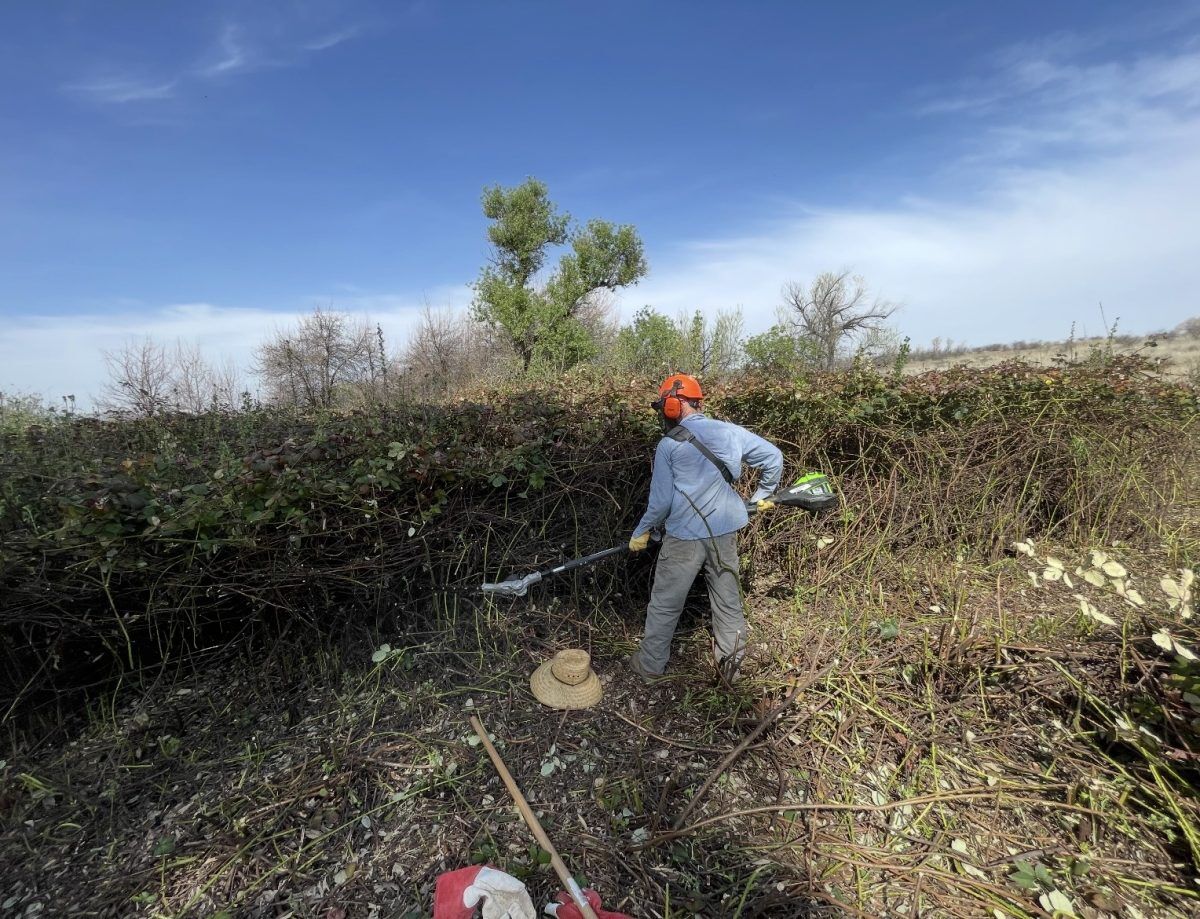
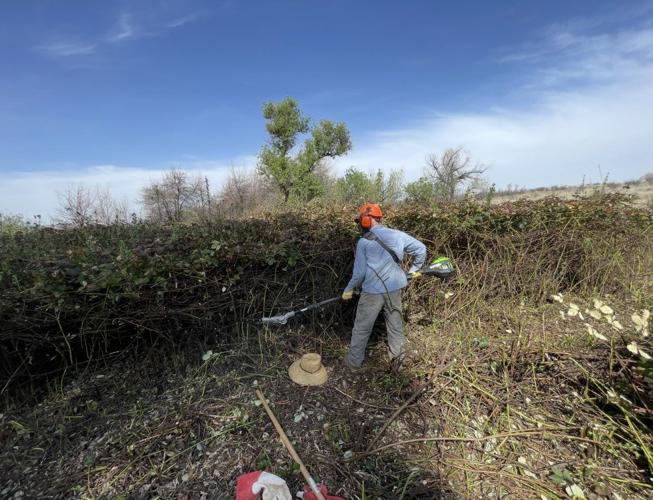
Restoration work being done this spring on one of the basins excavated during 2012 construction of the Arroyo Chico Park Avenue Basins project. Arroyo Chico is an urban tributary of the Santa Cruz River, and the project both alleviated flood risks and restored the area with native vegetation and wildlife amenities.
Before restoration can begin, invasives must be removed. During restoration, invasives must be removed. And after restoration, weekly and monthly management to remove invasives must continue.
People are also reading…
“At this moment, with the funding structures and the crews that are available to do this, it’s about picking and choosing the highest quality habitat,” Figueroa said. “Focus on the spot where you’re going to be supporting the most life.”
Complications with restoration
Invasives choke out native plants, decrease biodiversity, increase the risk of wildfires and are rarely eaten by native insects and animals, Figueroa said.
“If you don’t have palatable plants, then you don’t have insects and then you don’t have the things that eat insects,” he said. “You end up with a very quiet stream.”
The most predominant invasives in the river corridor are buffelgrass, a perennial, drought tolerant grass; fountain grass, once commonly used in landscaping but is now choking washes and riparian areas; salt cedar, an invasive tree that outcompetes native cottonwoods and makes the soil salty and arundo, a towering grass that can grow more than 20 feet tall.
“It’s one of the fastest growing grasses on earth,” Figueroa said.
These invasives complicate every step of ongoing restoration efforts on the Santa Cruz, he said. Restoration projects must incorporate invasive management, including properly removing plants, reseeding with native vegetation and funding long-term maintenance.
Figueroa’s team has removed tens of acres of invasives and continues follow-up treatments across the river corridor.
“There’s no chance for eradication of all invasive species everywhere,” he said. “The goal is to make it functional.”
Restoration projects prioritize key habitats like springs or consistently flowing sections of the river where restoration can support the most life.

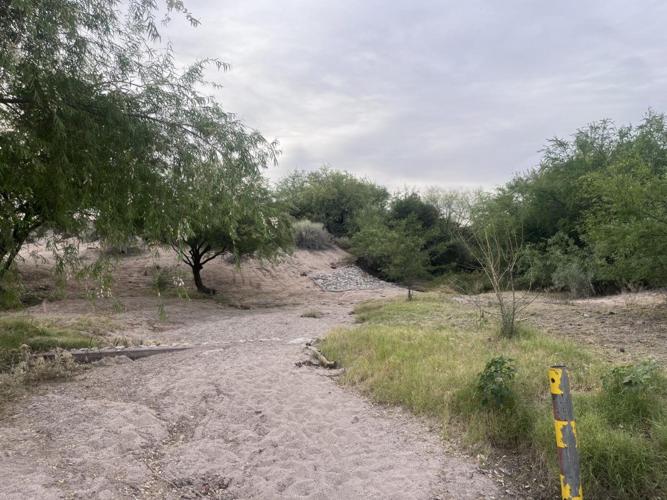
Arroyo Chico, an urban tributary of the Santa Cruz River.
At the headwaters
The San Rafael Grasslands are the headwaters of the Santa Cruz River. There, invasives like buffelgrass, Himalayan blackberry and arundo are removed because they kill native plants and are great wildfire fuel.
Jonathan Horst, founder of Baseline Shift, a company that works on habitat creation, monitoring and restoration. He works on invasive plant mapping and removal in the grasslands.
His current project targets invasive Himalayan blackberry bushes at spring sites that form dense and impenetrable mats that choke out native plants.
“They grow out across everything else, create a lot of shade and basically kill everything below it,” Horst said.
The plant creates canes that house its fruit but only live for two years, building new layers over time.
“So you can end up with this huge impenetrable mass of canes growing across each other and nothing else surviving,” Horst said.
With other invasives, like buffelgrass, even after the plant’s removal seeds can live in the soil for years.
“A buffelgrass seed bank is going to be there for three to five years at least,” Horst said, making ongoing maintenance vital
Urban Tucson
Restoration efforts and invasive maintenance are also ongoing in downtown Tucson, where the complexity of those projects is heightened.
“The watershed is almost entirely urban … so you’ve got a lot of weeds washing and blowing in from the surrounding areas,” said Jennifer Becker, environmental planning manager for the Pima County Flood Control District.
Arroyo Chico Park Avenue Basins is a flood control project, built in 2012 to reduce flooding issues that formerly plagued residents, the Fourth Avenue business district and parts of downtown Tucson.
Any construction or soil disturbance can worsen an invasive problem because disturbed soil is the ideal condition for invasive plants to spread.
“The original construction contractor wasn’t as vigilant about preventing weed seed drop,” Becker said. “So when our County staff took over the maintenance, they had a lot of work to do catching up.”
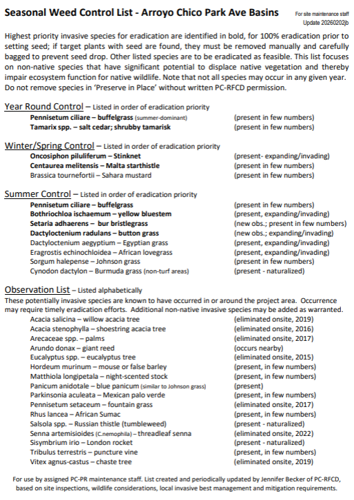
Like many other restoration projects in the river and its watersheds, crews manage invasive species year-round. Becker creates and periodically updates a list of invasive species for each season, starting with priority invasives like buffelgrass, stinknet and salt cedar.
Many of the lesser priority species have been present in urban Tucson for so long that they are considered “naturalized.” Species like Bermuda grass are tolerated despite being non-native because they stabilize soil in the frequently flooded area.
“You’re never going to be rid of it,” she said. “So I’d rather put resources toward species we can get ahead of.”

Her approach reflects a modern shift in restoration philosophy: Instead of trying to recreate a historical ecosystem, restoration on the Santa Cruz watershed is focused on creating a new, functional ecosystem to be resilient under modern and anticipated future conditions.
A shifting definition of restoration
Across the watersheds, experts agree that efforts are no longer about returning the Santa Cruz River to a single moment in time.
“What are you restoring it to?” Figueroa said. “Climate is always variable.”
Instead, it is an ongoing process, balancing ecology, funding and human needs. Even for completed restoration projects, invasive maintenance will always be needed, Becker said.
But despite the ongoing challenges, many see hope for the river.
“Every little action adds up,” Figueroa said. “If you pull one plant, you’ve stopped an invasion.”
In a system as large and interconnected as the Santa Cruz River, removal actions both small and large play a role in shaping the river’s future.
Arizona Sonoran News is a news service of the University of Arizona School of Journalism.