
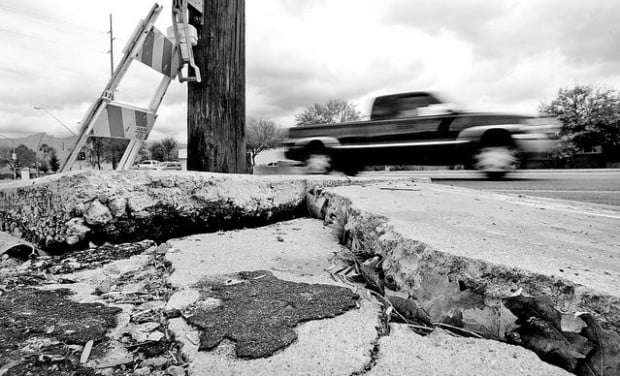
The sidewalk in front of Rex Baucom's East Side home was cracked and slightly buckling, so he called the city to let them know it needed repair. The sidewalk is, after all, in the public right-of-way, not on Baucom's property.
A few days later, he got a notice in the mail saying he had 10 days to repair the sidewalk, according to Chapter 25 of the City Code.
The news he had to fix the sidewalk and pay the cost blindsided Baucom, as it does many who get similar notices.
"I thought sidewalks belonged to the city," Baucom said as he stood on his driveway looking at the cracks and the barricade the city put up to warn pedestrians of the hazard.
City officials are looking at the possibility of taking over sidewalk maintenance and repairs.
Until that happens, however, they're looking at toughening the law to make it easier to crack down on property owners who don't fix their sidewalks.
People are also reading…
They're also gearing up to let people know where the responsibility lies so, like Baucom, they won't be caught by surprise.
If owners can't afford to fix the sidewalk along their property, the city will fix it to eliminate the public safety hazard. But the city can also charge the property owners for the cost of repair.
Regardless of who puts in a sidewalk or makes the repairs, though, if someone gets hurt because of an unsafe sidewalk, the property owner is responsible for claims filed against the city.
In January Transportation Department officials asked the City Council to consider letting them cite people who don't follow through on their sidewalk upkeep obligation — with a provision for people in special cases, such as those on a fixed income.
"We don't have the capability to actually cite somebody. What happens if they don't (fix it)? We go out and repair because we've been put on notice of a safety issue," said Steve Pageau, deputy director of the Tucson Department of Transportation.
The department spends about $300,000 a year on sidewalk maintenance and tree trimming, even though it's not part of its budget, because property owners are supposed to do those things, he said.
And the department can't track every sidewalk that needs repair, so it relies heavily on calls from the public.
"We do not have the staff to go out and monitor the condition of sidewalks. If we were to take these on, it would be an enormous cost," Pageau said.
Council members have requested an estimate of what it would cost for the city to take care of sidewalks so residents don't have to. That report is due later this month.
In addition to maintenance costs, the department is calculating the mileage of sidewalks in the city, how much the city has paid in claims and what it would cost to inspect all the sidewalks, something only done now if it's necessary because a claim is submitted. They're also working on a plan to better communicate the sidewalk maintenance responsibility to property owners.
Typically, property owners try to deny responsibility when they receive a 10-day sidewalk repair notice, because this is the first they've heard it's their problem to fix.
Most often, the city ends up fixing the sidewalk, because it has to comply with the Americans with Disabilities Act, and cannot ignore an unsafe sidewalk. The property owner is then billed for the cost.
"Some pay, most don't," Pageau said. If they don't pay, the city can sue, he said, but that's something city officials are reluctant to do because so many say they aren't financially able.
City Councilwoman Nina Trasoff said the law is inconsistent, and burdens some homeowners more than others, simply because there's a 4-foot wide stretch of concrete next to their property. Councilwoman Carol West said some homeowners cannot afford to fix sidewalks, so they get help from the city while those who are able to pay don't get assistance.
And when the department contacts property owners, it's usually not pretty, Pageau said.
Most react just like Midtown resident Helen Rowton did when she found out she was responsible for replacing 60 feet of cracked and pitted sidewalk along the side of her home.
"I feel strongly that it is an injustice to the homeowner to be liable for a thoroughfare sidewalk that is put there for the public. It's not our property — it's everyone's," she said.
The sidewalk along the side of her house was there when she moved into the neighborhood in 1961.
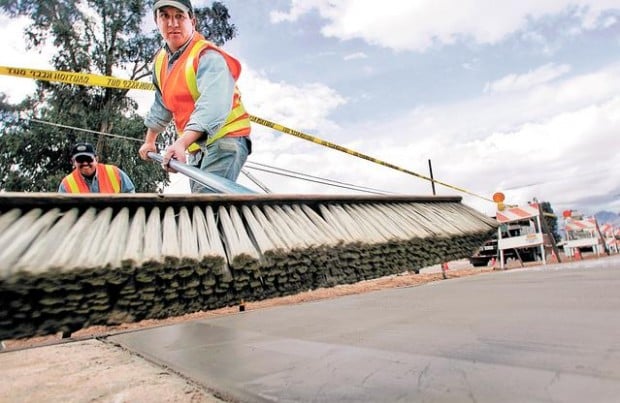
When Rowton told the city she couldn't repair the sidewalk, the a city crew came out to do it. The 60-feet-long by 4-feet-wide section of sidewalk took about 15 hours for Max Soto, a cement mason, and two other city transportation employees to complete.
Pageau said it costs the city about $10 to $12 a square foot to remove and repour concrete. Even if homeowners do the sidewalk repair themselves, he said, it must be inspected and meet city specifications.
But it's the mixed signals homeowners get that the department wants most to prevent. It would be better if they could cite property owners, to ensure the city doesn't pay for repairs that aren't budgeted, or put money in the budget to take over all of the repair.
Rowton and Baucom are two who mirror the reaction the city sees all the time, Pageau said.
That's why South Sider Dan Holguin was glad he heard a different version of repair responsibilities.
He was told the city would repair the buckled sidewalk in front of his home.
"I wouldn't want to be stuck with a bill for that," he said. When the city barricaded the sidewalk in front of his house, the crew told him the city would fix it and he hasn't received a repair notice.
These inconsistencies are partly why Pageau asked the city for the ability to educate people about what they are expected to do.
On StarNet: Who should be responsible for sidewalks? Find the online version of this story to participate in a poll at azstarnet.com/dailystar