PHOENIX — It’s taken seven years.
But Arizona schools are finally going to get their day in court — well, actually more like a month — in their bid to convince a judge the state is not living up to its constitutional obligation to adequately fund education.
The trial, which begins Tuesday, centers around arguments that the state has failed to establish minimum adequate facility standards and then provide the fund to ensure that no district falls below them.
That’s not just a random claim. That language is taken from a series of rulings by the Arizona Supreme Court, dating back to 1994, when the justices found the system of financing school construction and repair was unconstitutional.
The problem, the high court concluded, was that the state left it to each district to find its own funding. That, the justices said, created disparities between rich and poor districts — often determined by the amount of taxable property — of what they could afford.
People are also reading…
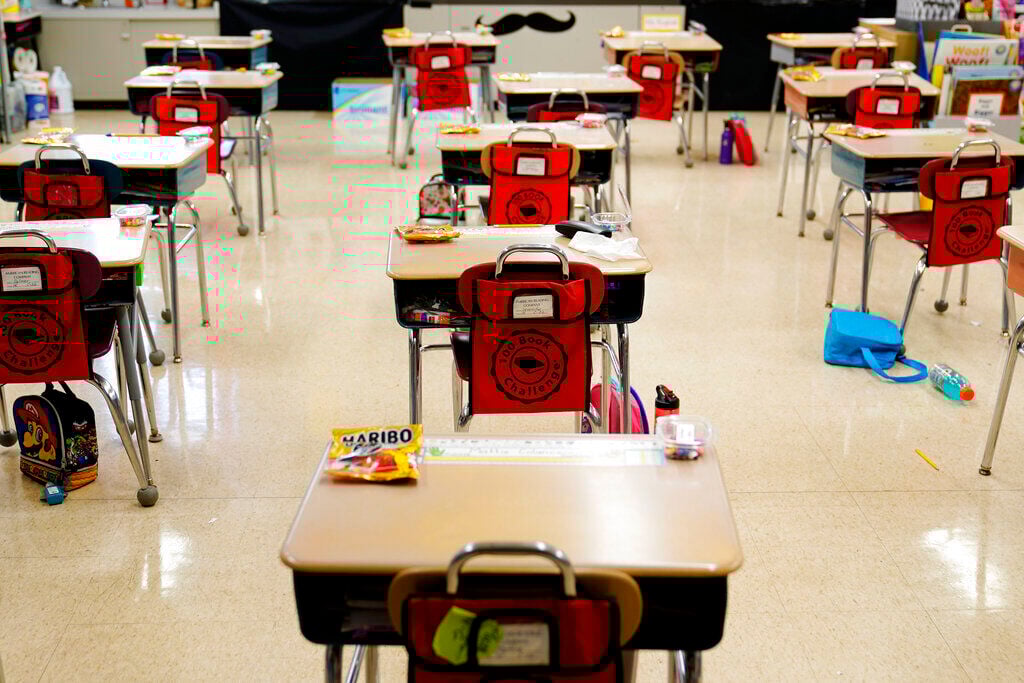
“Some districts have schoolhouses that are unsafe, unhealthy, and in violation of building, fire and safety codes,” the court ruled in in that historic 1994 decision, noting there are schools without libraries, laboratories or gymnasiums. “But in other districts, there are schools with indoor swimming pools, a domed stadium, science laboratories, television studios, well-stocked libraries, satellite dishes and extensive computer systems.”
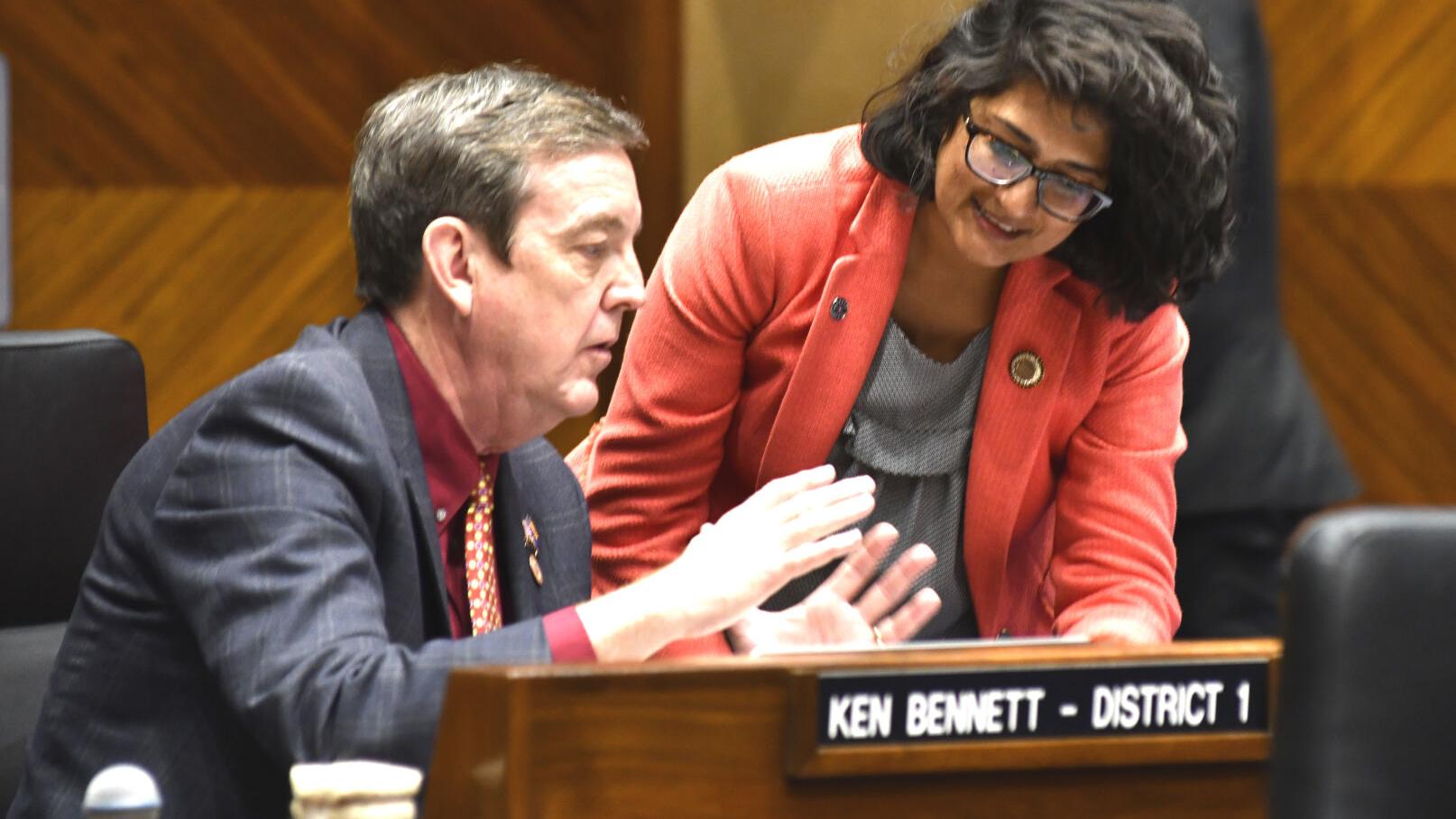
Attorneys for the districts acknowledged that lawmakers have made several attempts to fix the system, including making the state responsible for funding adequate schools.
But John Bullock, in opening arguments already given to Maricopa County Superior Court Judge Dewain Fox on behalf of the schools, said the Legislature “eviscerated’’ the funding system.
“Once again, a school district’s ability to provide decent facilities that comply with minimum standards depends largely if not exclusively upon the property wealth in the district and the willingness of that district’s voters to pass bonds and overrides,’’ he told the judge. “Once again, districts without these local resources are left with shabby schools, crumbling infrastructure, an inability to replace their bus fleets as needed, and inadequate resources to keep their technology and curriculum materials reasonably current.’’
But William Richards, representing Senate President Warren Petersen and House Speaker Ben Toma, said there’s nothing illegal going on here.
“The state of Arizona has honored its judicially identified obligations under (the) Arizona Constitution by adopting minimum facility standards for school districts and extensively expanding the financial support system it now uses to allow schools districts to comply with those standards,’’ he said. And Richards argued that any problems some districts are having are largely self-inflicted.
He said districts make “continuous and regular choices’’ to use the funds they get for other priorities rather than working to comply with the minimum guidelines. Richards said that districts don’t conduct required preventative maintenance, sometimes select “unnecessary expensive capital options,’’ and refuse to close schools that are no longer needed.
He also told Fox that some districts are spending money on “futile attempts to compete for students against other, nearby districts and charter schools their districts’ residents can choose freely to attend at public expense.’’
And there’s something else.
Richards contends that for schools to win the lawsuit — and the additional hundreds of millions of dollars they say to which they are entitled — they have to show that the current system of funding capital needs, ranging from buildings and maintenance to buses and computer equipment, has had an impact on their students’ academic education. He said they can’t do that.
“There is no district witness who can name such students or prove the required impacts on their academic achievement,’’ Richards told the judge. “And that failure or proof, along, means that the court should conclude this trial by finding that the plaintiffs were unable to meet their burden of proof and demonstrate the state system for funding public school district capital needs is unconstitutional.’’
What the court decides, however, ultimately could revolve around how Judge Fox reads a requirement in the Arizona Constitution that the state must “provide for the establishment and maintenance of a general and uniform school system.’’
That mandate, the Supreme Court ruled in 1994, was not being met given the disparities between rich and poor districts.
The justices at that time, however, did not impose a solution. Instead, they directed the Republican-controlled Legislature to come up with a plan that meets constitutional muster.
Several of those solutions had to be struck down by the state’s high court before the justices gave their blessing to a plan creating a School Facilities Board. It was charged with creating minimum guidelines for what schools need, creating a system to both finance new schools as needed, and provide $200 million a year for upkeep.
Only thing was, lawmakers had not fully funded that formula for years, adopting a more year-by-year approach of having districts apply for funds.
The result, according to those again challenging the financing scheme, has been a shortage of funds to pay not only for repairs but for other needs ranging from school buses to textbooks. And that, they said, forces schools to use locally raised funds — assuming voters are willing to go along — to pay for needs the Supreme Court concluded are a state responsibility.
That bonding process, however, only added to the disparity.
Some districts have more property wealth — the total assessed valuation of industry, homes and businesses — than others. That means adding $1 to the local property tax rate in a rich district raises far more than the same $1 levy in a property-poor district.
Put another way, people in poor districts must raise their tax rates by three or four times as much as those in rich districts to generate the same amount of money. And that, the challengers say, runs afoul of the Supreme Court saying that any financing scheme cannot be the cause of inequality.
Part of the reason the trial will take a month is that the fight is not just about dollars and cents. It’s also about whether the current “minimum adequacy guidelines’’ are current and, according to Bullock, “reflect what is needed in today’s schools.’’
And it’s not just about technology.
Bullock said that, in the wake of the 2012 mass shooting at Sandy Hook Elementary School in Connecticut, the School Facilities Board studied reasonable security measures but failed to include any recommendations in the adequacy guidelines.
“As a result, for the most part only schools with bond funds have been able to implement reasonable security measures to protect their students and faculty,’’ he said.
Bullock said some issues have been resolved over the years — sort of.
That includes “soft capital,’’ a special pot of money earmarked for technology, curriculum, buses, furniture and equipment.
From 2009 until after the lawsuit was filed in 2017, he said lawmakers cut the formula for what was renamed “district additional assistance’’ by about 85% — about $352 million. Bullock said after the districts sued, lawmakers gradually restored the funding.
“But the massive damage had been done,’’ he said, saying the cumulative cuts to this formula alone — money the districts did not get — is $3 billion.
Richards, in his own opening statement, painted a markedly different picture for Fox.
He does not dispute the Supreme Court required the Legislature to come up with a constitutional plan to fund capital needs for schools. But Richards underlined the fact that the justices in 1994 didn’t tell them how to do it, saying it is “up to the Legislature to choose the methods and combinations of methods from among the many that are available.’’
“For example, (the Arizona Constitution) does not mandate that the Legislature use only up-front, auto-generated or formula-based funding rather than grant funding a district must apply for,’’ he told the judge.
Richards also said that even the Supreme Court acknowledged that there will be differences that “inevitably exist’’ among public schools. He said the constitution does not require the state to equalize for things like parental influence, housing patterns and local control — including the ability of going above and beyond the state system if voters approve bonds and override elections.
And Richards told Fox he should ignore any testimony that the guidelines are incomplete or outdated, calling that “irrelevant second-guessing of discretion our constitution delegates to members of the Legislature and the education experts to whom the Legislature’s enactments have delegated responsibilities.’’
Then, of course, there’s the question of whether schools really need more money.
Richards cited a report of Tucson Unified School District for the 2021-2022 school year which said it used more than $51 million of its basic “maintenance and operation’’ funds for things like facility maintenance spending plus another $24 million from state dollars assigned to a separate “unrestricted capital outlay fund.’’
“The TUSD records show that after all that spending, the district had an unexpended balance of some $8 million in unrestricted capital funds and some $26.5 million in maintenance and operation monies,’’ Richards said. And yet, he said, the district has or is in line for “substantial’’ building renewal grants, “all of which demonstrate a robust and responsive grant system for those true minimum guidelines deficiencies a district may claim.’’
Republican legislative leaders actually tried to stop the case from ever getting to trial. They had sought to have the lawsuit dismissed two years ago, arguing that courts have no right to rule on the legality of the formula that state lawmakers use to finance school capital funding.
But Maricopa County Superior Court Judge Daniel Martin said it clearly is within the purview of the courts to determine whether the state is complying with the constitutional mandate to maintain a “general and uniform school system.”
Howard Fischer is a veteran journalist who has been reporting since 1970 and covering state politics and the Legislature since 1982. Follow him on X, formerly known as Twitter, and Threads at @azcapmedia or email azcapmedia@gmail.com.

 Hobbs offers no plan to deal with her concerns about vacation rental properties