

WASHINGTON — President Donald Trump issued a pair of executive orders in a push to address ranchers' concerns after his recent move to ease tariffs on imported beef ignited a backlash among supporters in major cattle-producing states.
One of Friday’s orders takes steps to enable ranchers to process their own meat to sell on the market — a practice that has generally been prohibited under a 120-year-old federal law that mandates meat inspections.
Trump's second order directs his administration to begin the process to remove the gray wolf and Mexican gray wolf — predators of cattle that has long plagued ranchers — off the federal list of endangered species list, allowing ranchers to shoot and kill the animals to protect their farms.
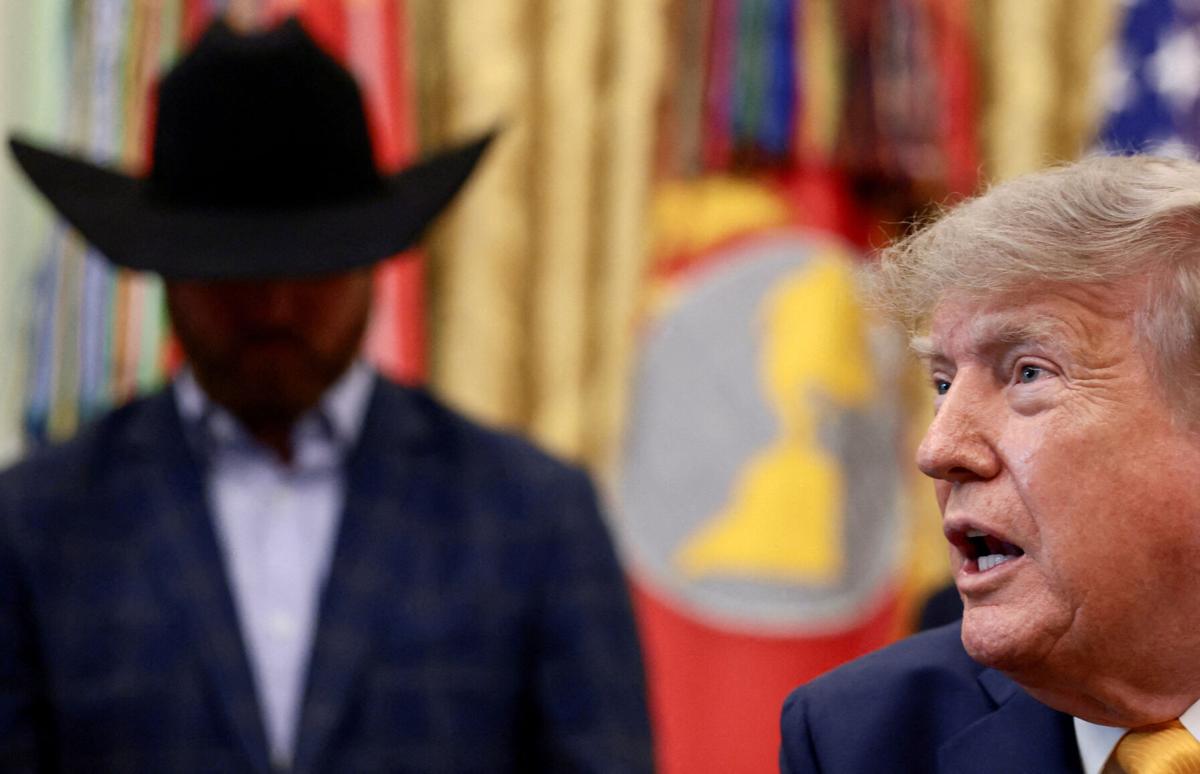
Trump signed the orders in the Oval Office as a handful of ranchers from across the country, some wearing cowboy hats, stood behind him.
People are also reading…
"For the first time every, we're going to give farmers and ranchers the right to process their own food," Trump said, following through on executive action that he previewed in a social media post last week. "That's a big announcement."
The order supports efforts to make it easier for ranchers to sell their product directly to customers, bypassing meat processing facilities where meat typically goes before being sold. Four companies — Cargill, Tyson Foods, JBS USA and National Beef Packing Co. — currently control about 85% of U.S. meat processing, effectively giving them a monopoly over the meat industry.
"They're not going to be happy when they hear this," Trump said. "I don't know who they are, but they're going to be coming at me at different angles."
Under the 1906 Federal Meat Inspection Act, ranchers can process their own meat for personal or household use, but all meat products sold in the United States must be processed at facilities that are subject to inspections by the U.S. Department of Agriculture.
The order directs Agriculture Secretary Brooke Rollins to create a "one-stop shop" and coordination position within her department to expand federal licensing for inspections and connect meat producers with more inspection options.
The order further calls for additional resources and training for small meat processors, moves to expand the sale of meat products access across state lines and pushes increased participation in a federal program that allows states to operate their own meat and poultry inspections.
Conservative commentator Glenn Beck, who owns a ranch in Idaho, suggested to Trump during a podcast interview last week that he target the Big Four meat processing companies.
"People have been asking for this change for decades, and we're getting it done," Trump said. "This is the largest-ever government effort to change all federal rules and regulations necessary to support our ranchers."
Trump: Remove gray wolves from endangered species list
The order targeting gray wolves directs Interior Secretary Doug Burgum to determine whether gray wolves or Mexican wolves meet the criteria for delisting from protections under the Endangered Species Act — and to remove them from the list if deemed appropriate.
Trump is also instructing Burgum to prepare legislative recommendations for delisting gray wolves and to work with states to encourage delisting of the wolves at the state level.
"Because they're on the endangered species list, they can't shoot them. They have to sit and watch them destroy their herd," Rollins said.
Animal conservative groups slammed Trump’s efforts to roll back protections for gray wolves.
“Scapegoating wolves is a cynical and performative gesture given the immense harm that the Trump administration has inflicted on our nation's ranchers with irresponsible tariffs,” Sara Amundson, president of Humane World Action Fund, said in a statement.
Amundson cited Department of Agriculture data that 1% of cows and sheep are killed by wild carnivores including wolves. She added that removing protections will lead to “untold death and cruelty” for a species that was once on the brink of extinction.
Angering ranchers, Trump in August signed an order to remove certain tariffs on 300,000 metric tons of ground beef imported into the United States for 90 days. The move is a bid to reduce the prices Americans are paying for the grocery staple ahead of the November midterm election.
Imported beef into the United States has increased dramatically — up 122% in five years, according to the American Farm Bureau Federation — as the supply of domestic cattle remains at multi-decade lows following years of drought, the spread of the parasitic New World screwworm near the Mexican border and other factors.


