A quarter-century later, 9/11 still echoes.
The worst terrorist attack in U.S. history has been followed by other seismic events, from a once-in-a-century global pandemic to the rise of artificial intelligence that is transforming commerce, education and more. Nearly 100 million Americans − almost one in four − have no personal memory of the Sept. 11 attacks, born since it happened.
And yet the attacks continue to resonate in the lives of the families, friends and colleagues of the 2,977 victims who died and for the tens of thousands of survivors and first responders who are dealing with 9/11-related health issues.

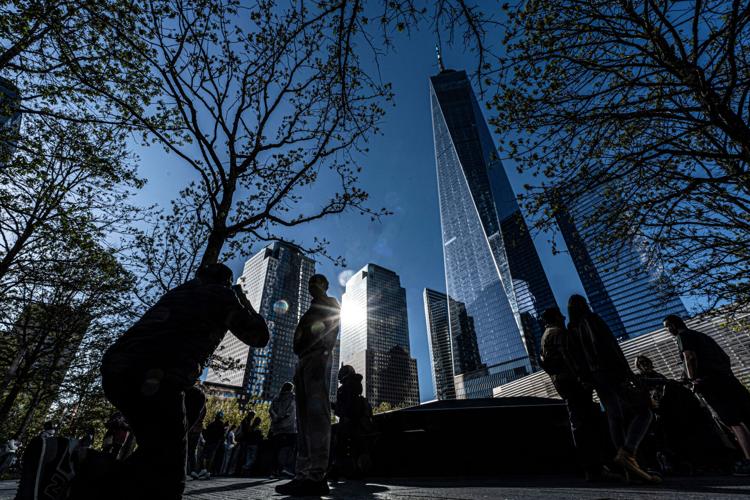
Visitors take photos of themselves with One World Trade Center behind them as they spend time April 27 at the 9/11 Memorial in Manhattan. The National September 11 Memorial & Museum has become one of the most visited destinations for tourists visiting New York City.
In a spiderweb that has spread through the nation's laws, economy, warfare and culture, its repercussions are also felt by just about every American. Some of the questions it raised remain unsettled.
People are also reading…
Consider: Extension of the post-9/11 law that allows warrantless surveillance abroad is stalled in a fierce congressional divide. The mistrust of officialdom about the attack and the war in Iraq that ensued helped lay the groundwork for current-day conspiracy theories about school shootings and election fraud. A new generation of video games inspired by 9/11 is being tapped as a controversial recruiting tool by the military and law enforcement in real life.
"We encounter an echo every time we go to an airport, obviously," with creation of the Transportation Security Administration and tighter travel security regimes, said Mitch Daniels, a member of President George W. Bush's Cabinet who was on the White House campus when the planes struck the World Trade Center. Even amid the chaos of that moment, he recalled, "we knew something completely new and terrible had happened."
The consequences continue to reverberate. In some ways, Sept. 11 was 25 years ago, and also yesterday.

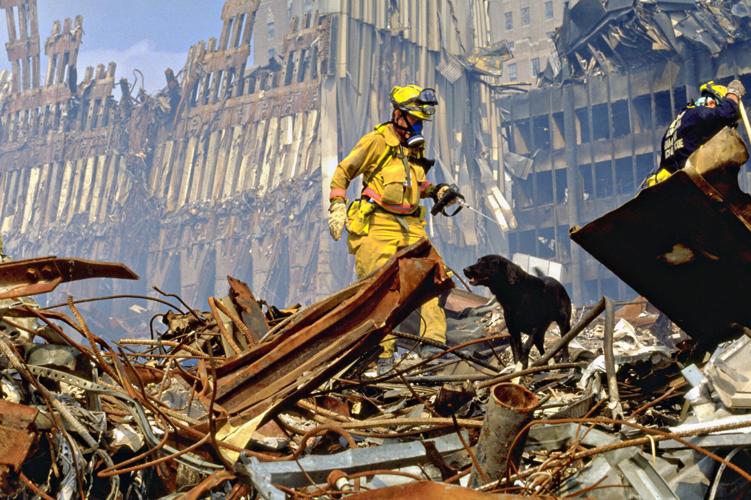
Sept. 21, 2001 - New York, NY, United States of America - Urban Search and Rescue teams search for survivors amongst the wreckage of the World Trade Center following a massive terror attack which destroyed the twin towers killing 2,606 people September 21, 2001 in New York, NY. (Credit Image: © Andrea Booher/Planet Pix via ZUMA Wire)
Here are three ways how.
Where's the line? Liberty vs. security?
In the immediate aftermath of 9/11, Americans were more than willing to trade liberty and privacy for a stronger sense of security.
Just weeks after the attacks, Congress passed the landmark USA Patriot Act by an overwhelming and bipartisan vote, expanding the government's investigative and surveillance powers. Later, the behemoth Homeland Security Department was created, and an overarching director of national intelligence position was installed.
By a double-digit margin in 2004, the public told a Pew Research Center poll that the anti-terrorism policies imposed so far had "not gone far enough to protect the country," rather than having "gone too far restricting civil liberties."
At about a decade later, there were second thoughts after abuses in surveillance were exposed by former National Security Agency contractor Edward Snowden in 2013. Then, by another double-digit margin, Americans said the anti-terror programs had gone too far.
Today, that debate has been joined again on Capitol Hill, where Congress has so far been unable to extend Section 702 of the Foreign Intelligence Surveillance Act (FISA). The law, which sunset in June, allows U.S. intelligence agencies to collect communications of foreign targets overseas without obtaining warrants, but in the process they have also incidentally swept up the phone calls, texts and emails of Americans.

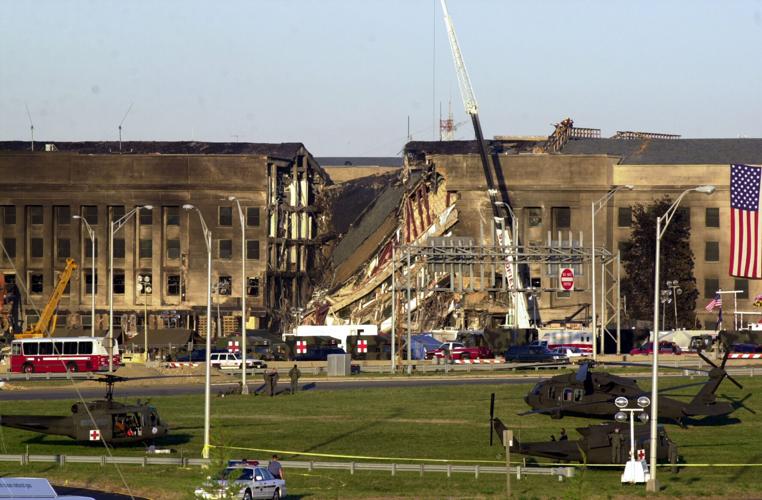
The Pentagon is seen in the aftermath of the Sept. 11, 2001, terror attacks. More than 200 people died there, including 64 people on the hijacked plane that crashed into the building.
Some warn that the hard lessons of 9/11 are being forgotten.
"You know, the dog that doesn't bite − it's easy to overlook," said Daniels, who after the attacks served two terms as governor of Indiana. His memoir, "Impatience is a Virtue," is being published by Lyons Press on Saturday. "Even though we may have strengthened ourselves against certain kinds of terrorism, we have opened ourselves up to others," including in the cyber world.
But in the House debate, Rep. Thomas Massie, R-Kentucky, called the existing law "an infringement of the Constitution."
The road from 'an inside job' to other conspiracies
Conspiracy theories aren't new in America. Witness the Cold War speculation in the 1950s that adding fluoride to drinking water was, alternatively, a Communist plot or a CIA mind-control experiment. Or that the Apollo moon landing in 1969 was staged, the video shot on some clandestine movie set.
But the Sept. 11 attacks, which hit just as the internet was emerging as a force, accelerated a new era of conspiracy thinking that has moved from the political fringe to mainstream debate. With it, it has helped undermine faith that already was eroding in government, science and the news media.

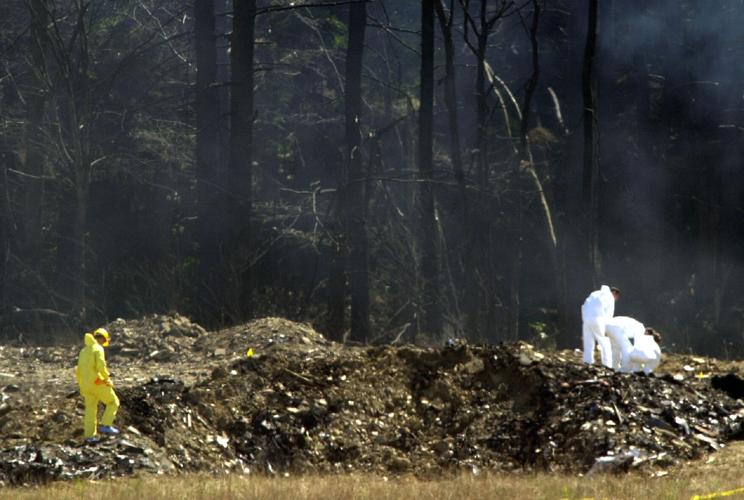
Smoke rises behind investigators as they comb the crater left by the crash of United Airlines flight 93 on Sept. 12, 2001, near Shanksville, Pennsylvania. Flight 93 is one of four planes hijacked as part of a deadly and destructive terrorist plot against the U.S.
"Around 9/11, a significant chunk of the public thought it was an inside job, who believed that the Bush administration either knew in advance or planned it as a pretext for Iraq," Matthew Baum, a professor at Harvard's Kennedy School whose studies include fake news and misinformation, said in an interview. "All the conspiratorial thinking that we have now been inundated with in the last decade in some ways traces back to that era."
The fact that weapons of mass destruction were never found in Iraq, the purported justification for the U.S. invasion, stoked the doubts.
Those who now follow QAnon or believe debunked conspiracies about the Sandy Hook school shooting form what scholars call a "through line" with the 9/11 doubters. These days, conspiracy theories range from the state of Kentucky Sen. Mitch McConnell's health to the real story behind sexual predator Jeffrey Epstein.
While the number of people who believe in a conspiratorial world hasn't increased, there has been an impact on those who are no longer quite sure whether they can believe what experts and officials are saying. "A COVID false story, or an election false story − how many are willing to entertain that it might be true?" Baum asked. "Not hard-core conspiratorial people, (but) people who aren't confident enough to say, 'definitely not.'"
That nagging uncertainty creates an opening that can be exploited. For instance, more than 6 in 10 Republicans agree with Trump's discredited complaint that the 2020 election was stolen from him.
Video warriors: It's not (just) a game
In the summer of 2001, the hottest gaming titles were videos like Pokémon Crystal (about fictional monsters) and Tony Hawk's Pro Skater 3 (about skateboarding).
But in the wake of the attacks that September, a new generation of video games began to reflect the headlines. Terrorism and counterterrorism, intelligence ops and special forces, attacks on cities and public spaces moved to the center of gaming culture.

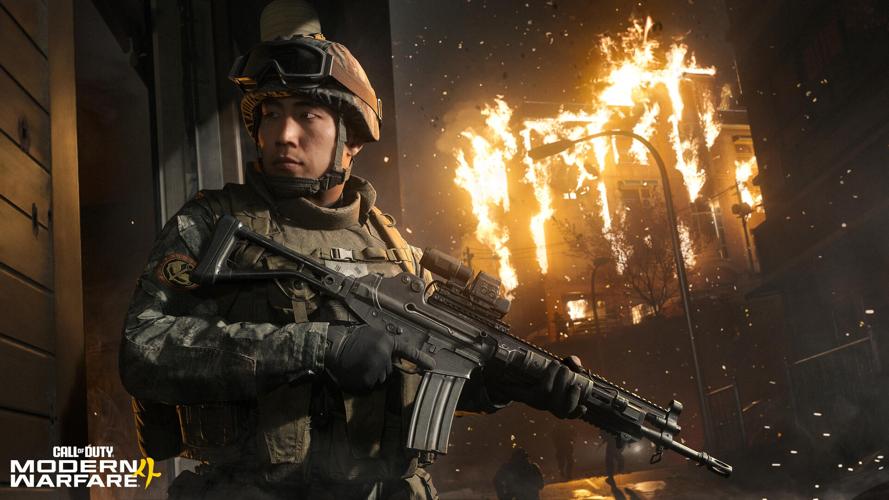
"Call of Duty: Modern Warfare 4" is set amid a clash between North and South Korea.
The blockbuster Call of Duty franchise, first released in 2003, is now the best-selling first-person-shooter series ever. Decades later, scholars say the legacy of Sept. 11 continues to fuel the persistent demand for war-themed games.
"Post-9/11 shooters weaponized the shared sense of national trauma and powerlessness into profitable toys," said Matthew Payne, a professor at Notre Dame and author of "Playing War: Military Video Games After 9/11." Video games became one way those in the generation growing up in the shadow of Sept. 11 experienced and interpreted the attacks, experts say.
"These games clearly have political and ideological points of view," Payne said. "They typically represent U.S. military engagements and weapons of war in a positive light. The games present overly simplified worlds devoid of civilians, children, and animals, and there are no lasting consequences for players’ decisions. Enemies simply disappear from the battlefield following a level, and the player’s soldier never suffers from any mental or physical injuries."
Now the Pentagon and law enforcement agencies − and the White House − have mimicked video games in appeals targeting young people for recruitment.
In March, the White House posted a video on social media that mixed footage from Call of Duty with combat footage from U.S. strikes on Iran, set to a driving instrumental version of Childish Gambino's song "Bonfire." Another White House video, titled "UNDEFEATED," intercut footage of a Nintendo Wii game with real military attacks. The Department of Homeland Security and ICE, the immigration and customs agency, have borrowed from video games in their recruitment posters and social-media campaigns.
Veterans and religious leaders say the administration is trivializing warfare and its costs. "War is not a f------ video game," Illinois Sen. Tammy Duckworth, who lost both legs as a helicopter pilot in the Iraq War, protested in a social media post. Critics note that video games typically depict a world of moral clarity and clear-cut victories.
Though real life, and 9/11, have proved to be more complicated than that.
9/11 attacks: A look back after 25 years

The World Trade Center south tower burst into flames after being struck by hijacked United Airlines Flight 175 as the north tower burns following an earlier attack by a hijacked airliner on Sept. 11, 2001, in New York City.
The Pentagon is seen in the aftermath of the Sept. 11, 2001, terror attacks. More than 200 people died there, including 64 people on the hijacked plane that crashed into the building.
Smoke rises behind investigators as they comb the crater left by the crash of United Airlines flight 93 on Sept. 12, 2001, near Shanksville, Pennsylvania. Flight 93 is one of four planes hijacked as part of a deadly and destructive terrorist plot against the U.S.

A September 14, 2001 file photo shows U.S. President George W. Bush talks to retired firefighter Bob Beckwith (R) from Ladder 117 at the scene of the World Trade Center disaster in New York. Bush, who was in office at the time of the Sept. 11 attacks and famously said he wanted Osama bin Laden dead or alive, said on Sunday the death of the al Qaeda leader was a "momentous achievement." "The fight against terror goes on, but tonight America has sent an unmistakable message: No matter how long it takes, justice will be done," Bush said in a statement. REUTERS/Win McNamee/Files (UNITED STATES - Tags: DISASTER CRIME LAW POLITICS IMAGES OF THE DAY)
Sept. 21, 2001 - New York, NY, United States of America - Urban Search and Rescue teams search for survivors amongst the wreckage of the World Trade Center following a massive terror attack which destroyed the twin towers killing 2,606 people September 21, 2001 in New York, NY. (Credit Image: © Andrea Booher/Planet Pix via ZUMA Wire)

Melvin Brenzy of Ronco, Pennsylvania (L) and Betty Kotila of Hanover Park, Illinois (R) examine wooden angels at the Flight 93 Temporary Memorial near Shanksville, Pennsylvania on September 10, 2003. The angels memorialize the forty people killed when United Airlines Flight 93 crashed in Shanksville two years ago. The victims will be remembered in ceremonies on September 11 marking the two-year anniversary of the attacks on New York, Washington DC and Pennsylvania. REUTERS/Jason Cohn JC
Al Bucca, the brother of FDNY Fire Marshal Ron Bucca killed in the Sept. 11 attacks on the World Trade Center, is dedicated to remembering all who died in the attacks.