What happened to Amelia Earhart?
That question eluded countless researchers, biographers and devoted enthusiasts for almost 90 years.
Researchers scanned swaths of the ocean floor, traversed remote islands and scoured satellite images in efforts to locate the plane that Earhart piloted as she sought to become the first person to fly around the world along the equator.
Now, an expedition that some believe represents the best chance at solving the mystery is set to take place this fall.
“I am feeling very confident about this,” lead archaeologist Richard Pettigrew said. "I'm pumped."
In October, a 16-person team of researchers will head to Nikumaroro, a remote Pacific island where a popular theory suggests Earhart and her navigator, Fred Noonan, landed in 1937.
People are also reading…
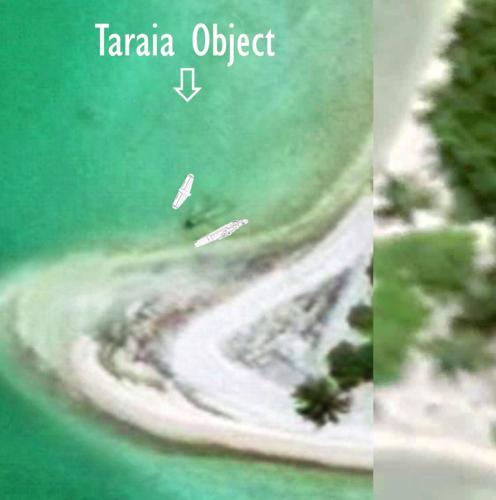
The expedition centers around the “Taraia object,” an anomaly spotted in the island’s lagoon. The mission, a joint effort between the Purdue Research Foundation and the Archaeological Legacy Institute, aims to determine if the object is Earhart’s long-lost plane.

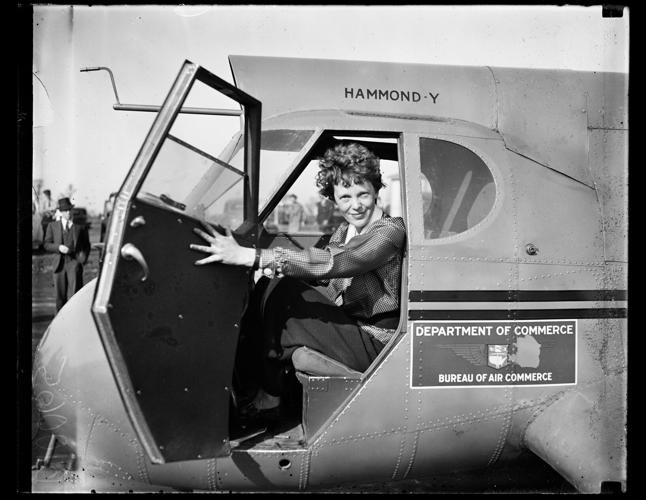
Amelia Earhart sits inside an airplane in 1936.
Unsolved disappearance
Earhart and Noonan disappeared July 2, 1937, as they flew from Lae, Papua New Guinea, toward Howland Island, where the U.S. Coast Guard cutter Itasca waited with refueling supplies. The pair were near the end of their round-the-world journey that began May 21, 1937, in Oakland, Calif.
Coast Guard authorities received voice messages from Earhart, who warned that she was almost out of fuel. Neither Earhart nor Noonan knew Morse code, so there was no two-way contact, according to the Smithsonian Institute’s analysis of government records.
After their disappearance, the U.S. government conducted its largest ever search for a lost aircraft. After two weeks, the search ended with no trace of Earhart, Noonan or their plane. On Jan. 5, 1939, they were declared legally dead.
Since then, millions of dollars were poured into research expeditions seeking answers.
In 2024, an ocean exploration company conducted a deep-sea search within 100 miles of Howland Island, after spotting what was believed to be the wreckage of the Electra 10E. It turned out to be a rock formation.

October’s expedition centers around the “Taraia object,” an anomaly spotted in Nikumaroro’s lagoon.
Hypotheses unproven
Earhart's disappearance sparked a wide range of theories.
Some posit that the flight was part of a secret spy mission, that Earhart assumed another identity or that she and Noonan were captured by the Japanese. The most widely supported explanation is that Earhart and Noonan ran out of fuel and crashed into the Pacific Ocean near Howland Island.
"I do believe that they were close to Howland Island based on the records," said Dorothy Cochrane, a retired general aviation curator at the Smithsonian National Air and Space Museum and a leading expert on Amelia Earhart.
A hypothesis that Earhart and Noonan landed on Nikumaroro and died there gained steam in recent years.
The main piece of evidence is satellite imagery of the item in the island’s lagoon. Pettigrew said the object came into view in April 2015 and resembles an anomaly seen in photographs taken in the months and years after Earhart's disappearance.
Other supporting evidence includes radio bearings that converge on Nikumaroro, an analysis of human bones discovered on the island that are similar to Earhart's bone lengths and artifacts — including a woman's shoe, a freckle cream jar and a medicine vial — that date to the 1930s, according to the Purdue Research Foundation.

Steve Schultz, Purdue University senior vice president and general counsel, and Richard Pettigrew, archeologist and executive director of the Archeological Legacy Institute, are part of an expedition seeking to locate Amelia Earhart's long-lost plane.
Going on location
In October, researchers are set to travel by ship to Nikumaroro. Using a hydraulic dredge, a crew will gently remove sediment to determine if the object in the lagoon is the Electra 10E.
If it is the aircraft, the team will return next year for a “full-scale excavation,” Pettigrew said. Crews eventually would transport the wreckage back to the United States.
Steve Schultz, senior vice president of Purdue University, said the institution is in discussions with the government of Kiribati, the island nation that controls Nikumaroro, over a potential agreement that would entrust Purdue with the wreckage. Earhart, once a visiting adviser and counselor at Purdue, intended to give the plane to the university after her historic flight so it could be used for scientific research in aeronautics, according to Purdue’s Research Foundation.
“That would be our vision,” Schultz said, “to fulfill Amelia’s wishes and bring it back to Purdue on permanent display for the world to see.”
Cochrane and other researchers remain skeptical.
"It would be amazing if they do find something," said Rachel Hartigan, who authored a book about Earhart and twice traveled to Nikumaroro as a journalist covering expeditions. "But there's just been a lot of promising things that haven't come through."