For years, Dave Poniatowski had no trouble managing his household budget. Then came two years without steady full-time work amid soaring living costs and mounting debt.
Suddenly, the 54-year-old father of three from Bailey, Colorado, found himself on the brink of a financial crisis. When a neighbor suggested he visit a food pantry run by his church, Poniatowski resisted.
"I didn't really consider myself to be somebody who would need a food bank," said Poniatowski, who even launched a high-country wildfire mitigation business to keep creditors at bay.

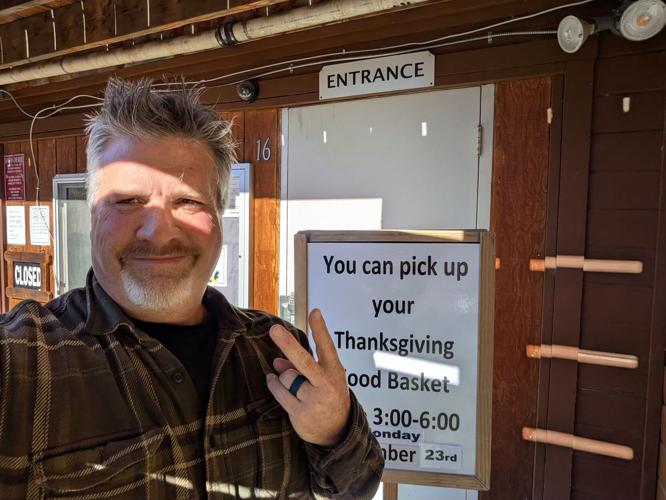
Dave Poniatowski
His reluctant first visit became a weekly routine as his family recovers financially.
Years of compounding price hikes are taking a heavy toll on paychecks and unemployment checks, driving many who never expected to need help to food pantries.
People are also reading…
According to the Capital Area Food Bank’s annual Hunger Report, 1 in 4 middle-income families experienced food insecurity over the past year, marking the largest increase in need among such households.
Feeding America’s latest Map the Meal Gap report underscores the strain. Food-insecure Americans now report needing an extra $23.16 per person every week just to cover basic nutrition. In the latest Feeding America food bank survey, about half of responding food banks reported an average 15% year-over-year increase in people served.
Most food bank visitors remain deeply low-income, including 95% of the clients at the pantry Poniatowski frequents, according to executive director John Obrecht.
Yet pantries increasingly serve households above the poverty line who saw a financial setback. By stocking up on essentials like eggs, milk, bread and meat at the LifeBridge Food Pantry on Saturdays, Poniatowski says he cut his monthly grocery bill from $650 to $272, which helped stabilize his family's finances after he secured a new position in software sales.
“It’s been a godsend," he said. "Our situation has changed for the better but we're still digging ourselves out of a big debt hole.”

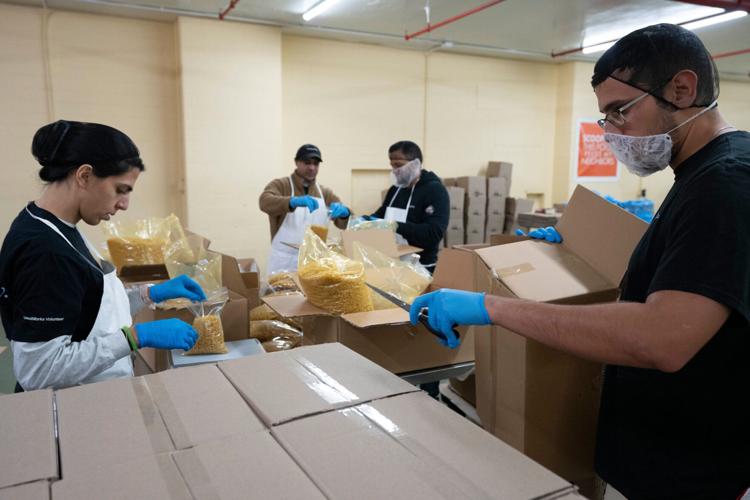
Pasta is sorted for holiday boxes Nov. 10 at The Community Food Bank of New Jersey in Hillside.
Stopgap to survival
According to the U.S. Department of Agriculture, U.S. food insecurity jumped from 10.2% to 13.5% between 2021 and 2023 — the largest increase since the Great Recession. While it rose twice as fast for households below the poverty line, the overall surge was driven by Americans above it because they make up most of the population.
Though COVID-19 pandemic relief measures expired, grocery prices remain near record highs. Low-income households are hardest hit, but the Urban Institute’s 2025 Well-Being and Basic Needs Survey shows rising distress among moderate-income groups.
"There's always been a not insignificant part of the population who turns to charitable food as a coping strategy when their budgets just don't cover their basic needs," said Elaine Waxman, senior fellow at the Urban Institute. "What we have noticed is that charitable food use for the last few years is persistently elevated and certainly higher than pre-COVID."
"You can't really not pay your full rent for very long if you want to keep your place. Your car payment is not going to get adjusted,” she said. “So food is one of those places that people cut back on."

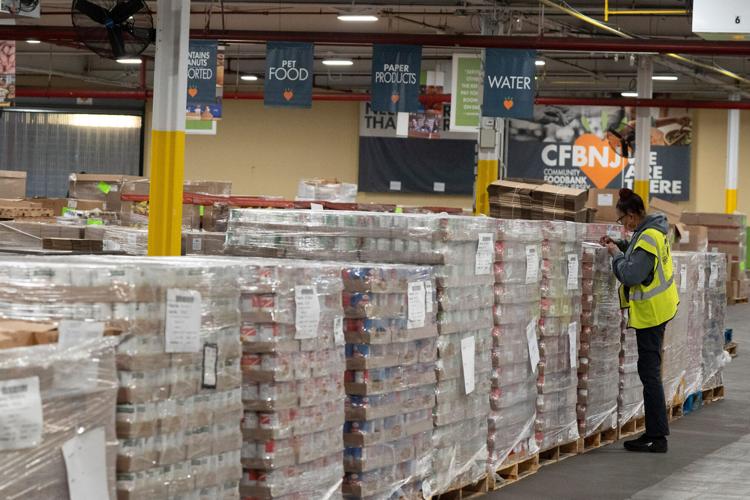
Supplies are stacked Nov. 10 at the Community Food Bank of New Jersey in Hillside.
Families frequently charge groceries to credit cards or "buy now, pay later" services. Many quickly fall behind on minimum payments, causing long-term debt. When credit lines max out, families often borrow from friends and family or sell possessions before they turn to community resources, Waxman said.
Even then, some are hesitant to seek help. Stigma and public misconceptions breed shame while newly struggling households often don't know where to turn. Work schedules that conflict with pantry hours, long travel distances in rural areas and dietary restrictions add more obstacles.
Overcoming stigma

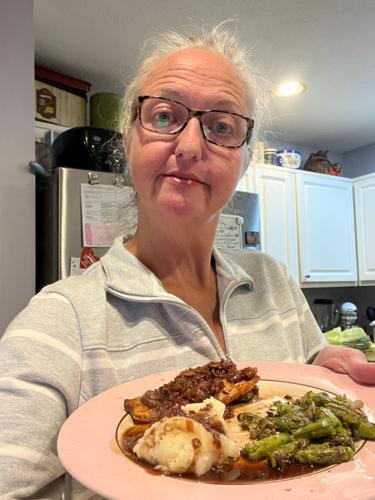
Kristin Brandenburg
Between 2022 and 2023, Kristin Brandenburg faced unimaginable loss: her grandparents, her only sibling and her mother all passed away in rapid succession.
"I had lost almost everyone," said Brandenburg, 44, whose father, a Vietnam War veteran, died when she was 19.
In 2025, she was laid off from her six-figure job as a tech client success manager. Months of job hunting yielded zero offers — not even for entry-level, minimum-wage positions paying $11 an hour. As her savings and unemployment benefits ran dry, her cupboards went bare.
Having organized community food drives in Denver during the pandemic, she never imagined she would need help herself. "That's not for me," she recalled telling a friend. "That's for other people."
"I need you to look in the mirror," her friend replied, "because you are the person who needs it."

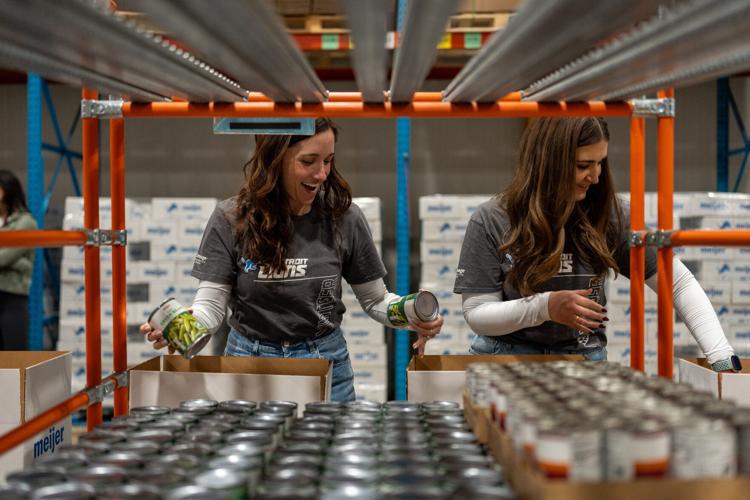
Nicole Dornseifer, 34, left, and Isa Bruno, 29, pack meal kits Nov. 10 during a Detroit Lions community service event at Gleaners Community Food Bank in Taylor, Mich.
Brandenburg put her tech background to work, building a custom database to track regional pantries, filtering by operating hours, eligibility rules and locations.
"I may be super poor but I'm really, really smart and I'm really, really resourceful," said Brandenburg, who collects food weekly.
That resourcefulness extended to her kitchen. Using skills taught by her mother, she turned unconventional canned goods into gourmet meals such as cranberry-Dijon chicken drumsticks, green peppers stuffed with leftovers and what she calls "fridge cleanout went sideways soup."
After nearly two years out of work, she recently got a new job on a factory floor refurbishing heavy construction equipment.
She’s still deeply grateful for the community safety net. "I literally wouldn't have been able to eat without them (food banks)," she said.

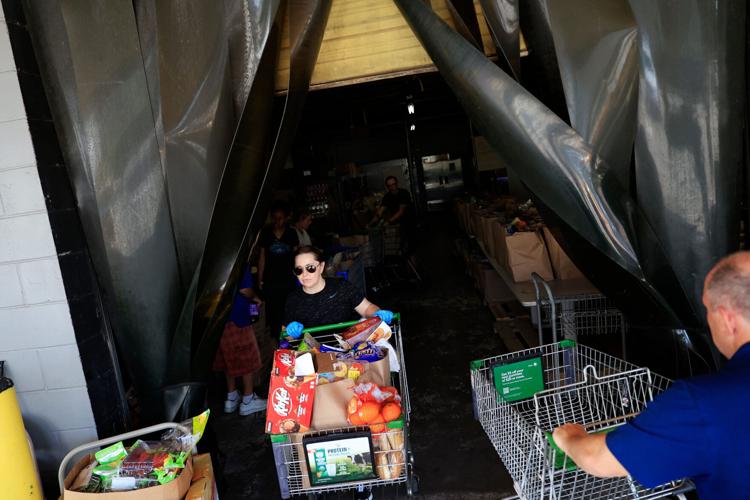
Volunteer Jenny Hoenshel helps cart food to waiting cars Aug. 14 at Catholic Charities food pantry annex in Jacksonville, Fla.
Benefits cut
Second Harvest Heartland is the second-largest food bank in the country by pounds of food delivered. Amid federal cuts to the Supplemental Nutrition Assistance Program and the rising cost of living, its chief external relations officer Zach Rodvold says food pantries in Minnesota are on pace for a fifth straight record-breaking year.
"Many of the people coming to food shelves for the first time do not qualify for SNAP, yet their income is not sufficient to cover their household's basic needs,” Rodvold said. “When they're able to save money on groceries, they're putting that savings into paying their rent or mortgage or paying for health-related expenses or other critical needs."
He said he doesn't have data on how many are first-time visitors, but “people are coming to food shelves who never expected to be there.”
Craig Gundersen, a Baylor University professor who studies food insecurity, says about 13% of households in the U.S. experience food insecurity annually but only about 7% visit pantries, and those are much more likely to be low-income in comparison to the broader food-insecure population.
When food prices surge, "it is mainly low-income families visiting more often or even visiting for the first time. In general, we don't see a large increase in higher-income families going to food pantries," Gundersen said.
Angela Rachidi, senior fellow at the American Enterprise Institute, says higher-income households typically exhaust other buffers first.