KRAMATORSK, Ukraine — Serhii Krynitskyi watched the life seep out of the only man who shared his living hell.
He and his comrade survived almost a year together in a foxhole on the front lines. They killed Russian soldiers and scavenged for food among the dead. They argued and laughed, amid the horror.
Now, Krynitskyi was alone.
The Ukrainian soldier aimed his phone camera at his companion's lifeless body, wedged in the dugout.
"In the morning, you're joking together," the 42-year-old told the camera numbly, his face smudged and worn. "And by the evening, it's the gates of heaven calling."
It was day 326.

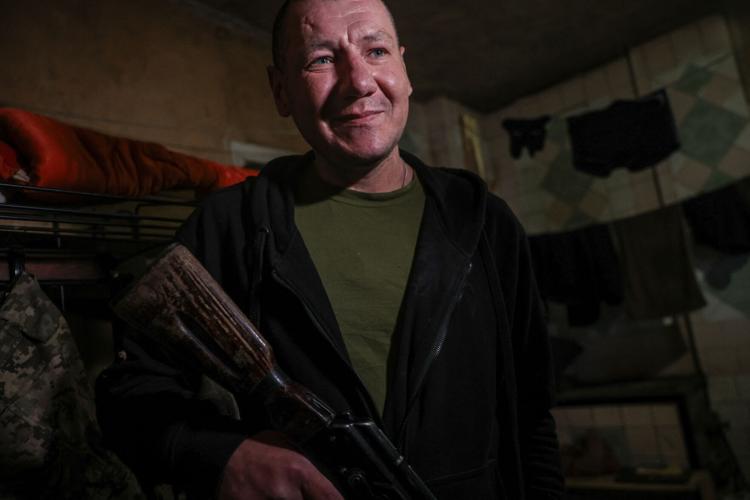
Serhii Krynitskyi, 42, a service member of the 24th Separate Mechanized Brigade of the Ukrainian Armed Forces who spent 346 days at an isolated front-line position in Chasiv Yar, carries an AK assault rifle May 27, his first day back on duty after recovery, in the front-line city of Kramatorsk in Ukraine’s Donetsk region.
The men's isolated position is a consequence of the way drone warfare revolutionized the battlefield. The technology forced both sides to abandon the age-old practice of massing troops, artillery and armored vehicles in a relatively narrow corridor along the long front line. Such visible targets are easy prey for the cheap unmanned aerial vehicles, with which both sides flooded the skies.
People are also reading…
Both armies now have tiny teams, sometimes of just two or three soldiers, scattered in small dugouts across a battlefield about 20 miles wide, known as the "kill zone" because of the constant drone threat. These groups seek to evade detection and infiltrate gaps in enemy defenses, often taking huge risks for minimal territorial gains. They typically are stuck for months in their positions because it's so dangerous to rotate troops in and out.
Krynitskyi was deployed near Chasiv Yar in eastern Ukraine from April 20, 2025, to March 31, 2026, he and his brigade said. He filmed video diaries with a cellphone, powered at times by batteries collected from downed Russian drones. He documented, in expletive-laden recordings, the inhumanities and absurdities of life in a cramped redoubt, about 10 by 13 feet.

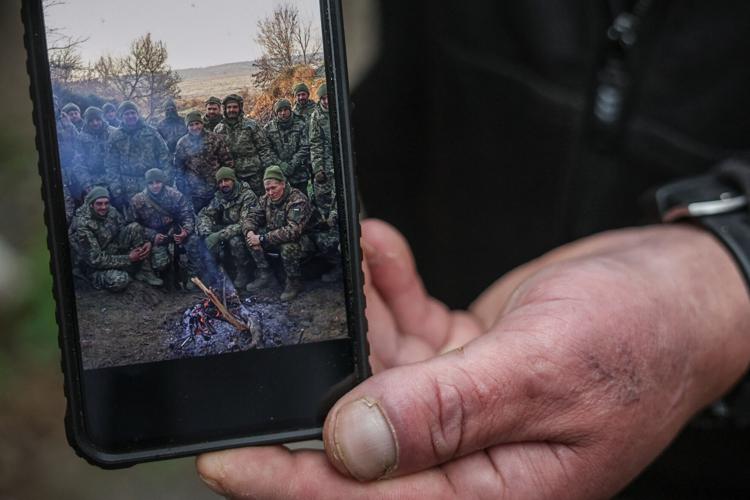
Serhii Krynitskyi shows a November 2024 photo of him with fellow soldiers at the start of his service, on May 27 in Kramatorsk, Donetsk region, Ukraine.
Reuters reviewed 22 videos, provided by his unit to bring Krynitskyi's story to a wider audience, and interviewed the soldier after his deployment to piece together this account of his 346-day stint at the front, almost all of it spent in a foxhole, which earned him the country's highest military award.
Every couple of days, Russian soldiers would advance on foot in small groups of typically two or three. They sometimes came as close as about 65 feet before the Ukrainians fired at them.
He said he killed 23 enemies at close range during his deployment.
He most clearly recalled one of his first: a soldier injured by a grenade. The Russian faked surrender before aiming at him with a rifle.
"Well, I reacted," Krynitskyi said. "He stopped aiming at me."
Krynitskyi's unit, the 24th Mechanised Brigade, confirmed he reported 23 enemy kills. Reuters couldn't verify all aspects of the infantryman's account.
Russia's defense ministry didn't respond to a request for comment.

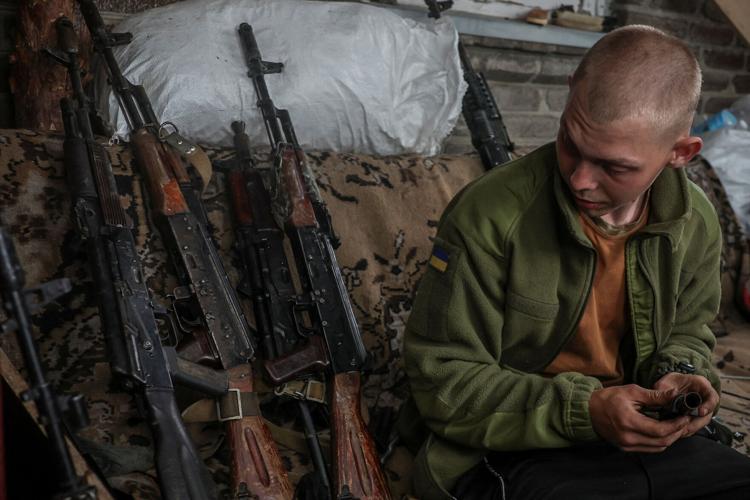
A Ukrainian service member of the 24th Separate Mechanized Brigade of the Ukrainian Armed Forces, a fellow soldier of Serhii Krynitskyi, cleans AK assault rifles May 27 in Kramatorsk, Donetsk region, Ukraine.
Collecting guns, smokes
Krynitskyi worked in farming and construction until an injury left him in a monthlong coma. After that, he scratched out a living as a rabbit breeder.
In late 2024, he was rounded up by draft officers in his village of Bilohir'ya in western Ukraine. They put him on a bus, brought him to the city of Rivne and trained him quickly.
He was assigned to the 24th Mechanised Brigade and sent to the front in the east, where Russia's invading army, significantly outnumbering Ukraine's, attacked the so-called "fortress belt" of strategic cities in the Donetsk region.
He and two other privates dug in near Chasiv Yar in April 2025. The men knew the deeper they dug, the better their chance of survival. Krynitskyi joked he didn't know whether to call the hole a shelter or a grave.
When their refuge was hit by drones, they had to excavate the area anew. One comrade was killed early in the deployment by an attack that left Krynitskyi concussed and temporarily without hearing.
Krynitskyi and his remaining comrade also fought the elements, plugging holes to block frigid drafts and capping lookout shifts at two hours. Any longer was unbearable.

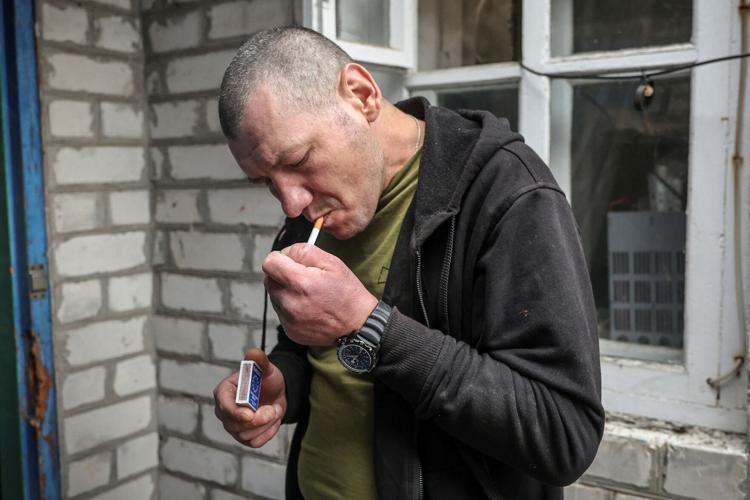
Serhii Krynitskyi smokes a cigarette May 27 in Kramatorsk, Donetsk region, Ukraine.
Sometimes, three or four days passed before a re-supply drone could make it through enemy fire. To survive, Krynitskyi picked food and sundries from fallen Russians.
The infantryman, who has two teenage children, started filming the diaries in August to show people when he got back home what he went through and to remind himself. Reuters verified the date of all the videos using the original file metadata.
In one video, in February, he surveyed the cigarettes he'd gathered from dead enemy troops: Camels, Winstons, Chesterfields and others. He obsessed over the packets, "like some nerd collects stamps."
In another video days later, he showcased mud-caked "trophy" rifles he'd seized.
"This is my small arsenal," he said, proudly counting off the 13 firearms, arranged in a row.

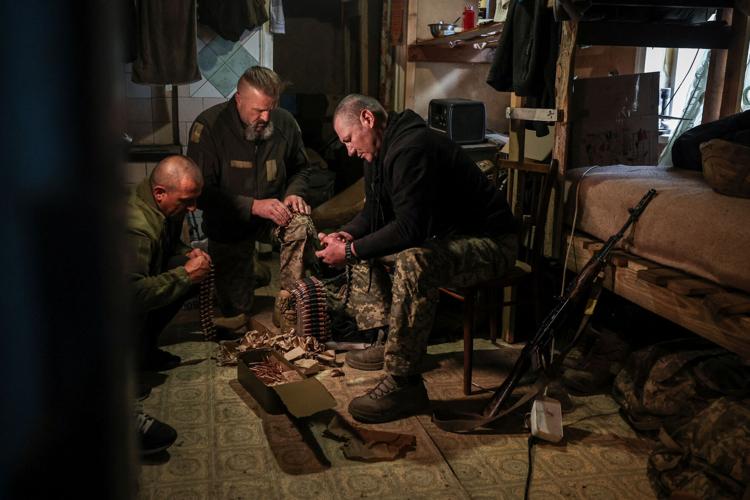
Serhii Krynitskyi helps his fellow soldiers load machine gun cartridges May 27 in Kramatorsk, Donetsk region, Ukraine.
Desperate attempt to save his comrade
Russia launched the full-scale invasion of its neighbor in 2022. While neither side discloses death tolls, the Center for Strategic & International Studies estimates Russian battlefield casualties at 1.4 million, including killed, wounded and missing, and Ukrainian forces suffered between 525,000 and 625,000 casualties.
Krynitskyi dug his foxhole on one of the deadliest stretches of the kill zone. On March 11, he heard an explosion outside.
He rushed out and found his comrade on the ground, hit in the leg by a drone attack. Krynitskyi dragged him back into the hole and frantically tore through his thick cotton trousers to find the wound. He applied a tourniquet.
It was too late.
Volodymyr Zelensky has bowed to pressure from the streets. The former head of the Ukrainian armed forces Oleksandr Syrsky has been replaced by the popular Mykhailo Drapaty. Who is he?
Upon radioing command, Krynitskyi was ordered to abandon the position as the Russians encroached. That night he crawled out of the dugout for the last time to join a few fellow infantrymen holed up nearby for almost three more weeks. Then came a perilous march to safety more than 15 miles away made more difficult by his weakened state after months underground.
He left behind the body of his friend — a man he came to know deeply through countless conversations between enemy assaults.
In May, President Volodymyr Zelenskyy presented Krynitskyi with the Hero of Ukraine medal for personal bravery.
Ukraine's army is full of men like him, who endured the unimaginable, said Andriy Derun, a military manager at leading Ukrainian charity Come Back Alive, which provides equipment and other support for the armed forces.

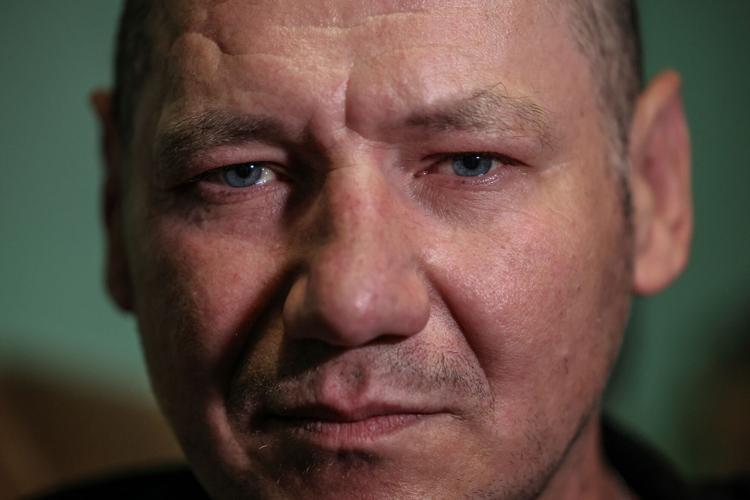
Serhii Krynitskyi poses for a photo May 27, his first day back on duty after recovery, in Kramatorsk, Donetsk region, Ukraine.
"It can completely destroy a person," said Derun, who frequently speaks with front-line troops.
Back in Kramatorsk, the eastern city where he returned after his time at the front, Krynitskyi described the mental toll exacted by the marathon stints on the front: "Many guys have gone out of their mind."
The scars inside show on the surface. He fights back tears, his hands shake.
Krynitskyi visited schools near his home to speak to students about his experience, and he began to understand better how others may benefit from his sacrifices.
"I realized there, in those schools, that it wasn't in vain that I defended our land and these children,” he said, “so they could study, see the clear sky."