The Arizona Department of Education has found the Arizona State Schools for the Deaf and the Blind violated federal special education law in displacing blind, visually impaired and residential program students during its move to Oro Valley.
The department has appointed a special monitor to oversee ASDB’s compliance and has “ordered the school to consider the full range of placement options for the affected students by August 28.”
Under the Individuals with Disabilities Education Act, a student’s educational placement must be decided by a group, including the student’s parent, which considers options such as general education or resource classes, specialized schools or in some cases more supportive or unique environments.
The Department of Education's investigation found ASDB violated that law by predetermining student placements rather than making individualized decisions grounded in each child’s needs.
People are also reading…
Early this year, ASDB announced plans to relocate its deaf and hard-of-hearing programs to a new campus in Oro Valley, and to close its longtime residential campus on West Speedway.
Under the transition, blind and visually impaired students were to be integrated into local public school districts, “the same districts that referred them to ASDB because they could not meet the students’ educational needs,” the University of Arizona James E. Rogers College of Law’s Education Advocacy Clinic said Wednesday in announcing the state's finding.
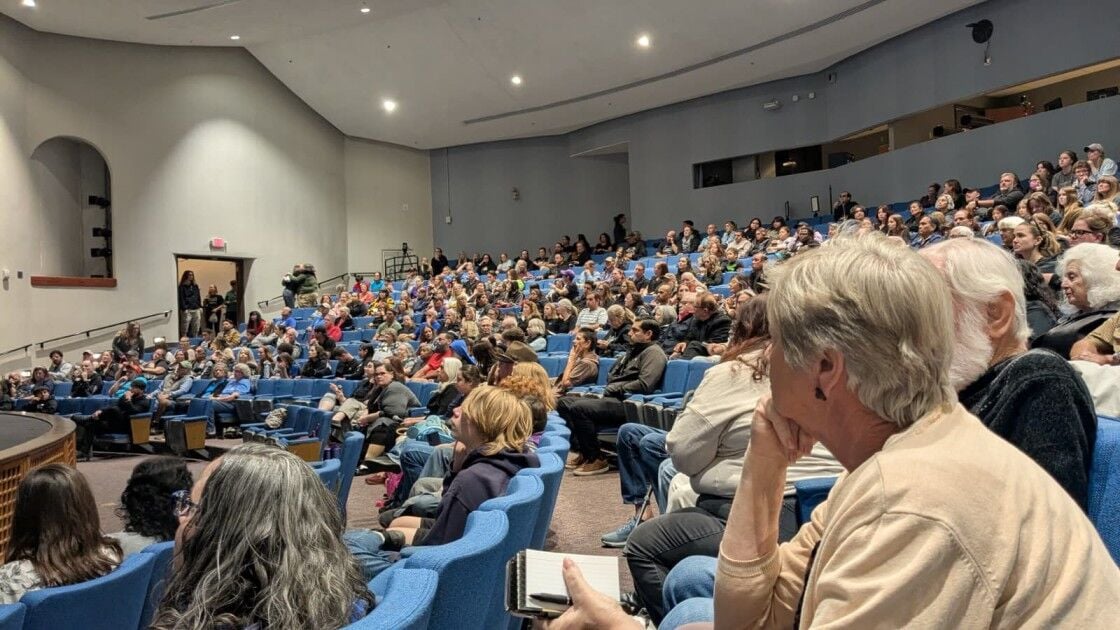
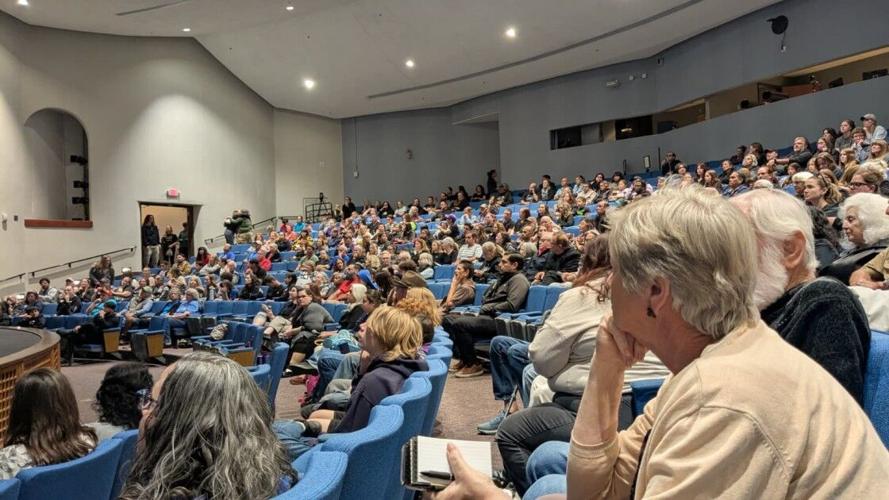
An audience of about 300 parents, students, staff and community members attended an Arizona State Schools for the Deaf and the Blind community meeting Jan. 19 about the campus' move and changes to education delivery systems starting this fall.
“The population of students that this affects is a wonderful and unique population of kids, and many of them have a very high level of need,” Diana Newmark, the director of the Education Advocacy Clinic, told the Arizona Daily Star on Wednesday.
“In addition to having blindness or vision impairment, they may also have a number of other disabilities, whether autism or intellectual disabilities or orthopedic impairments, but they’re often kids who have a quite complex profile and really need specialized support and care," she said.
The Education Advocacy Clinic with UA’s law college focuses on areas of special education, provides no-cost legal services to families of students in Tucson-area schools, and also works on school discipline and other related issues.
“We heard from a number of families of affected students at ASDB because the parents were really worried and they didn’t know what the plan was for their children,” said Newmark.
“Students attend the ASDB campus programs only after an education team has determined that their home school district doesn’t have the appropriate specialized support that the child really needs,” she said. “Students usually come to ASDB only after either having a negative experience in their home school district or difficulty getting the services that they need, and there’s been a meeting to determine that they really need a specialized school like ASDB. So, this was a really big deal.”
The Education Advocacy Clinic filed a complaint in May. In its subsequent investigation, the state Education Department found that even though ASDB held individualized education program or IEP meetings with students and parents, there wasn’t a real option on the table.
“Evidence shows that the placement decisions were technically limited to local-level placement, which is basically just placement within a school district and not a specialized school,” Newmark said.
ASDB now must go through the files of all children in cases where the department found the IEP meeting decisions were predetermined, she said, and “they’re going to have to hold IEP meetings for the students to actually consider real alternatives that must be on the table.”

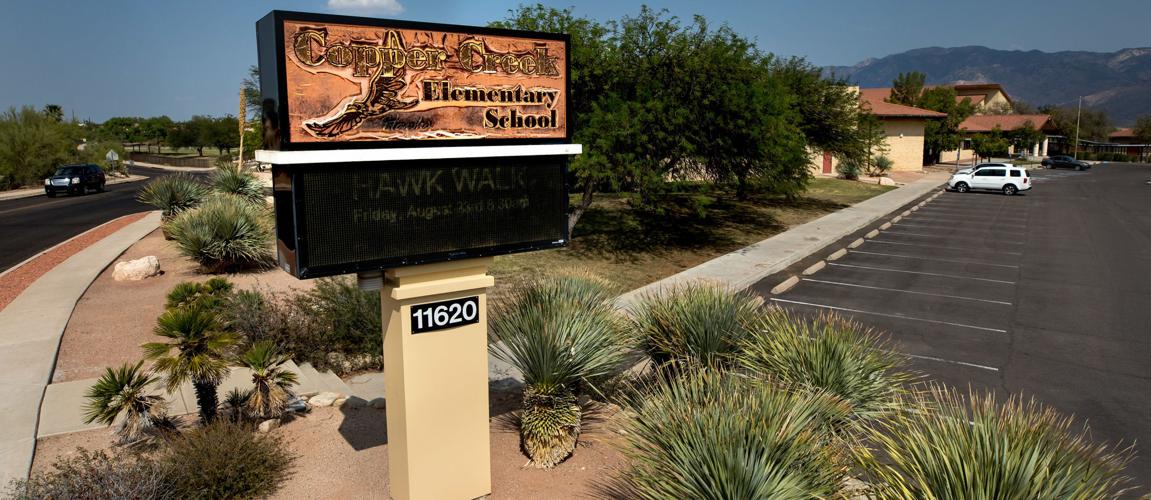
Amphitheater Public Schools' Copper Creek Elementary School is closing and the Tucson branch of the Arizona State Schools for the Deaf and the Blind will lease it and move there.
Newmark said ASDB could decide what the options are, including opening its new Copper Creek campus in Oro Valley to blind students, or placing them at the new, private Tucson School for the Blind that’s opening this fall, or other potential options.
“I don’t know whether they might want to place students at those campuses, or find a residential program, or create a residential unit for students to attend Copper Creek,” she said.
“This is a huge win for families at ASDB, and our hope is that the corrective action spurs real change to serve this population of students both now and moving forward,” Newmark said.
ASDB said in a written statement Wednesday, “We have received ADE’s report and are currently reviewing its findings with legal counsel to determine feasible next steps.”
Former ASDB parent Andrea Lopez told the Star she was happy the state was recognizing “how unfair they treated our blind students.”
“I was very disappointed and disheartened of how they handled this whole situation,” she said.
Lyza Ahumada, another former ASDB parent, said she was satisfied with the finding because of how the school failed, during its Oro Valley move, to support her visually impaired daughter, who thrived at ASDB.
She said her 18-year-old daughter improved academically and socially at ASDB, but would now have to start her senior year without her friends this school year.
“She never got good grades, so as soon as she was able to go into ASDB, she did a complete 360,” Ahumada said. “She was getting better grades, she was amongst her peers, she wasn't being bullied. She just had a positive change in her life.”

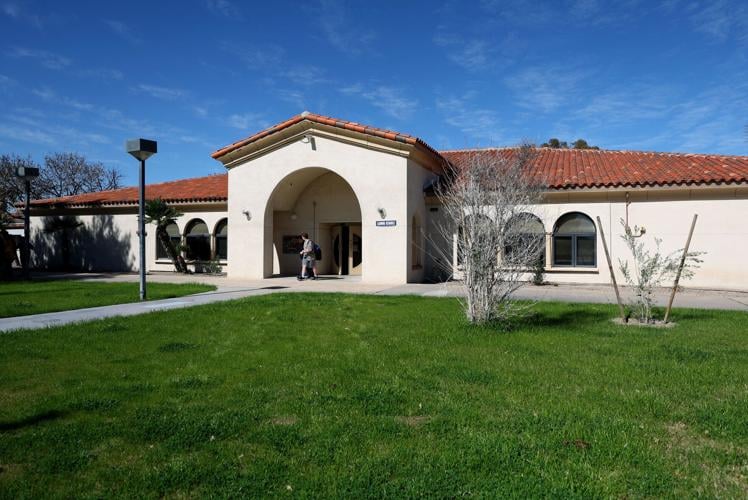
The learning resource building at the Arizona State Schools for the Deaf and the Blind, 1200 W. Speedway. The current campus will be leased or sold when the schools move to what has been Copper Creek Elementary School, officials say.
While ASDB has not publicly commented on its next course of action, Ahumada said she would be hesitant to send her daughter to the state school for the blind even if it was an option.
“A lot of the teachers that were there aren't there anymore,” she said. “I would love my daughter to be back into her school where she thrived, but in the same sense they would have to change the board … Their superintendent Annette (Reichman), she would have to be fired in order for me to have my daughter go back.”
Ahumada’s daughter, Monroe Stockton, said she felt the state’s late acknowledgment of the violation is both too little, too late and a small form of justice.
“Where was this information before, like when it just happened?” Stockton said. “It's too late now. I mean, kids have probably found out where they’re going to go now, and some people have had to move, and it's just not right.”
Derrall Peach, who will be sending his daughter to the private Tucson School for the Blind following the transition out of ASDB, said even if ASDB brought back its school for the blind, he would worry about retaliation from administration.
“It doesn’t feel safe or comfortable,” Peach said. “It definitely put a really bad taste in our mouth, and at this point, I think the Tucson School for the Blind is going to be our option.
"We don't know what that (ASDB) administration is going to be like again, and I feel like there'll be retaliation against our kids, honestly, with the way they dealt with everything. So it doesn't feel safe to go back to that.”
An ASDB spokesperson did not respond Wednesday to a request for comment on the parents' statements about administrators.
Sierra Vinson, parent to an 11-year-old, said she was grateful to see some accountability being brought to the situation.
"I am just so beyond grateful for Diana Newmark and the whole crew for being so supportive and going after this," she said. "I am so excited that they're being held accountable, and I'm hoping that it'll yield some results for those residential kids that really have nowhere else to go."