WASHINGTON — The Federal Reserve raised interest rates Wednesday and flagged further increases in borrowing costs in coming months, with new U.S. central bank chief Kevin Warsh joining a unanimous decision that effectively acknowledges the Trump administration's inability so far to control inflation.
While President Donald Trump promised to lower prices on his watch, the combined effects of his global import tariffs, an energy shock following the start of the U.S.-Israeli war with Iran and capital spending from the artificial intelligence boom kept price pressures intense enough that the Fed felt it needed to raise its benchmark overnight interest rate by a quarter of a percentage point, to the 3.75% to 4% range.

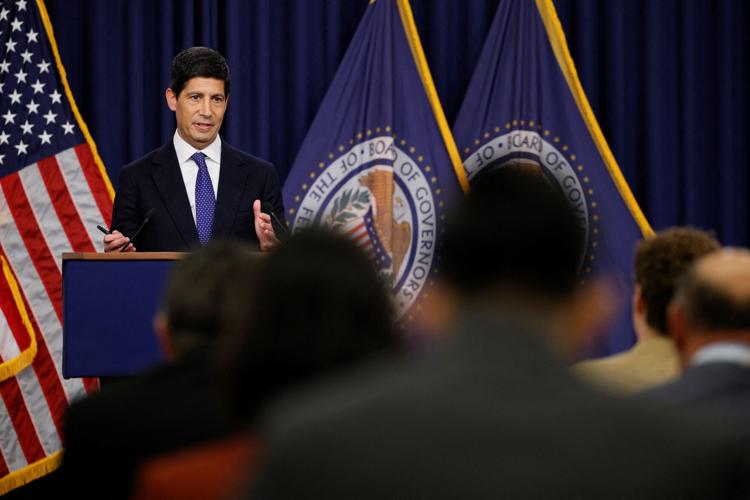
Chairman Kevin Warsh holds a news conference Wednesday at the Federal Reserve in Washington.
New policy projections showed 16 of 18 policymakers anticipate at least one more quarter-percentage-point hike by the end of this year, with only two of them expecting rates to remain stable from here. Warsh apparently again did not submit a rate projection.
People are also reading…
It's the first policy shift under the new Fed chief, who took office in late May after Trump selected him with an expectation that he would cut rates.
In a news conference following the Fed meeting, Warsh said that when it came to lifting rates, "inflation remains elevated. Today's policy action will support a timelier return to the committee's 2% goal."
He added, "I would be hard pressed to describe broad financial conditions as restrictive. This view was widely shared by the committee, so we removed a dose of accommodation."

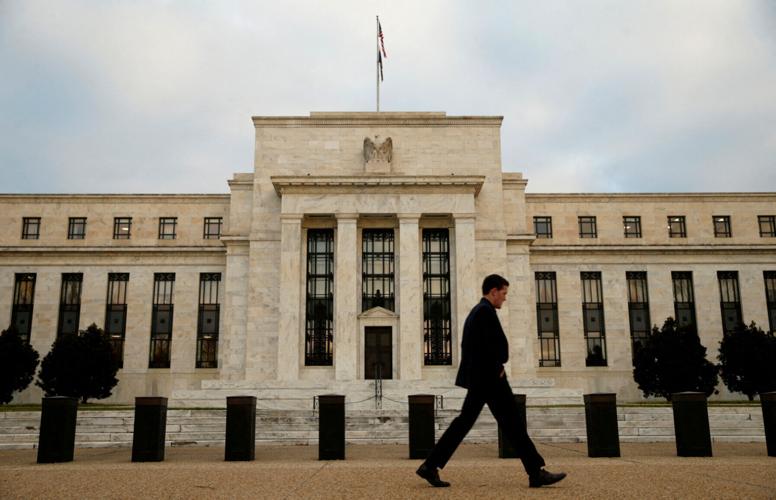
A man walks past the Federal Reserve in Washington.
The dollar rose against the euro after the Fed's announcement, while U.S. Treasury bond yields held largely steady after they already weakened in anticipation of the hike. After hitting a 19-year high above 5% on Monday, the benchmark 10-year Treasury yield traded at 4.958%, compared to 4.946% just prior to the announcement.
The 30-year bond yield dipped to 5.312% after trading at 5.327% just before the announcement. Stocks were mostly higher, with the S&P 500 index up 0.3% and the Nasdaq Composite up 0.7%.
Rising bond yields are not a function of a loss in confidence in the central bank, Warsh said in his news conference. Instead, he said, the rise in real-world borrowing costs is due to economic strength, surging capital expenditures that increased the competition for capital, and geopolitical factors.
Market bets on a rate hike at the Fed's next meeting in late October ticked higher to 56.5% from 54% prior to the hike, according to CME Group's FedWatch Tool.
"The Federal Reserve's decision today to raise interest rates by a quarter percentage point reflects its continued focus on addressing persistent inflation. While inflation has moderated from peak levels, it has remained elevated enough to prompt additional action from the Federal Open Market Committee," said Michele Raneri, head of U.S. research and consulting at TransUnion in Chicago.

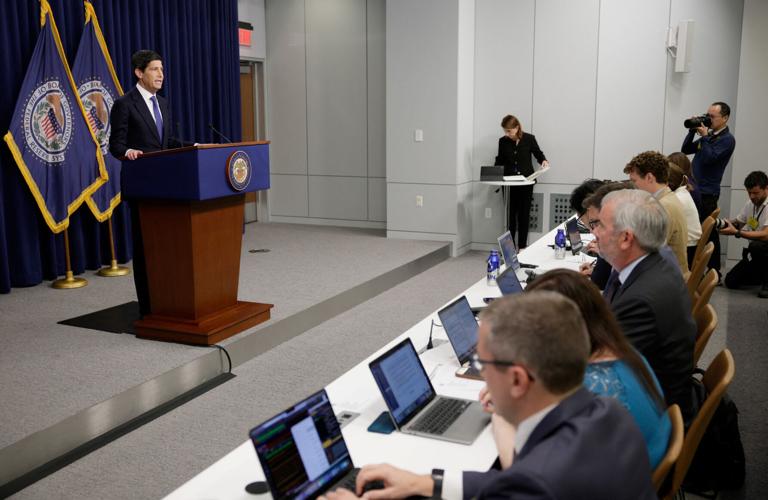
Federal Reserve Chairman Kevin Warsh holds a news conference Wednesday at the Federal Reserve in Washington after a two-day meeting of the Federal Open Market Committee.
All eyes on Warsh
The Fed's new policy statement and economic projections show a central bank opening the door on tighter monetary policy through next year, with the policy rate rising to the 4% to 4.25% range by the end of this year and ending 2027 at the same level.
"Today's policy action will support a timelier return to the Committee's 2% goal," the central bank said in its policy statement after the end of a two-day meeting.
While the statement withheld any forward guidance about coming policy decisions, as is Warsh's preference, the decision is likely to ease doubts that the Fed chief would hold off on tighter policy out of deference to Trump, a lingering question during his first months in office.

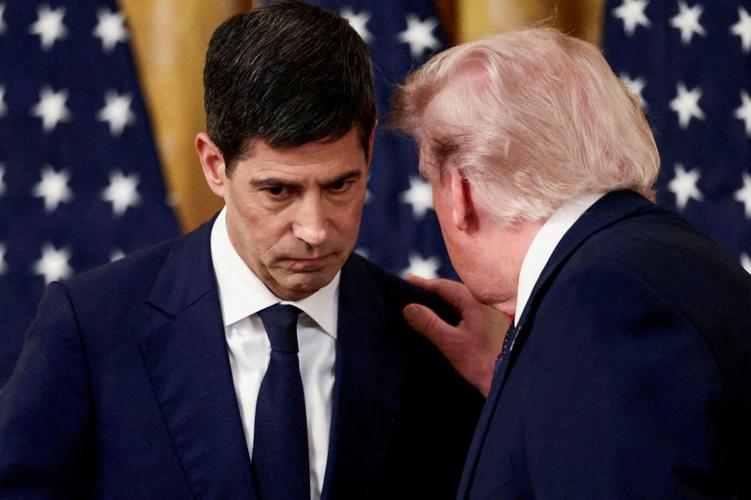
President Donald Trump speaks with new Federal Reserve Chairman Kevin Warsh on May 22, the day of his swearing in ceremony, in the East Room of the White House in Washington.
The statement dropped a previous reference attributing current elevated inflation to "supply shocks," particularly in the energy sector, a nod to concerns among policymakers, including Warsh, that price pressures were too broad for comfort.
The rate increase was announced less than two months ahead of midterm elections that will determine whether Trump's Republicans maintain control of Congress for the final two years of his presidency.
The Republicans face an uphill battle with voters angry about gasoline prices that are about a third higher than a year ago and interest rates on home mortgages that rose steadily this year. The average rate on a 30-year fixed-rate mortgage is approaching 7%.
U.S. real median household income rose 2.6% in 2025 while the poverty rate declined to 10.2%. The data arrive ahead of the Federal Reserve’s rate decision.
Policymakers' new quarterly economic projections marked up estimates of inflation, as measured by the Personal Consumption Expenditures Price Index, to 3.7% versus the 3.6% projected at the Fed's June meeting. Inflation is not projected to return to the 2% target until 2029, a year later than previously expected.
Economic growth was marked up slightly from 2.2% to 2.3%, while the unemployment rate is seen ending the year at 4.1%, versus the 4.3% projected in June.
Wednesday’s rate hike was widely expected. Warsh pledged to lower inflation back to 2% "clearly and at sufficient speed" by raising rates as needed.