

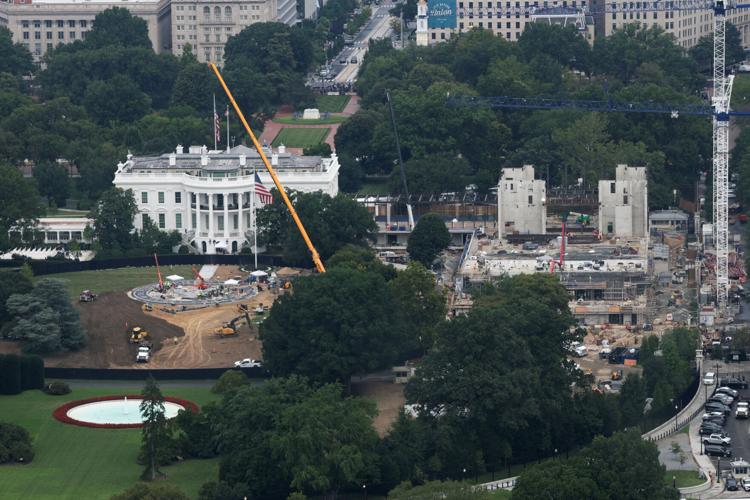
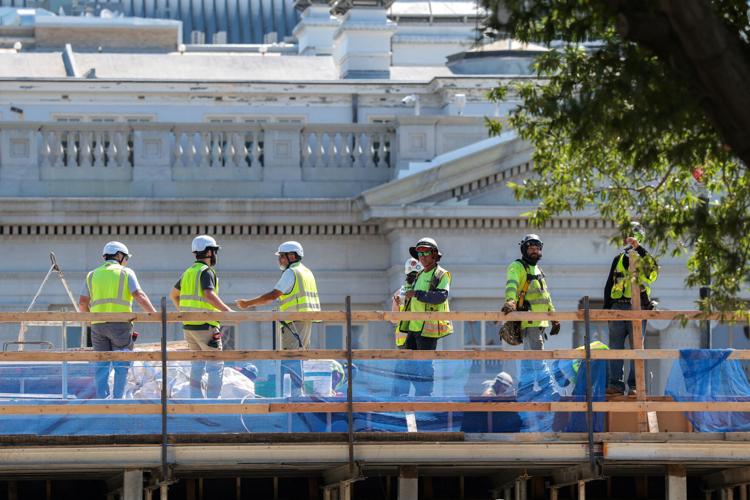
WASHINGTON — The U.S. Supreme Court on Friday allowed President Donald Trump's administration to continue construction of his White House ballroom project for now, temporarily pausing a judicial order that would halt much of the development.
The court's action, known as an administrative stay, gives the justices additional time to consider the administration's formal request to let it continue working on the $400 million ballroom while a historic preservation group’s lawsuit, which seeks to stop the project, proceeds.
In an Aug. 14 filing to the Supreme Court, Justice Department lawyers echoed Trump's contention that the project is a security necessity, citing assassination attempts against the president and other recent threats.
"This case involves an extraordinary and unlawful injunction that will halt the ongoing construction of the integrated military complex, including a totally secure ballroom space, at the East Wing of the White House, which is vitally required by national security," they wrote.
People are also reading…
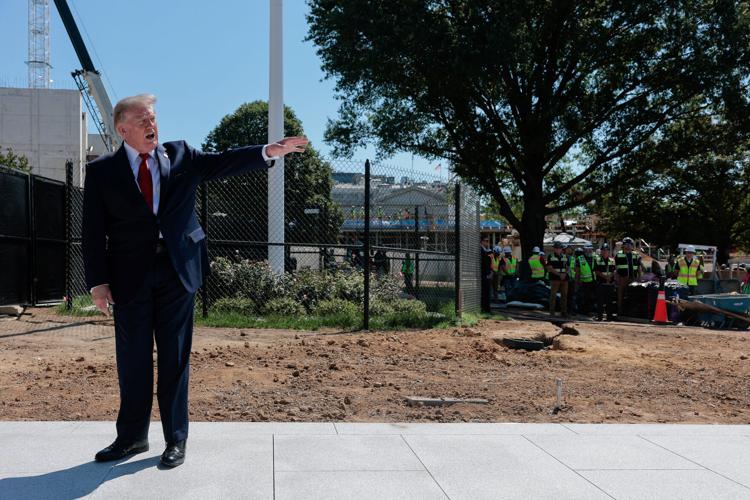
Trump welcomed the court's action on Friday.
"We are grateful for the Decision of the United States Supreme Court," Trump wrote in a social media post. "The Military/Ballroom Complex being built on the hallowed grounds of the White House, which is so vital for National Security, will be THE GREATEST OF ITS KIND!"
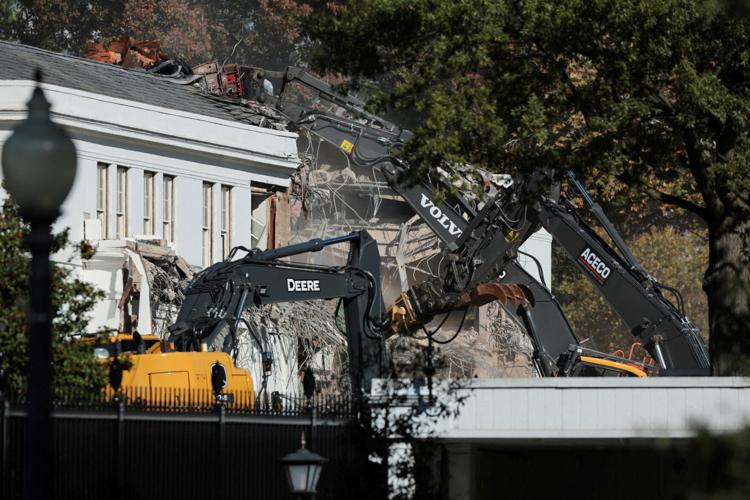
The nonprofit National Trust for Historic Preservation sued last year after the administration tore down the White House’s East Wing and began building a 90,000-square-foot ballroom without seeking specific approval from Congress. Trump said the ballroom will be "the greatest of its kind ever built."
After the Supreme Court acted Friday, a spokesperson for the National Trust for Historic Preservation said, "To be clear, this is not a final decision on the merits of the government's stay application, and we await further action."
The project combines the aboveground ballroom with an extensive underground complex. Trump said the project includes bomb shelters, medical facilities, shielding from drones and missiles and other security features that are "all tied together as one big, expensive and very complex unit."
On Aug. 7, the U.S. Court of Appeals for the District of Columbia Circuit in a 2-1 ruling upheld U.S. District Judge Richard Leon's order directing the administration to halt aboveground construction. The order was set to take effect Friday.
'A temporary tenant’
"Each President is a temporary tenant, not the owner, of the White House," and cannot fundamentally reshape it without congressional approval, the D.C. Circuit's ruling stated.
The district judge's order did not permanently bar construction of a ballroom. It blocked aboveground efforts while allowing belowground construction to continue, as well as work deemed "strictly necessary" for the safety and security of the White House.
In its ruling, the D.C. Circuit said national security arguments "are not an automatic get-out-of-law-free card."
The Justice Department said in its Aug. 14 filing that the overall East Wing project — including both the underground facilities and the aboveground ballroom — is 65% complete.
Trump says the ballroom project is a security necessity and referred to the structure as a "military center" in a social media post. The Republican president called the D.C. Circuit's decision "horrendous" and politically motivated, and said it left him, other White House officials and visitors exposed to attack.
"This unjust decision must be overturned by the Supreme Court in its entirety," Trump wrote.
The National Trust for Historic Preservation in court papers urged the justices to turn away the administration's bid to continue with ballroom construction while litigation proceeds.
"Each court to examine the question has agreed that (the Trump administration has) no unilateral legal authority — constitutional, statutory or otherwise — to build a massive ballroom on the site of the now-demolished East Wing," lawyers for the group wrote.
The Trump administration is trying to outrun the courts and make the president’s new ballroom impossible to stop, the National Trust told the Supreme Court, USA Today reported this week. The group urged the court not to let construction continue until the legal battle is resolved, or the project “will in all likelihood become irreversible,” the group said in its Aug. 18 response to the Trump administration’s emergency appeal.
"And each court has told (the administration) in no uncertain terms that they must stop their illegal construction unless and until they receive express approval from Congress," it wrote.
The project is part of Trump's broader efforts to reshape the Washington landscape, including plans to build a 250-foot-tall arch and revamp the John F. Kennedy Center for the Performing Arts, a cultural landmark and performance center.
The demolished East Wing housed the first lady's offices and the White House movie theater. It was originally built in 1902 during Theodore Roosevelt's presidency and greatly expanded in 1942 during Franklin Roosevelt's presidency.


