Hours after beginning the process of trying to execute Christa Pike, state officials told the Tennessee Supreme Court that she was being taken to a hospital in an ambulance to get medical care, according to a ruling obtained by USA TODAY.
As of early Oct. 1, Pike's location and condition weren't clear. What was clear is that the execution did not go as planned.
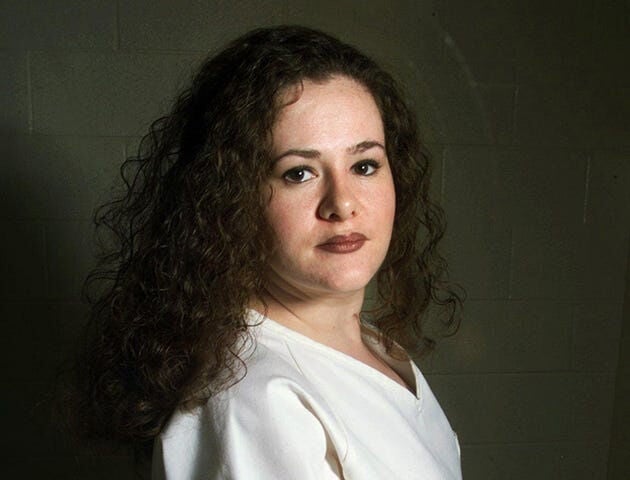
Tennessee death row inmate Christa Gail Pike was convicted of the murder of 19-year-old Colleen Slemmer in 1995. Tennessee Gov. Bill Lee has ordered an investigation into he failed execution.
Pike was scheduled to be executed by lethal injection at 10 a.m. Sept. 30 at Riverbend Maximum Security Institution in Nashville. After it failed, Pike received medical care, according to a court filing. Her attorneys reported she was still breathing after receiving two doses of lethal pentobarbital.
Tennessee Gov. Bill Lee said shortly before midnight that he ordered an investigation into what went wrong and has postponed the state's one remaining execution scheduled for this year, that of convicted killer Gary Wayne Sutton on Dec. 3.
People are also reading…
"Carrying out a lawfully imposed sentence is among the State's most serious responsibilities, and the people of Tennessee expect it to be done in a manner that is not only legal and constitutional, but is effective," Lee said. "I have ordered a comprehensive, third-party review to determine exactly what occurred."
State corrections officials put out a late-evening statement saying that they followed Tennessee's "execution protocol" but that it did not immediately kill Pike.
"The Tennessee Department of Correction followed every step of the state’s lawful, established execution protocol approved by the Attorney General’s Office," the statement said. "The lethal injection chemical in the protocol has consistently been effective, and the protocol does not allow for additional procedures beyond what was carried out this evening. Christa Pike has been transported to an off-site medical facility."
If Pike's execution succeeded, she would have become the first woman executed in Tennessee in more than 200 years and only the 19th in the U.S. in the last 50 years. She was sentenced to death for the brutal and prolonged 1995 murder of her romantic rival, 19-year-old Colleen Slemmer.
The execution Wednesday went awry quickly. After Pike received two syringes filled with lethal injection chemicals, she was still alive and experiencing "unnecessary agony," her attorneys said in an emergency motion filed in the Tennessee Supreme Court to immediately stop the process.
They said the prolonged nature of the execution attempt caused Pike "superadded physical and mental suffering." The Tennessee Supreme Court later said the motion to stop the execution was moot because the state advised the court that Pike had not been pronounced dead.
"Tonight the State of Tennessee once again failed to carry out a lawful execution," Pike's attorneys said in a statement to USA TODAY. "We take no pleasure in being right, but the concerns raised by Ms. Pike proved to be true: difficult vein access, blown veins, degraded pentobarbital, no emergency medical care available when things inevitably go wrong, all under a protocol that remains veiled in secrecy."
Her attorneys said the state had not updated them on Pike's condition as of late Wednesday. No updates were made public by the Star's press time.
Witnesses asked to leave, ambulance called
Execution witnesses told reporters that they were asked to leave while Pike apparently was still alive. Reporters were waiting to hear from the Tennessee Department of Corrections as an ambulance arrived.
Hours later, they were still waiting and reported that prison officials told them they would need to leave the property.
Media witnesses who were in a death chamber viewing room reported that Pike talked about experiencing pain during the process, saying: "My arm feels like it's about to burst open."
What else did Christa Pike say in the execution chamber?
Prison officials pushed the drugs into Pike's body, and they didn't stop her heart, her attorneys said.
Pike said moments before her intended death that she was going to leave this world in the same way she spent most of her life, "in love," Kim Chandler, a reporter with the Associated Press and official media witness, said during a news conference Wednesday night after the failed execution.
“She said she had love for the people who were out here hating on her," Chandler said. "She closed her statement with saying, ‘I’m at peace. I’m ready to be free.’ Then something about celebrating her freedom, and then she closed with, ‘This is a happy day.’”
'Incompetence ... at the lowest level'
The failed execution followed a day of tireless arguments from the state that Pike's death was long overdue. It also comes four months after Tennessee botched another lethal injection, that of Tony Carruthers in May.
Death penalty observers were quick to condemn Tennessee as questions swirled about what had happened to Pike.
"The incompetence of the Tennessee (Department of Corrections) sets the bar at the lowest level tonight," Abraham Bonowitz, co-Founder of Death Penalty Action, said in a statement. "There are no other words. This is an outrage. How do they sleep at night?"
Laura Porter, executive director of the U.S. Campaign to End the Death Penalty, said that people from diverse political backgrounds called for a pause in executions after the Carruthers' botched lethal injection.
"These pleas were ignored," she said. "The state of Tennessee has shown the world it cannot be trusted to implement capital punishment in a way that preserves human dignity and the rule of law. This has to stop now.”
Here's what else you need to know about one of the wildest days for the death penalty in the U.S. in recent memory.

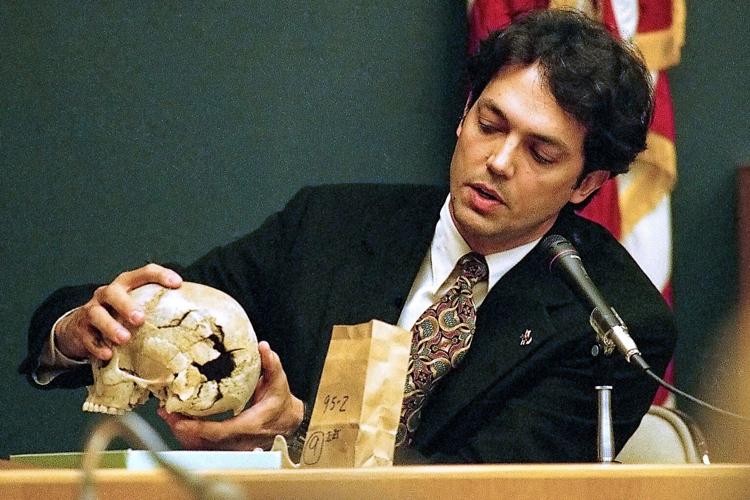
In this March 1996 file photo, UT forensic anthropologist Dr. Murray Marks testifies about the wounds to Colleen A. Slemmer's skull during Christa Gail Pike's murder trial in Knox County Criminal Court.
What happens after two doses of the deadly drug?
In the Tennessee Department of Correction’s lethal injection protocol, prison officials prepare one set of syringes for the lethal dose but have enough of the deadly drug on standby to build a second set of syringes if needed.
Each set is made up of four syringes: one of sterile saline solution, two of 50 milliliters of pentobarbital and another of saline, according to the protocol.
“Set B is only prepared if the inmate is not deceased after administration of Set A, applicable waiting period, and examination by the Physician,” the protocol said.
Once the first set is given, there is a five-minute waiting period. Then the witness blinds are closed, the camera is disengaged, and the doctor enters the death chamber to assess the inmate’s pulse.
“If the inmate is not deceased, a Backup Set B of syringes is prepared, the blinds are reopened,” the protocol said.
The protocol does not say what happens if the backup drugs do not kill the inmate.
Pike's attorneys drew special attention to what they said were her small veins in an August hearing, arguing it would complicate the lethal injection process.
Christa Pike's execution day was filled with drama
Pike's execution began after a roller-coaster ride of court rulings throughout the day.
Late on Sept. 29, Pike was all out of appeals, and her execution appeared to be a foregone conclusion.
But just after 7 p.m. CT, Pike’s attorneys filed new arguments in the 6th U.S. Circuit Court of Appeals, saying that the state of Tennessee’s recent acknowledgment of Pike’s history of childhood sexual assaults “erodes the foundation” of previous court orders.
“This is the first time in the history of Ms. Pike’s case that the state has conceded her history of child sexual abuse and rape,” her attorneys wrote. “Indeed, the state called Ms. Pike a ‘pathological liar’ in earlier proceedings in this case.”
Their filing did not request a stay of execution. Rather, it asked the 6th Circuit to send the case back to a lower federal court to reconsider her claims.
So when the 6th Circuit issued a stay, it caught those involved in the case by surprise. In a 2-1 opinion written by Democrat-appointed judges, the 6th Circuit panel wrote that a stay was necessary “to adequately address and resolve the issues now presented to this court.”
In a dissenting opinion, Republican-appointed Judge Richard Allen Griffin wrote that Pike’s new filings amounted to a “last-ditch meritless effort to delay a lawful execution.”
The state of Tennessee agreed. Shortly after the stay of execution came down, the state appealed to the U.S. Supreme Court.
US Supreme Court steps in
The Supreme Court agreed to lift the 6th Circuit’s stay, with the court’s three liberal justices dissenting.
Joined by Justices Elena Kagan and Ketanji Brown Jackson, Justice Sonia Sotomayor wrote in a dissenting opinion that the Supreme Court’s decision interferes with the 6th Circuit’s ability to consider Pike’s claims relating to extreme sexual abuse as a child.
Sotomayor also cited Pike's attorneys, who said that jurors at her 1996 criminal trial didn't get the opportunity to learn more about the abuse.
“I see no reason to short-circuit the ordinary process of appellate review, particularly in light of the grave consequences of an erroneous decision,” Sotomayor wrote. She cited case law that demands caution before “acting irretrievably” and pointed out that the Supreme Court is “a court of review, not of first view."
“Today, the Court, as it has too often lately, chooses to overlook that principle precisely when it matters most,” she wrote.
More about Christa Pike's traumatic past
Pike's attorneys, women's advocacy groups, sex assault experts and Amnesty International have been vigorously fighting for her life in recent months. They presented a novel argument in the annals of death row: that Pike was so traumatized from years of sexual assault as a girl that her execution would cause her to relive those moments and experience an unconstitutional level of cruel and unusual punishment.
"She will relive the sounds, the smells, and the pain," wrote a dozen women's advocacy organizations in what's known as a friend-of-the-court brief filed in the Tennessee Supreme Court on Sept. 10.
"She will feel it now as she did then. And it will be as horrific for her now as it was then," they wrote. "(We) have very little doubt that Christa Pike will go to her death believing and feeling that she is being raped yet again."
Court records show that Pike became a rape victim before she was even in preschool. Her grandmother's boyfriend targeted her for years, sexually assaulting her until she was in kindergarten, according to court documents obtained by USA TODAY.
At the age of 11, a neighbor raped Pike in an attack that caused an infection and preceded a suicide attempt at the age of 12. And at 17, a stranger attacked Pike while she was out walking, forced her into the woods, and raped her, court records say.
Prosecutors have recently acknowledged Pike's harrowing childhood, but they maintain that her punishment fits the brutal crime.
"Pike’s prior abuse and mental struggles are tragic to say the least," the Attorney General's Office wrote in arguments to the Supreme Court earlier this week. "But they are no cause to insulate her from a lawfully imposed and exhaustively reviewed death sentence that a jury of her peers imposed purely because of her own horrific conduct."
At every turn, courts and Tennessee Gov. Bill Lee rejected Pike's arguments, culminating in the Supreme Court declining to take up the case less than 24 hours before the execution. That is until Wednesday, when the 6th Circuit intervened following late-night filings by Pike's attorneys.
What did Christa Pike do?
On Jan. 12, 1995, 18-year-old Pike, her boyfriend, and another young woman lured Slemmer to the woods in Knoxville. Pike and her boyfriend, then-17-year-old Tadaryl Shipp, tortured and murdered Slemmer in a crime that made international headlines both for its brutality and because of Pike's gender and youth.
"Armed with a box cutter and meat cleaver, Pike and two accomplices lured Slemmer to an isolated area. There, Pike kneed Slemmer’s head, threw her to the ground, and repeatedly kicked her," the Tennessee Attorney General's Office wrote in court documents. "When Slemmer tried to flee, Pike sliced her stomach with the box cutter. ... As Slemmer begged for her life, Pike repeatedly kicked her in the face. Pike then cut Slemmer’s throat as she begged for mercy."
After Slemmer made one final attempt to escape, Pike smashed the back of her head with a rock, they wrote. Shipp also carved a pentagram into Slemmer's chest, and Pike later showed off a piece of Slemmer's skull to a friend.
Pike was sentenced to death, and Shipp got a life sentence because at 17, he wasn't eligible for the death penalty.
For Slemmer's mother, May Martinez, Pike's execution more than 30 years after her daughter's murder would represent long-awaited justice.
"I just want Christa down so I can end it, relieve my daughter, so she finally can be resting," Martinez told WBIR-TV in 2021. "There's not a day goes by that I don't think about Colleen or how she died and how rough it was."
Martinez was at the state prison in Nashville, where the execution is being carried out, and was expected to be a witness.
"I'll hold Colleen's picture up to remind her of what she did," Martinez recently told WBIR-TV. "She never apologized − never even tried − or her family."
She said she remembers her daughter as a playful and compassionate young woman who loved roller skating, computers, and playing old games with her family. She laments that Pike so overshadowed her daughter over the years.
"It's never about the victims," she said. "It's like Colleen was never there."
Christa Pike's life on death row
Like the other 44 women on death row in the U.S., Pike has experienced conditions that advocates say is more unfair and undignified compared to their male counterparts, a USA TODAY investigation found in June.
Women going through the criminal justice system face slut-shaming at trial, having to fight for access to menstrual products in prison, enduring the stares of some male guards, and what amounts to solitary confinement with fewer privileges and socialization than male inmates.
For 27 years, Pike was effectively in solitary confinement as the only woman on Tennessee's death row before she won the ability to interact with other inmates during meals, classes, and religious services.
"Female prisoners receive the worst of both worlds,” according to Stephanie Covington, a Southern California-based clinician specializing in trauma-informed responses to violence, and Barbara Bloom, a professor emeritus of criminal justice at Sonoma State University in California.
In recent years under more typical conditions, Pike's attorneys said in a clemency petition that she found an outlet both in painting and in "helping new women to the prison."
"After years of psychotherapy and medications to treat her mental illness," they wrote, "Christa is thoughtful, even-tempered, bright, funny, and hopeful."
Pike expressed remorse for Slemmer's murder in her clemency petition.
"Think back to the worst mistake you made as a reckless teenager. Well, mine happened to be huge, unforgettable and ruined countless lives," she wrote. "I was a mentally ill 18-year-old kid. ... I took the life of someone’s child, sister, friend. It sickens me now to think I had the ability to commit such a crime."
When was the last execution of a woman in the US?
Only two women have been executed in the past decade, according to the nonprofit Death Penalty Information Center.
In 2023, 49-year-old Amber McLaughlin became the first openly transgender person executed in the U.S. Missouri executed her by lethal injection for the 2003 rape and stabbing death of her ex-girlfriend, 45-year-old Beverly Guenther.
In 2021, 52-year-old Lisa Montgomery became the first woman executed by the federal government in 67 years. The federal government executed Montgomery by lethal injection in Indiana for the 2004 murder in Missouri of 23-year-old Bobbie Jo Stinnett. Montgomery strangled Stinnett, performed a crude cesarean section on her and fled with Stinnett's baby, who survived the attack.
How many women has Tennessee executed?
The last woman to be executed in Tennessee is believed to be an unnamed Black woman who was hanged in 1819, according to historical records obtained by The Tennessean, part of the USA TODAY Network.
Before that, there was a hanging in 1808 of another Black woman, whose name was also not recorded because she was enslaved and viewed as property, resulting in her removal from historical execution registries.
The earliest recorded execution of a woman in Tennessee was in 1807, when a Black woman named Mary Holcomb died by hanging on March 20. Though Holcomb was convicted of murder, many people of color were unjustly killed over false accusations or for no reason at all.
In 2010, a female death row inmate named Gaile Owens came within three months of being executed for hiring a hitman to kill her abusive husband, Ron, in 1985. But then-Gov. Phil Bredesen commuted Owens' sentence to life in prison because of the abuse she suffered from her husband.