At home, Jazz was mostly alone.
Her father often left the teenager to fend for herself when he traveled for business. When he was with her in their Southern Oregon home, Jazz watched his substance use disorder slowly wrap around him, choking him. Her mother was across the country in Connecticut living a new life.

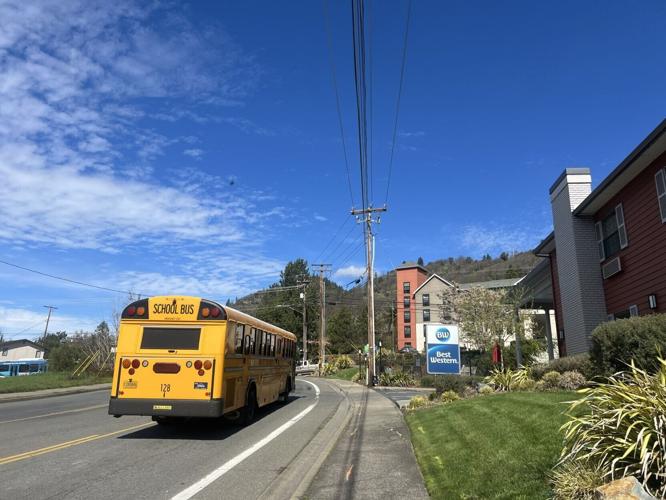
A public school bus diverted its route each day to pick up Jazz at one of two motels she stayed at during her senior year of high school last year.
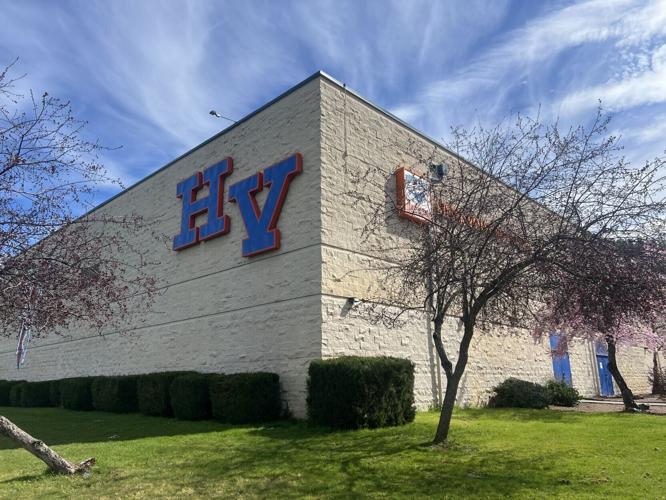
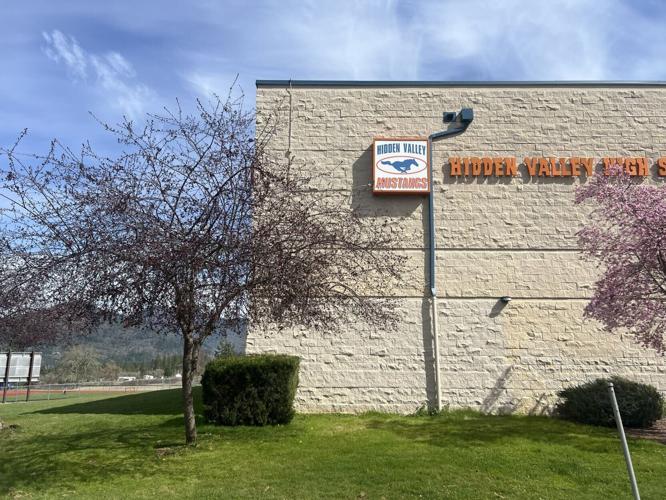
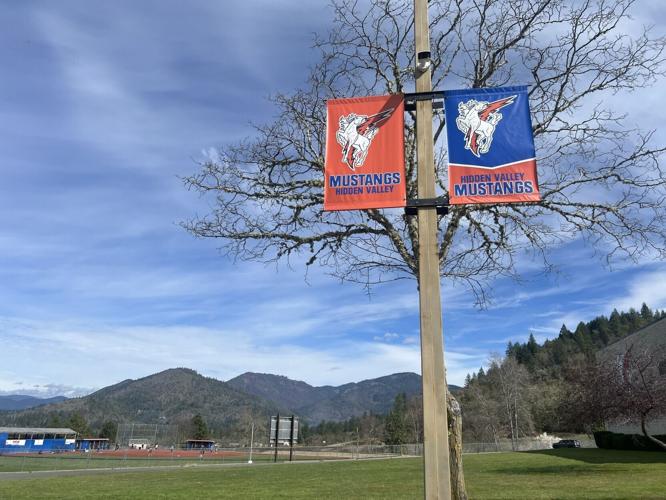
Jazz, 17, was a senior at Hidden Valley High School in Grants Pass last year when she began experiencing homelessness. She was so close to the finish line. Her father and grandmother never graduated from high school. She was determined to break the cycle.
This meant showing up to school despite living alone in a motel, microwaving her dinners each night and waiting for the school bus to make the extra trek to her temporary home.
The Lee Enterprises Public Service Journalism Team is not using Jazz’s full name in this article to protect her identity due to safety concerns.
People are also reading…
Without federally supported programs, she believes she would have slipped through the cracks. Instead, with support from school counselors, advocates and programs armed with money meant to ensure students in poverty access an equal education, she earned her diploma in May 2025.
Last year, President Donald Trump proposed to cut what's called McKinney-Vento Education for Homeless Children and Youth funding intended to support low-income families and students — the same funding that helped Jazz succeed where other generations of her family had failed.
Congress rejected Trump’s proposal, securing the $126 million. Those dollars are protected through the next school year thanks to bipartisan support.
However, Trump recently released his 2027-28 budget, and it once again proposes steep education cuts, including eliminating McKinney-Vento funding.
That could put more pressure on the funds school districts receive to help these families and aid in better life outcomes for students like Jazz.
Oregon, where Jazz calls home, already has one of the highest rates of homeless students, ranking sixth in the nation, trailing behind New York, West Virginia, California, Washington and Missouri, respectively. Oregon has released more up-to-date data than has yet to be federally reported, showing that in the 2024-25 school year, the state's number of homeless students decreased 0.1%.
Oregon also falls in the lower half of states for the percentage of homeless students who graduate — with just 61% of homeless seniors graduating, according to 2022-23 federal data, the most recent report available. To be sure, Oregon's overall student graduation rate has also continued to lag behind most states.
Educators across the state worry what the coming school years will bring with uncertain and scrapped funding.
For Jazz, she made it through the system just in time, though she worries about the impact on other students still navigating elementary and secondary school.
“If they take away that funding, a lot of people will be hurt by it,” she said. “I wouldn’t have had any transportation to school. I would not have graduated high school. I would have no place to live. … Without that school staff, I would have had no idea what to do.
"It’s not as simple as Googling ‘how to get money.’”
Early mornings
The importance of McKinney-Vento is twofold. The first is obvious: provide money that helps students show up to class even if their home life is unstable.
The fund doesn’t connect students to housing. Instead, it fills in gaps to help them thrive in school. If they are living in a shelter or in transitional housing outside of a normal bus route, the school district can use the fund to set up transportation for that student, for example.
While educators say this funding is critical, Oregon’s $1.2 million portion of the funds doesn’t stretch far.
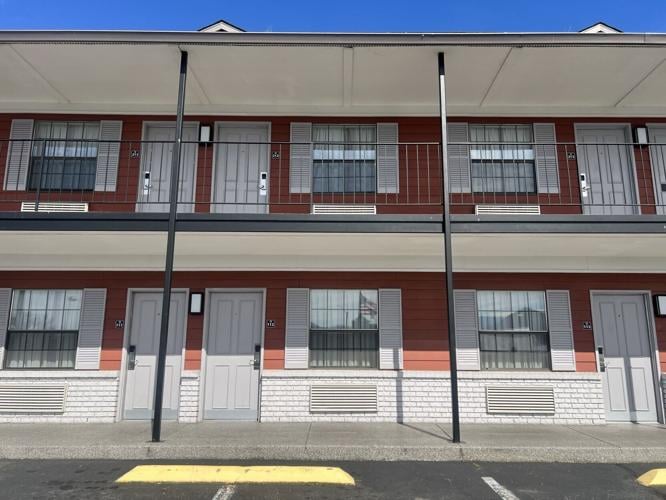
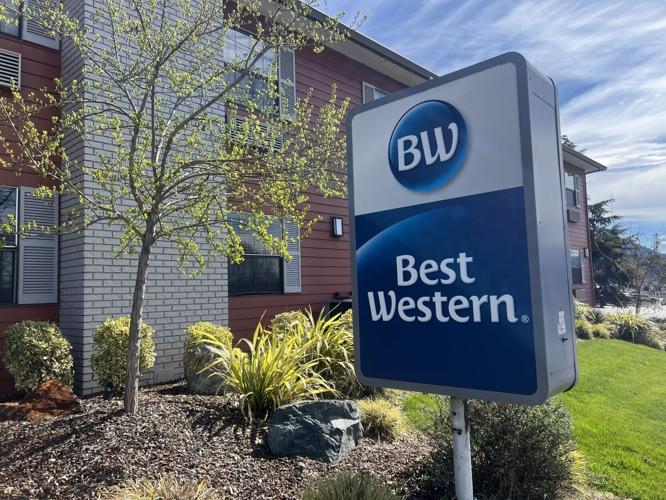
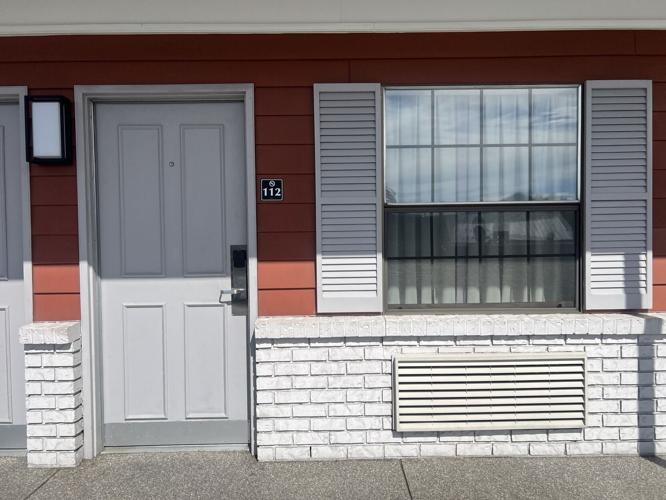
After a school counselor identified Jazz’s need for safe housing, the Maslow Project, a Southern Oregon nonprofit that serves homeless youth, placed her in a motel. It was a Best Western with room doors opening into the parking lot instead of tucked within the safety of a hotel.

The first motel in which Jazz found shelter had doors that opened directly into the parking lot instead of tucked within the safety of a hotel. As a teenager living alone for the first time, not having an extra layer of hotel check-in desk security between her and the outside world made her nervous.
“At first, that was really scary,” Jazz said. “But I was living in hotels for like two months, so eventually the feeling became normal.”
But the hotel had free breakfast each morning — her favorites were the biscuits and gravy — and the staff was kind, she said. Jazz receives $292 in food stamps each month, so the free meal helped stretch her resources, which went toward anything she could store in a tiny hotel fridge and warm up in a microwave.
While other students at school woke up to homemade breakfasts and packed lunches, Jazz was accustomed to fending for herself. It was not unlike each time her dad had left her alone for long stretches of time.
When her stay ran out at the Best Western, she was shuffled to a nearby Red Lion, another motel.
In nearby Medford, Oregon, a small community that ranks third in the state for the highest rate of homeless students, the school district receives $35,000 a year.

After a school counselor learned that Jazz’s home was not safe, she was provided a motel room through the Maslow Project, a Southern Oregon nonprofit that serves homeless youth.
“When you think about the cost of an employee or supporting a student in a meaningful way with 700 kids that need help, what are you going to do with $35,000,” said Mary Ferrell, executive director of Maslow Project, which supports McKinney-Vento work by partnering with school districts.
“McKinney-Vento is literally pennies relative to funds that feed into the foster care system or veterans or seniors or other groups of people who have federal priority.”
Ferrell’s nonprofit was created to stretch those dollars by pursuing other grants and private donations. Maslow Project also has partnered with housing providers to secure housing dollars that can help with security deposits and about a dozen permanent supportive housing spots per year, prioritizing homeless families with students in the local school district.
“It is frustrating to be tasked with helping people when you have no resources since the district funding doesn’t help move the dial,” Ferrell said. “We have a very braided funding model that helps us maximize what we can do.”
Right to education
Not just about the money, the McKinney-Vento law also addresses students’ rights. The oversight of those funds means there are eyes on the most vulnerable students, ensuring they do not get left behind. Without the funding, the oversight goes away — and with that, the advocates and accountability.
“Homeless students are still a protected class of students under the Civil Rights Act, but cutting the funds undermines the regulations that guide and support those rights,” Ferrell said.
Up until mid-April, Oregon was one of many states that did not have a state law that protected this class of students. But on April 14, Gov. Tina Kotek signed a bill to ensure that homeless students have the right to access education regardless of possible future changes to federal funding.
For those states that don’t have these protections, homeless students will not be protected because without the McKinney-Vento funding regulation, there is no way to enforce the federal rule.
While the new state law ensures protections for Oregon students, it does not come with funding. The state will still need to rely on bipartisan support from Congress to secure those dollars in coming years.
States like Michigan and Colorado have long had these rules to ensure homeless students receive services that allow them equal access to education. Washington also recently joined those ranks.
“Colorado has long been a leader in protections for students and their families,” said Jeremy Meyer, Colorado Department of Education spokesperson. The state has “explicit protections for equal access to schools for students experiencing homelessness."
While Oregon funds are often focused on adult homelessness with few dollars carved out to address youth homelessness, Ferrell said the best way to prevent adult homelessness is with a high school education.
“Getting a diploma is the No. 1 deterrent to chronic adult homelessness,” Ferrell said. “If you really want to talk about getting in front of homelessness in Oregon, the best bang for your buck is making sure you break that cycle and that kids graduate on time.”
Discrepancies in aid
Oregon’s high cost of living contributes to its high homeless rates, including for both adults and children. The state’s wildfires have also displaced many families outside of the Portland metro area, such as in Jackson County, where the Alameda Fire of 2020 wiped out nearly two whole communities.

Jazz, 18, was a senior at Hidden Valley High School in Grants Pass last year when she began experiencing homelessness. Despite her challenging home life, she was determined to break her family cycle. Her father, grandfather and great-grandfather never graduated from high school. She would be the first.
Central Oregon is one of four regions, called continuums of care, in the country that have the highest rate of families experiencing homelessness and youth living on the street, said Eliza Wilson at J Bar J, a youth homeless shelter near Albany. The nonprofit sees a high number of youth exiting the foster care system and becoming unhoused.
“If we look at our youth population, many of our people experiencing homelessness are also needing access to mental health services,” Wilson said. “Some need services for people living with intellectual or developmental disabilities.”
Oregon has historically underfunded youth homeless services, Wilson said.
“We have been noticing that central Oregon specifically, and the state as a whole, receives much less in allocations from the federal government,” Wilson said. “How they figure out distributions is based on an old calculation that greatly favors states in the eastern part of the U.S., so it is not an equitable formula.”
The funding is not based on exact student counts and doesn’t necessarily grow based on increases in the number of homeless students. It is based on a competitive application process.
Currently, the states that receive the most McKinney-Vento funds per student have the lowest rate of homeless students. To be sure, funds aren’t awarded based on the number of homeless students but based on census poverty data.
Mississippi, which has 10 homeless students per 1,000 students, receives $354 compared to Oregon’s $52 per student with a rate of 38 homeless students per 1,000.
The top money grabbers after Mississippi are Rhode Island at $249, New Jersey at $224 and Connecticut, which has the lowest rate of homeless students in the country, at $214.
At the opposite end, Oregon is only slightly above Utah, whose funding breaks down to $42 per homeless student, Washington at $47 and Idaho at $52.
All those states have comparable homeless student graduation rates, ranging from near 60% to 73%.
Barbara Duffield, executive director of Schoolhouse Connection, which advocates for student homeless dollars and tracks funding impact, said her organization has continually pushed for a better funding formula. Currently, funding goes to states based on census poverty data.
Duffield believes the count of homeless students should also factor into that formula.
“It has been very challenging for Congress to accept a change in funding formula because it would mean that while some states would gain money, other states would lose money,” Duffield said.
And within Oregon, Wilson said the state often prioritizes funding for adults in more densely populated urban areas — like the Portland metro area — despite central Oregon having such a high rate of homeless families and youth.
“Youth homelessness is not identified by the public as a huge issue since youth are often in school, and people don’t see it,” Wilson said. “Youth voices are not as loud as the public who don’t want to look at tents on the street.”
The state is improving on some fronts. Homeless students now have a lower chronic absence rate and a higher graduation rate, though both rates still fall below the national average of their counterparts.
Getting across the finish line

Jazz, 18, was a senior at Hidden Valley High School in Grants Pass last year when her world was turned upside down. When the Lee Enterprises Public Service Journalism team spoke to her, she was focused on finishing school, applying for summer retail jobs at the local mall and making plans to go to college.
At another Oregon school district, school staff attempt to make up for lack of funding with action. At Greater Albany Public Schools, the team of nine support staff tasked with helping students in poverty have been known to make homemade meals for the students and spend their time outside of work delivering furniture donations to families who just received housing.
The district serves 8,587 students with 1,879 students identified as part of economically disadvantaged homes. And 429 students were identified as McKinney-Vento students, meaning they needed additional help accessing school services due to their family’s lack of housing.
“It takes a village,” said Marivi Wright, the director of the Family and Community Together, or FACT, team which helps students who are housing unstable or facing other barriers. “It’s not just about federal or state funding. It’s an entire community that should be responsible for students caught in situations they didn’t ask to be part of.”

Jazz, 18, was a senior at Hidden Valley High School in Grants Pass last year. When the Lee Enterprises Public Service Journalism team spoke to her, Jazz said after high school she planned to study to become a special education teacher.
The district receives nearly $2.5 million from Title IA, and about 5% of that is set aside for FACT team salaries. The rest is largely distributed to schools within the district. The district pads that funding with $65,000 McKinney-Vento funds.
“The main purpose of McKinney-Vento is for children to enroll in school without a barrier,” Wright said. “We want those students to enroll immediately in school even if they don’t have a birth certificate or immunization records. We will get them enrolled and then work through those things and identify if they need help with school supplies or clothing or transportation.”
Those funds target students who might be living in shelters, motels, vehicles, campgrounds, on the street, in a garage, at a church or doubled up with another family.
Title I is focused on broad poverty and can pay for things like a $45 birth certificate. McKinney-Vento is focused more on students experiencing homelessness and can be used to pay for food.
Finding stability
Homelessness impacts a variety of factors in a child’s life. They may experience chronic absenteeism. They might move schools frequently. They might not sleep well or have access to adequate food.
“We want to try to make school the one thing in their life where they know they can go every day, eat their meals and have support,” Wright said.
“Homelessness can lead to lack of educational continuity, lack of preparation, missing homework, trouble completing projects, hygiene issues, behavioral issues, falling asleep in class, acting out because they aren’t processing what is happening at home, poor social relationships, trouble trusting others. Often they don’t want to tell someone they are living in a car because they feel embarrassed.”
Near Albany, Jackson Street Youth Services has 25 units for youth between Linn and Benton counties. It’s an 18-month transitional program that often has a wait list of up to three months. The program also has emergency programs to fill in those more permanent housing gaps.
Three and a half hours south of Albany, Jazz continued to plot her future after an exhaustive senior year.
The nonprofit and school worked together to arrange for a bus to pick her up from the hotels each morning for class. She was up at 5:30 a.m. to get on the bus at 6 a.m. When a space finally opened in a young adult transitional shelter, it was even farther away from school. She had to set her alarm for 4:40 a.m. to be picked up from Hearts with a Mission in Medford.

Jazz, 18, was a senior in high school when she began experiencing homelessness. To get through her final academic year, she began living in a motel by herself with support from a local nonprofit.
But her arrival at the shelter that Maslow Project connected her to was a positive change from the hotels. She felt immediately welcomed and had immense support from the house manager.
“I had help getting an eye doctor and dentist and psychiatrist appointments, and I got rides each week to Grants Pass to see my chiropractor,” she said. “They also helped with navigating finances. I am working on a budget for my food stamps right now. Food is so expensive. It is hard to stretch it out for the whole month.”
Some donations the transitional house receives allow the youth staying at the shelter to share necessities like milk and butter.
“There is also a (volunteer) that comes once a month who makes really good vegetarian food,” Jazz said. “I’ve never had such good mushrooms.”
For Jazz’s part, she often cooked spaghetti and chicken piccata for the others.
Since graduating, Jazz temporarily got a job at Wal-Mart before finding her passion working as a caregiver for adults with disabilities.
In high school, she volunteered as a supportive assistant in the special education classroom, teaching fellow students how to do basic math, helping them understand how to handle money. That dedication has continued.
While she enjoys the work she does currently, Jazz said she might go to college in the future to be a special education teacher. For now, she is proud of herself for making the transition from unhoused student to a young adult with her own apartment and a job she cares about.
Maslow Project helped find her an apartment and initially paid her rent while she got on her feet. Starting last month, she took over the rent payments with her fiancé, she said.
“If you end up being homeless, your life is not over,” Jazz said. “You will still get to experience things in life. I am living in an apartment with someone I am going to marry next year. I’ve made a big step from living in a hotel to being a functional adult.
"Your life doesn’t stop. You can do anything you want, even if the 'doing it' is hard.”