President Donald Trump's approval rating remained steady near the lowest levels of his political career, according to a new Reuters/Ipsos poll, as the country anticipates continued high gas prices stemming from the ongoing Iran war.
The survey, released Monday, showed that 35% of Americans approve of Trump's job performance in the White House. Voters gave the president similar ratings in Reuters polls in April and mid-May, and close to his first-term low of 33% back in December 2017.
Most of the 4,531 Americans in the latest Reuters/Ipsos poll continue to cite rising food and gas prices as reasons for their disapproval. The June online survey has a margin of error of 2 percentage points.
Similar polls show Trump's approval ratings lingering around 40% as the Iran war stretches into its fourth month, with a very fragile ceasefire in danger.
People are also reading…
Nearly 60% of Americans expect gas prices to worsen over the next year, compared with 17% who believe prices will improve, the poll said. The remaining 23% polled said they were unsure which direction prices will go.

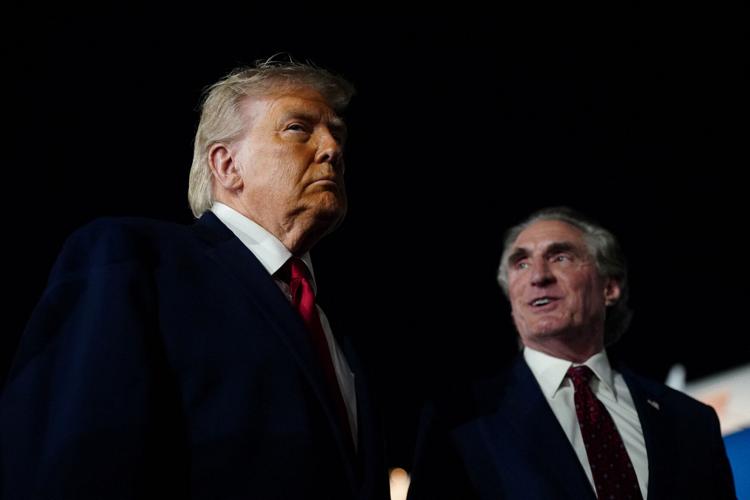
U.S. President Donald Trump looks on as he stands next to U.S. Interior Secretary Doug Burgum, after attending Game 3 of the NBA Finals, at John F. Kennedy International Airport in New York, U.S., June 8, 2026. REUTERS/Nathan Howard
Trump's cost-of-living approval dips below Biden's
The June Reuters/Ipsos poll showed that just 22% of Americans approve of how Trump is managing the high cost of living for households, compared to 70% who disapprove.
Americans are now more disappointed with Trump's handling of the issue compared to his Democratic predecessor, former President Joe Biden, who finished his only term in office with 29% approval on the cost of living and 63% disapproval.
Overall, the discontent comes as U.S. consumer confidence fell slightly in May, while inflation concerns tied to the Middle East conflict and higher fuel costs offset improving labor market sentiment.
"So far, consumers aren't pulling back significantly, but they are clearly shifting behavior," said Michael Gunther, senior vice president of Research & Market Intelligence at Consumer Edge, Reuters reported on June 3. "Going forward, gas prices will be key; if they stay high through summer and back-to-school season, they could start putting more pressure on discretionary spending."

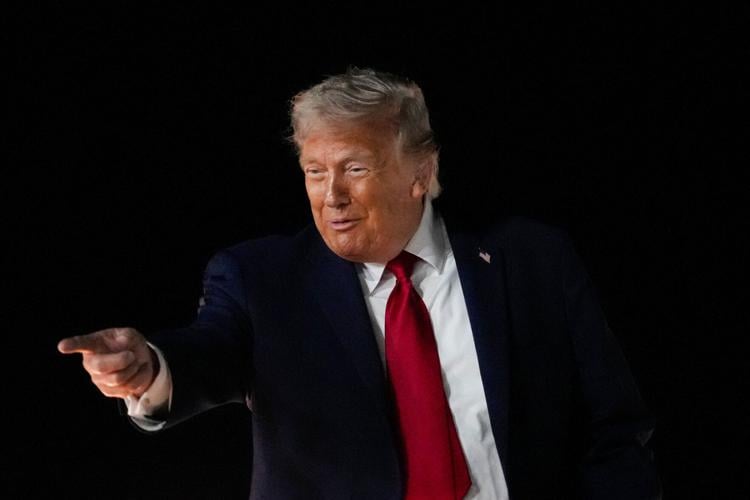
U.S. President Donald Trump reacts as he boards Air Force One, after attending Game 3 of the NBA Finals, at John F. Kennedy International Airport in New York, U.S., June 8, 2026. REUTERS/Nathan Howard
Americans' views on the Iran war
Regarding the United States' war with Iran, which just surpassed the 100-day mark, the latest Reuters/Ipsos poll said about 36% of Americans surveyed said they approved of U.S. strikes on Iran. Meanwhile, just 25% said the benefits of the strikes have been worth the costs.
The Iran war has cost U.S. consumers around $100 billion, or roughly $750 per household, Mark Zandi, chief economist at Moody’s Analytics, said in a June 1 post on X. Zandi said the current cost-of-living spike comes from increased military spending and higher prices as a result of oil supply disruption out of the Middle East.
"The financial pressure is thus mounting quickly, particularly on already hard-pressed middle and lower-income households," Zandi said. "With the saving rate about as low as it ever goes, unless the war ends soon and energy prices come down, they will have little choice but to rein in their spending, weighing further on the already sagging economy."
A new Marquette Law School Poll national survey finds President Trump's overall approval among Americans continues to decline.
Voters more likely to choose Democrats over Republicans, poll says
The Reuters/Ipsos also showed that registered voters surveyed would currently vote for Democrats over Republicans 41% to 37%, if congressional elections were held today.
This is a slight contrast to similar polls conducted last year, which showed voters trusted Republicans far more with handling the nation's economy.
But the GOP's advantage has recently dissolved, as just 37% of registered voters participating in the June Reuters/Ipsos poll think Republicans have a better plan for the economy, with Democrats right behind at 36%.