

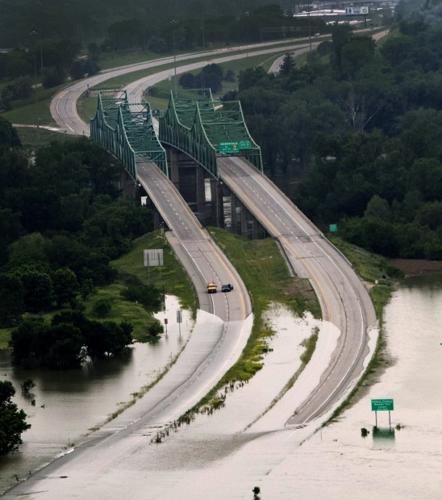
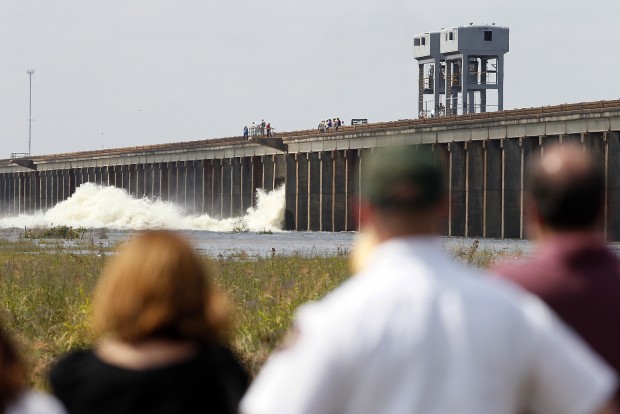
MORGANZA, La. - Water from the inflated Mississippi River gushed through a floodgate Saturday for the first time in nearly four decades and headed toward thousands of homes and farmland in Louisiana's French-speaking countryside, threatening to slowly submerge the land under water up to 25 feet deep.
As the gate was raised, the river poured out like a waterfall, at times spraying 6 feet into the air. Fish jumped or were hurled through the white froth and within 30 minutes, 100 acres of what was dry land was under about one foot of water.
The opening of the Morganza Spillway diverted water from Baton Rouge and New Orleans, and the numerous oil refineries and chemical plants along the lower reaches of the Mississippi. Shifting the water away from the cities eased the strain on levees and thwarted flooding in New Orleans that could have been much worse than Hurricane Katrina.
People are also reading…
"We're using every flood-control tool we have in the system," Army Corps of Engineers Maj. Gen. Michael Walsh said during a news conference on the dry side of the spillway, before the bay was opened.
The Morganza spillway is part of a system of locks and levees built following the great flood of 1927, which killed hundreds and left many more without homes. When the Morganza opened Saturday, it was the first time three flood-control systems have been unlocked at the same time along the Mississippi River, a sign of just how historic the current flooding has been.
Snowmelt and heavy rain swelled the Mississippi, and the river has peaked at levels not seen in 70 years.
In Krotz Springs, La., one of the towns in the Atchafalaya River basin bracing for floodwaters, phones at the local police department rang nonstop as residents sought information on road closings and evacuation routes.
About 25,000 people and 11,000 structures could be affected by the oncoming water, and some people living in the threatened stretch of Cajun countryside - an area colonized by French speakers that is known for fish camps - have already fled.
It took about 15 minutes for the one 28-foot gate to be raised in the middle of the spillway. Several hours will pass before any of the water hits sparsely populated communities, but residents nearby have been told to go.
The corps planned to open one or two more gates today in a painstaking process that gives residents and animals a chance to stay dry.
The water will flow 20 miles south into the Atchafalaya Basin. From there it will roll on to Morgan City, an oil-and-seafood hub and a community of 12,000, and eventually into the Gulf of Mexico.
The water came perilously close to overtopping Morgan City's floodwalls in 1973. Since then, they have been raised to 24 feet and aren't expected to be overtopped, but officials have filled sandbags to shore up the levees. The water was expected to reach Morgan City around Tuesday.
The crest of the Mississippi was still more than a week away from the Morganza spillway, and when it arrives, officials expect it to linger.
The corps blew up a levee in Missouri - inundating an estimated 200 square miles of farmland and damaging or destroying about 100 homes - to take the pressure off floodwalls protecting the town of Cairo, Ill., population 2,800.
The Morganza flooding is more controlled, however, and residents are warned by the corps each year in written letters, reminding them of the possibility of opening the spillway, which is 4,000 feet long and has 125 bays.
At the site of the spillway, water splashed over the gates on one side before a vertical crane hoisted the 10-ton, steel panel to the let water out. Typically, the spillway, built in 1954, is dry on both sides.
By today, all 350 bays at the 7,000-foot Bonnet Carre structure were to be open. The Morganza was expecting to only open up about a quarter of its gates.
The spillways could be opened for weeks, or perhaps less time, if the river flow starts to subside.


