
A report by the Senate Judiciary Committee's Democratic majority details former President Donald Trump's extraordinary effort to overturn the 2020 presidential election that he lost. His pursuit of fraud claims brought the Justice Department to the brink of chaos and prompted top officials there and at the White House to threaten to resign.
WASHINGTON (AP) — Donald Trump’s extraordinary effort to overturn his 2020 election defeat brought the Justice Department to the brink of chaos, and prompted top officials there and at the White House to threaten to resign, a Senate Judiciary Committee report found.
The report released Thursday offers new insight into how the Republican incumbent tried to undo the vote and exert his will on the department, asking leaders to declare the election "corrupt" and disparaging its top official for not doing anything to overturn the results. Trump's actions led to a near-revolt at department headquarters that receded only after senior officials warned of a mass resignation, with one White House lawyer describing the efforts to undo the election as a "murder-suicide pact."
"In attempting to enlist DOJ for personal, political purposes in an effort to maintain his hold on the White House, Trump grossly abused the power of the presidency" and arguably violated a federal law that prevents anyone from commanding that federal employees engage in political activity, the report says.
People are also reading…
While the broad outlines of what took place after the Nov. 3 election have long been known, the Senate investigation based on a review of documents and interviews with former officials lays bare the extent of Trump's all-out campaign to remain in the White House. It shows how Trump benefited from the support of a little-known Justice Department lawyer who championed the then-president's efforts to challenge the vote but how, in the end, other senior officials stood together to face down Trump. The outcome suggests how reliant the fragile U.S. election system is on the integrity of government officials.
Trump's effort, now the subject of a Justice Department inspector general investigation, did not succeed and Biden took office on Jan. 20. Even so, the false claims over the election have fractured the nation, with millions of Americans wrongly believing the contest was stolen.
Rage about the election compelled a mass of Trump supporters to violently storm the Capitol on Jan. 6 in an effort to disrupt the congressional certification of Biden's victory. The rioters beat and bloodied an overwhelmed police force, sent lawmakers running for their lives and caused $1 million in damage. More than 630 people have been charged criminally in the riot, the largest prosecution in Justice Department history.
Republicans, who have mostly stayed loyal to Trump since the insurrection, issued their own report that downplays the concerns raised by Democrats and paints Trump as a hero who ignored the suggestions from the lawyer, Jeffrey Clark, and who refused to fire top Justice Department officials. Their rebuttal makes the astonishing claim that Trump was concerned about the election system writ large and not about himself, even though he was publicly fighting to stay in office and pressured Vice President Mike Pence to help him.

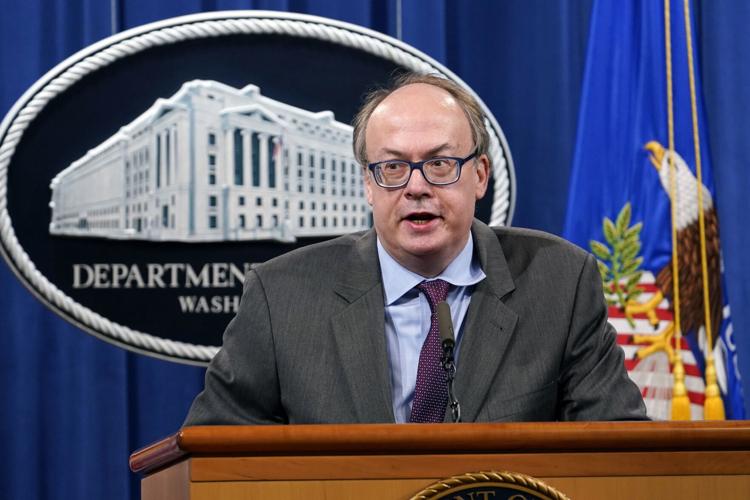
In this Sept. 14, 2020, file photo, Jeffrey Clark, Assistant Attorney General for the Environment and Natural Resources Division, speaks during a news conference at the Justice Department in Washington.
The Democrats' report chronicles Trump's relentless prodding of the Justice Department during a turbulent stretch in late December and early January to investigate suspected voter fraud and to support his efforts to undo the results. Trump had laid the groundwork for that effort even before the election when he attacked the vote-by-mail process.
But he escalated it significantly after Election Day and particularly after the December resignation of Attorney General William Barr, who weeks before he left the Justice Department told The Associated Press that the department had not found fraud that could affect the outcome of the election.
In one White House meeting recounted for Senate investigators, Jeffrey Rosen, who served as Barr's deputy and briefly led the department after Barr left, described how Trump, in an effort to initiate a department inquiry, showed videos of "somebody delivering a suitcase of ballots."
Rosen said he recalled saying to Trump, "I really want to suggest to you, sir, respectfully, that it would be a better thing for everyone to use this last month to focus on some of the things that had been accomplished in the last four years, a — tax reform and the vaccine, Operation Warp Speed, and not go into this 'the election was corrupt.'"

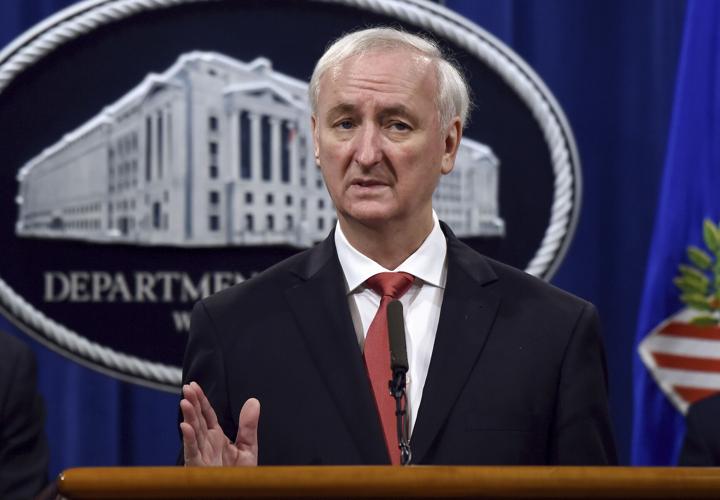
In this Sept. 22, 2020 file photo, Deputy Attorney General Jeffrey Rosen speaks during a news conference at the Department of Justice in Washington.
The pressure campaign by Trump and his allies included a draft brief the White House wanted the Justice Department to file with the Supreme Court to overturn the election results. The department refused to file the document, which the Senate report describes as raising a "litany of false and debunked claims."
The conflict culminated in a contentious, hourslong meeting at the White House on Jan. 3 in which Trump openly considered replacing Rosen as acting attorney general with Clark, an assistant attorney general. The Democrats' report says Trump told Rosen: "One thing we know is you, Rosen, aren't going to do anything to overturn the election."
Clark had positioned himself as more sympathetic to pursuing Trump's fraud claims even though the results were certified by states and Republican election officials. Courts rejected dozens of legal challenges to the election and Barr, Trump's own attorney general, had said Biden won fairly.
Clark declined to be interviewed voluntarily by the committee.
But several officials in the Jan. 3 meeting told Trump they would resign if he put Clark in charge at the Justice Department. According to witnesses interviewed by the Senate committee's majority staff, White House counsel Pat Cipollone referred to a draft letter from Clark pushing Georgia officials to convene a special legislative session on the election results as a "murder-suicide pact." Cipollone threatened to quit.

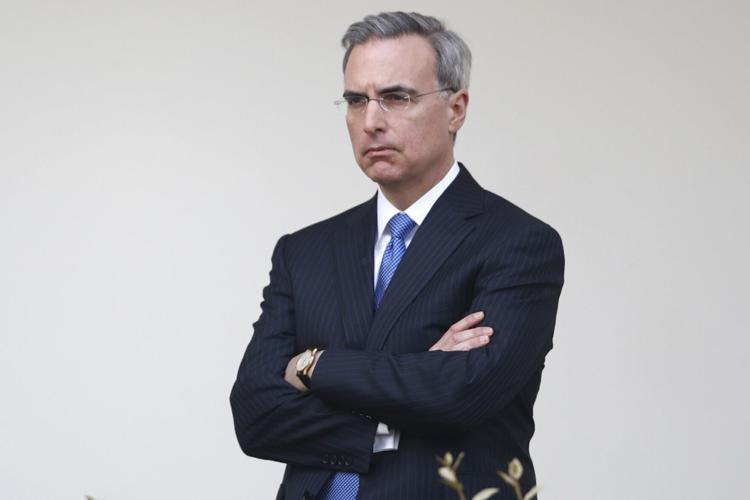
In this March 29, 2020, file photo, White House counsel Pat Cipollone listens as President Donald Trump speaks during a coronavirus task force briefing in the Rose Garden of the White House in Washington.
Richard Donoghue, who was Rosen's deputy at the time, replied there was "no chance" he would sign that letter or "anything remotely like that." Donoghue told the committee that he told Trump that all of the assistant attorneys general, and perhaps U.S. attorneys and other senior department officials, would resign en masse if the president were to replace Rosen with Clark.
Georgia emerged as a particular area of focus for Trump, who sought the removal of the top prosecutor in Atlanta, BJay Pak, claiming that he was a "never Trumper," according to the report. Pak had originally planned to stay on in the position until Inauguration Day, Jan. 20, but resigned weeks earlier than that because of the pressure from Trump.
Besides Clark, Trump found another ally in Rep. Scott Perry, R-Pa., who has disputed the validity of Biden's victory in Pennsylvania and called Donoghue on Dec. 27 to say the department wasn't doing its job with respect to the elections. Perry encouraged Donoghue to call on Clark to help because he's "the kind of guy who could really get in there and do something about this," according to the report.
Associated Press writers Michael Balsamo and Farnoush Amiri contributed to this report.
25 ways America changed during the Trump administration
25 ways America changed during the Trump administration

President Donald Trump quickly upended previous presidential norms when he entered the White House four years ago.
He continued to share his thoughts via Twitter, dramatically changing how the chief executive communicated with the public. He reversed many of the policies of his predecessors, rolling back environmental protections, cutting regulations governing businesses, and transforming relationships with foreign leaders. Where most presidents have encouraged constituents to appeal to the "better angels of our nature," Trump has been accused of fanning constituents' worst instincts—from flagrant racism to violence.
Trump presided over the coronavirus pandemic as It came ashore in the U.S., tainting his presidency with a tanking economy and 385,855 deaths as of Jan. 14—a rate among the highest of all developed countries. Following four years of unprecedented policy shifts, shocking public statements, and a staggering commitment to undoing as many actions of his predecessor as possible, Trump's term in office culminated Jan. 6, 2021, when his supporters stormed the Capitol building as Congress certified the victory of President-elect Biden and Vice President-elect Kamala Harris. The act of sedition was spurred on by repeated, false claims by the president that the election was fraudulent.
The House on Jan. 13 impeached Trump for a second time, charging him with “incitement of insurrection.” Ten Republicans voted with the House Democrats to impeach, the largest number in history of party lawmakers to vote against one of their own party. A Senate trial will likely begin after President-elect Biden is sworn in on Jan. 20, and could result in Trump being barred from holding office again, among other consequences.
While some Republican lawmakers have broken from President Trump after the Jan. 6 riots, he still commands an enormous amount of influence, with a base of supporters more loyal to him than the Republican Party. He has kept a relatively low profile since his supporters stormed the Capitol, and his Twitter account was suspended. No one knows what he will do or say next—a signature quality of a president who has made a lasting mark on the office and the United States as a whole.
Stacker compiled a list of 25 ways American has changed under the presidency of Donald Trump by examining news and government reports. Take a look at what is different now.
[Pictured: Then-candidate Trump delivers remarks while campaigning at Regent University Oct. 22, 2016, in Virginia Beach, Virginia.]
You may also like: Youngest and oldest presidents in U.S. history
Mob storms Capitol

Near the end of his administration, President Trump incited a mob of supporters who violently stormed the Capitol on Jan. 6, 2021, to try to stop Congress from confirming President-elect Joe Biden’s victory. The rioters vandalized the building and took control of the Senate chamber as lawmakers fled to safety. A Capitol police officer was killed when he was beaten to death by the mob, and four others died. At the end of the day, lawmakers returned to the job of confirming that President-elect Biden had won. The Capitol had seen violence before, but not this kind.
[Pictured: Pro-Trump protesters gather in front of the U.S. Capitol Building on Jan. 6, 2021, in Washington D.C.]
Trump tweets from the White House

Americans became accustomed to a president who governed by Twitter, tweeting from the White House on staff, policy, and politics. He announced he had fired Defense Secretary Mark Esper in November, tweeting “Mark Esper has been terminated.” He baselessly insisted the election was rigged when President-elect Joe Biden won, leaving Twitter to attach a reader warning. He was able to reach his supporters without filters, but detractors countered that his tweets were inflammatory and dishonest. On Jan. 8, 2021, he was permanently suspended from Twitter over what it called “the risk of further incitement of violence.”
[Pictured: President Trump speaks in the Oval Office before signing an executive order that could lead to attempts to punish companies such as Twitter and Google for attempting to point out factual inconsistencies in social media posts by politicians.]
U.S. eliminates environmental protections

The Trump administration reversed more than 80 regulations meant to ameliorate climate change. President Trump lifted limits on carbon dioxide emissions from cars and trucks and from power plants, for example. He went after California in particular, revoking its ability to regulate vehicle emissions on its own. States and environmentalists challenged the changes in court and many will be flipped again by the Biden administration, but in the meantime America lost time in its fight against greenhouse gas emissions.
[Pictured: President Trump signs H.J. Res. 38, disapproving the Stream Protection Rule, which "addresses the impacts of surface coal mining operations on surface water, groundwater, and the productivity of mining operation sites," according to the Congress.gov summary of the resolution.]
Trump politicizes the pandemic

America split politically over the coronavirus pandemic, with many of President Trump’s supporters discounting its seriousness, calling it a hoax, and refusing to wear masks or socially distance. A Fox News survey of registered voters in December 2020 found that 56% of Americans thought the country did not take the threat seriously enough, but that broke down to 72% of Democrats and only 34% of Republicans.
[Pictured: President Trump speaks during the daily briefing of the coronavirus task force in the Rose Garden at the White House on April 27, 2020, in Washington D.C.]
Trump remakes the GOP

The GOP became the party of Trump, with the president’s base passionately loyal to him, and other Republicans wary of him. In December 2020, more than 120 GOP House members joined a lawsuit that challenged the election results, while Georgia Secretary of State Brad Raffensperger got death threats when he refused to illegally reverse the president’s loss there. Moments before the mob overran the Capitol, top Republicans such as Senate Majority Leader Mitch McConnell began breaking with the president.
[Pictured: Rep. Paul Gosar (R-AZ) and Sen. Ted Cruz (R-TX) (C) are applauded by Republican members of Congress after they objected to the certification of the electoral votes for the state of Arizona during a Joint Session of Congress on Jan. 6, 2021, in Washington D.C.]
Many Americans believe in a ‘deep state’

The country saw an erosion in faith in institutions like the Supreme Court, the FBI, the intelligence agencies, the Justice Department, and the U.S. Postal Service. In August 2020, the president accused the “deep state” at the Food and Drug Administration of delaying the coronavirus vaccine until after the election. An NPR/Ipsos poll released at the end of December 2020 found that 39% of Americans believed a “deep state” was working to undermine President Trump.
[Pictured: People hold flags during a "Patriot March" demonstration in support of President Trump, separated from counter-protesters by a police skirmish line on Jan. 9, 2021.]
Supreme Court turns to the right

The U.S. Supreme Court became more conservative under President Trump, who appointed three of the nine justices now on the bench. That was made possible by Senate Majority Leader Mitch McConnell, who held open the seat of the late Justice Anton Scalia for nine months in 2016, until President Trump was elected. Despite similar circumstances filling a vacancy in the last year of President Trump's term, McConnell orchestrated the appointment of Amy Coney Barrett with less than two months before Trump's term ended. A Gallup Poll in June 2020 on abortion, one of the most hot-button issues to go to the court, found that Americans are closely split, with 48% calling themselves “pro-choice” and 46% saying they were “pro-life.”
[Pictured: Mitch McConnell gestures while walking out the Senate Chamber on Capitol Hill on Oct. 26, 2020.]
Public discourse coarsens

President Trump has been free with insults, shaping the way Americans treat those they disagree with. He belittled the late Sen. John McCain’s time as a war prisoner, shared an unflattering photo of Sen. Ted Cruz’s wife next to the first lady, and more recently called Georgia Gov. Brian Kemp a “fool” and a “clown” because Kemp would not illegally overturn the Georgia election results. His rally-goers routinely shout “lock her up” about his former opponent, Hillary Clinton, and about Speaker of the House Nancy Pelosi.
[Pictured: A day after the FBI announced it plans on reopening an investigation into Democratic presidential nominee Hillary Clinton's use of a private e-mail server, a crowd of Republican presidential nominee Donald Trump supporters hold a rally in front of Trump Tower on 5th Avenue in midtown Manhattan.]
American voters smash records

Turnout in the 2020 presidential race was the highest in more than a century, with strong feelings about President Trump drawing voters. In all, 155.5 million Americans voted, up from 128.8 million in 2016. President Trump received 74,222,965 million votes compared to 81,283,077 million for Joe Biden, and lost the Electoral College, 232 to 306. Four years earlier, President Trump got 62,985,106 million votes compared to 65,853,625 million votes to Hillary Clinton, but won the Electoral College votes, 305 to 232.
[Pictured: Residents wait in line for the opening of an early voting location at the Mid-Island Y Jewish Community Center on Oct. 24, 2020 in Plainview, New York.]
Republicans shrug off claims of sexual misconduct
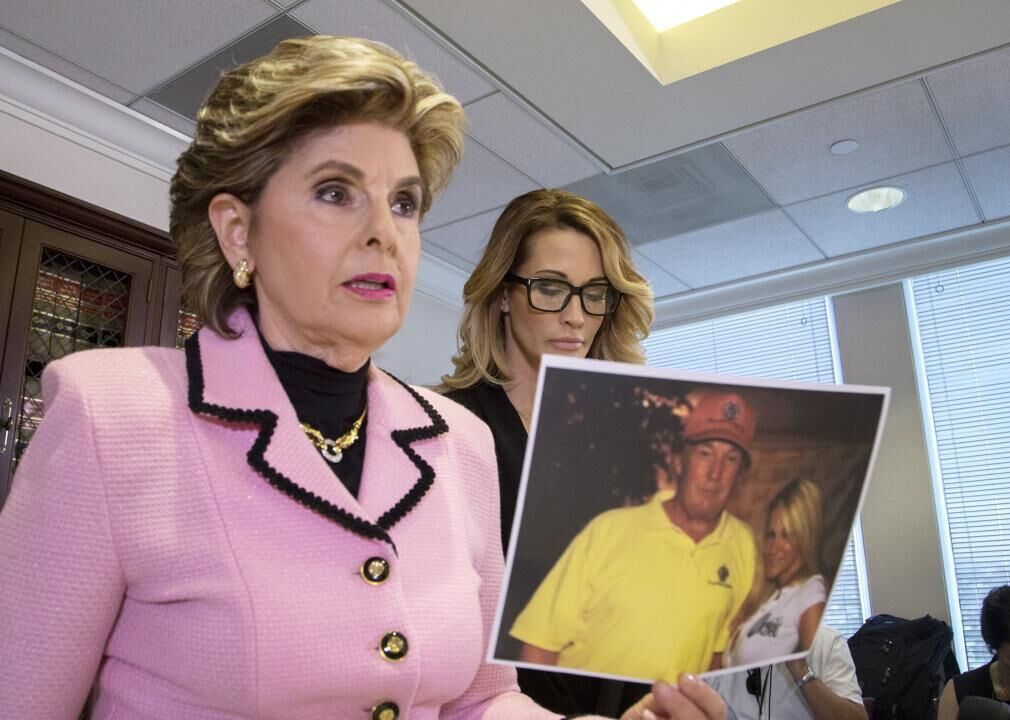
President Trump was elected after a 2005 tape was released in which he is heard bragging vulgarly about kissing and groping women. Then-candidate Trump said, “And when you’re a star, they let you do it. You can do anything. Grab ’em by the p****. You can do anything.” Additionally, 26 women have publicly accused Trump of sexual misconduct. Eighty percent of white Evangelical Christians voted for him, and their support did not diminish four years later, but President-elect Biden did make inroads with white Catholics.
[Pictured: Attorney Gloria Allred holds a photo of Jessica Drake with Donald Trump, taken in 2006 during an event where Drake alleges Trump behaved in a sexually inappropriate way toward her, on Oct. 22, 2016 in Los Angeles, California.]
Trump changes talk about immigrants

Before President Trump, America politicians mostly portrayed immigrants as contributing to the country’s success. He attacked undocumented immigrants but also tried to limit documented immigrants, separating migrant families and turning away software engineers. The Pew Research Center found that Republicans and Democrats have never been more divided in their views: 83% of Democrats say immigrants make the country strong, while among Republicans, only 38% say they strengthen the country and 49% say they are a burden.
[Pictured: A woman holds the flag and her paperwork as the U.S. Citizenship and Immigration Services welcomes 200 new citizens from 50 countries during a ceremony in honor of Independence Day at the New York Public Library on July 3, 2018 in New York.]
Reporters fact check Trump

An army of reporters stepped up to fact check President Trump, accused repeatedly of distorting the truth and flat-out lying. The Washington Post reported by November 2020 that he had made nearly 30,000 false or misleading statements. One claim: the U.S. had a “record” for coronavirus testing, while in truth, it lagged several major countries in tests per million people.
[Pictured: A reporter wearing a latex glove raises his hand to ask President Trump a question during Coronavirus briefing at the White House on March 16, 2020, in Washington D.C.]
Republicans distrust media even more

President Trump dubbed much of the country’s media “enemies of the people,” an unusual level of enmity with the reporters who covered him. Distrust in the media is divided sharply along partisan lines, according to the Pew Research Center, with Republicans becoming more alienated from the major American media outlets between 2014 and 2020.
[Pictured: The front page of the August 16, 2018 edition of the Boston Globe newspaper reads "Journalists are Not the Enemy."]
Trump keeps hand in business

In a major break with the past, President Trump refused to divest from his businesses, though he said that he had turned the running of his hotels and golf courses over to his sons. The Trump International Hotel in the Old Post Office in Washington D.C. drew a steady business from foreign governments and lobbyists, and complaints of possible conflicts of interests.
[Pictured: A view outside Trump International Hotel Washington D.C.]
Trump wields pardons

As his administration neared an end, President Trump pardoned associates who declined to cooperate with Robert Mueller’s Russia investigation: his adviser Roger Stone and his former campaign manager, Paul Manafort. Earlier, the president had pardoned his former national security advisor Michael Flynn, who admitted he had lied to the FBI about communicating with a Russian ambassador. The way President Trump used his constitutional pardon powers has prompted talk of a constitutional amendment.
[Pictured: Roger Stone greets supporters after speaking in front of the Supreme Court on Jan. 5, 2021, in Washington D.C.]
Economy hums, then tumbles

The U.S. economy continued to grow under President Trump until the coronavirus pandemic hit. As schools, shops, restaurants, and other businesses shut down, people suddenly found themselves unemployed and without meaningful government assistance. Over the year, the economy picked up, but by December, layoffs were up again, Americans were losing income, and more people were applying for unemployment benefits. President Trump is the only modern president to leave office with fewer people employed than when he began.
[Pictured: New York City subway is seen nearly empty due to the COVID-19 pandemic on March 16, 2020, in New York City.]
Women repudiated Trump

President-elect Biden won the votes of 57% of women compared to 45% of men. President Trump’s results were the reverse, 42% of women to 53% of men. Women were in the forefront resisting the president over his time in office, but although they were responsible for putting him out of office and electing the first woman vice president in Kamala Harris, the gender gap did not widen as much as had been expected. Also notable is that 55% of white women voted for Trump in 2020, and more white women voted for Trump in 2020 than in 2016.
[Pictured: The 4th Annual Women's March gathered at Columbus Circle in New York City on Jan. 18, 2020.]
Black Lives Matter takes to the streets

After George Floyd died when a Minneapolis police officer kneeled on his neck, the Black Lives Matter movement took to the streets once more to protest police brutality. President Trump’s response—he called it a symbol of hate at one point—heightened their anger and frustration. By contrast, he was seen as encouraging white supremacists when he refused to condemn a march in Charlottesville, Virginia, that left one woman dead.
[Pictured: A man holds a Black Lives Matter sign as a police car burns during a protest on May 29, 2020, in Atlanta, Georgia.]
President’s lawyer versus the people’s lawyer

Attorney General William Barr was roundly criticized for behaving more like a personal lawyer to President Trump than a lawyer for the United States. He was accused of failing to protect the Justice Department’s independence, as he undermined the investigation into Russia and the Trump campaign, and heightened fears of voter fraud. He is being replaced by Merrick Garland, a federal appeals court judge, who was President Barack Obama’s pick for the Supreme Court in 2016.
[Pictured: U.S. Attorney General nominee William Barr testifies at his confirmation hearing before the Senate Judiciary Committee Jan. 15, 2019, in Washington D.C.]
Drilling in the Arctic

President Trump auctioned off drilling rights in Alaska’s Arctic National Wildlife Refuge just before leaving office, but the exercise was less than successful. No major oil companies bid because banks are increasingly saying they will not fund such projects, leaving only the state agency, Alaska Industrial Development and Export Authority.
[Pictured: A demonstrator holds a sign against drilling in the Arctic Refuge on the 58th anniversary of the Arctic National Wildlife Refuge, during a press conference outside the U.S. Capitol in Washington D.C.]
Nepotism in the White House
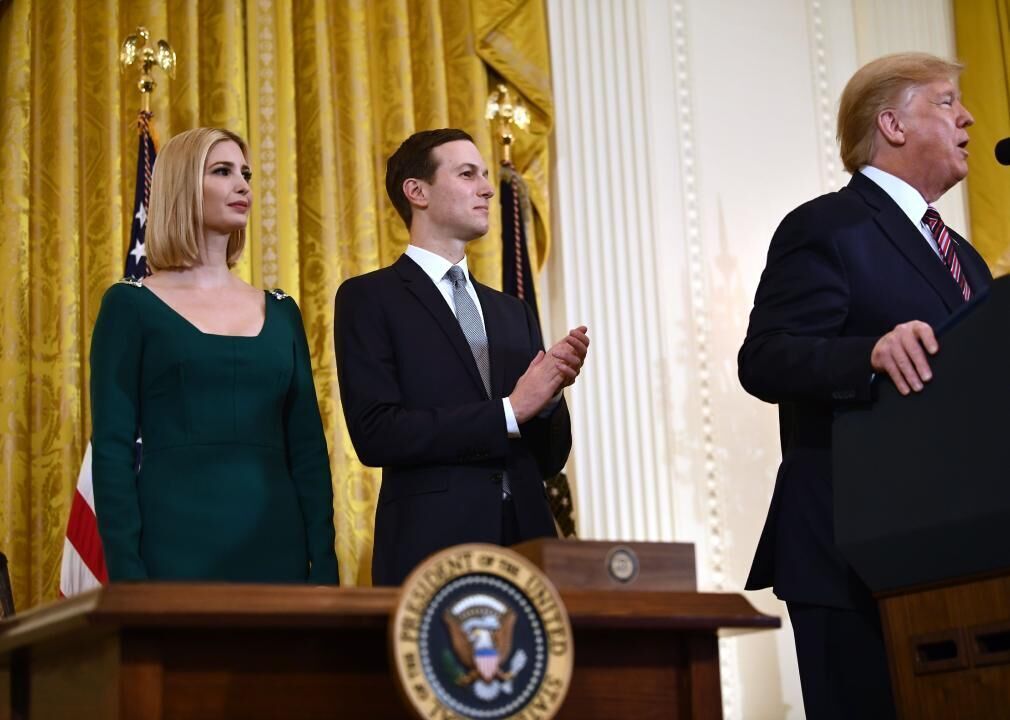
President Trump's daughter, Ivanka Trump, served as an adviser to the president, with a focus on the economic empowerment of women. Her husband, Jared Kushner, had a wide-ranging portfolio of jobs in the White House, from trying to secure peace in the Middle East to overseeing the pandemic response. Neither took a salary, but critics questioned the unusual situation.
[Pictured: President Donald Trump, with Senior Advisors to the President Ivanka Trump and Jared Kushner, speaks at a Hanukkah reception at the White House on Dec. 11, 2019, in Washington D.C.]
Clearing protesters for a photo op

U.S. Park Police and National Guard troops violently cleared people from around Lafayette Park in Washington D.C. with tear gas as they peacefully protested police brutality. The reason: to make a path for President Trump to walk to St. John’s Church for a photo op. The president, who had been urging a stronger response to protesters, held up a Bible outside the church and said, “We have the greatest country in the world. Keep it nice and safe."
[Pictured: President Trump leaves the White House on foot to go to St John's Episcopal church across Lafayette Park in Washington D.C. on June 1, 2020.]
Shrinking the protected lands

President Trump shrunk the Bears Ears and Grand Staircase-Escalante national monuments in Utah and opened them to mining and drilling companies. National monuments are created by executive order, not by Congressional approval, so President Trump argued they could easily be slashed. Tribes and environmental groups went to court.
[Pictured: President Trump holds up a pen after signing the hat of Bruce Adams, Chairman of the San Juan County Commission, after signing a Presidential Proclamation shrinking Bears Ears and Grand Staircase-Escalante national monuments at the Utah State Capitol in Salt Lake City, Utah on Dec. 4, 2017.]
Fighting with China over trade

President Trump’s trade war and subsequent trade agreement with China yielded little benefit, some trade experts say. The U.S. economy was hurt but underlying economic concerns with China were not solved, the Brookings Institution wrote. President Trump had pointed to U.S. trade with China as a reason for the loss of American manufacturing.
[Pictured: President Trump signs a trade agreement with Chinese Vice Premier of the People's Republic of China, Liu He in the East Room at the White House on Jan. 15, 2020, in Washington D.C.]
Insulting friends, cozying up to enemies

While in office, President Trump insulted America’s friends and reached out to enemies such as North Korea’s Kim Jong-un, with whom he held two summits, though North Korea continued its nuclear weapons program. He refrained from criticizing Vladimir Putin or Russia, which his own intelligence agencies accused of interfering in the 2016 elections and hacking into government agencies. President-elect Biden is expected to return to more traditional diplomacy.
You may also like: How Americans feel about 30 major issues