

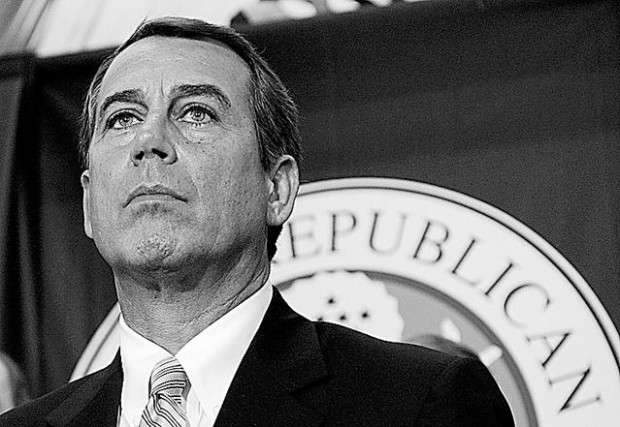
WASHINGTON — House Republicans chose Rep. John Boehner of Ohio on Friday to lead a GOP return to power as quickly as possible. "We're going to earn our way back into the majority," he vowed.
To do that, he said, "we need to fight for a smaller, less costly and more accountable federal government."
Boehner, a 14-year, pro-business veteran of Congress with a solidly conservative voting record, defeated Rep. Mike Pence of Indiana for minority leader on a secret ballot vote of 168-27, a margin that demonstrated fellow lawmakers do not hold him responsible for the election losses the party suffered on Nov. 7. The Ohio Republican has been serving as majority leader, the second-in-command in the leadership, since February.
Another leadership veteran, Roy Blunt of Missouri, won a new term as party whip, defeating Arizona Rep. John Shadegg on a vote of 137-57.
People are also reading…
As Republican leader, Boehner's job, at least in part, will be to oppose legislation advanced by Rep. Nancy Pelosi, the Democratic speaker-in-waiting, and help develop alternatives designed to appeal to the electorate in 2008.
"I think what the American people care about are: Who's going to hold down spending in Washington, who's going to cut their taxes, who's going to make sure that America is strong and can defend itself and make sure that it's safe and secure for American families," he said.
At the same time, Boehner will have to keep in mind the wishes of the White House, where President Bush will be in his final two years, and a need to work more cooperatively with Democrats if Republicans are to succeed in passing legislation.
Boehner's ascension as the top party leader followed a decision by Speaker Dennis Hastert not to seek the post in the wake of the party's losses. Hastert, of Illinois, is the longest-serving Republican speaker in history.
While eight Republicans — the entire leadership — spoke at a news conference — none mentioned Bush in prepared remarks. In campaigning for their support in recent days, Boehner wrote fellow Republicans that the election had been in part a referendum on the administration and the war in Iraq — factors beyond their control.
"What we can control is the third part of our loss: the simple fact that we failed to live up to the expectations of voters who had supported us since 1994," he wrote.
After more than a decade in power, he noted Republicans had struggled with scandal, which "mainly acted to confirm underlying concerns that voters had about us.
"They thought we were doing more to protect our jobs instead of … real problems they face in their everyday lives," Boehner wrote four days after the election.


