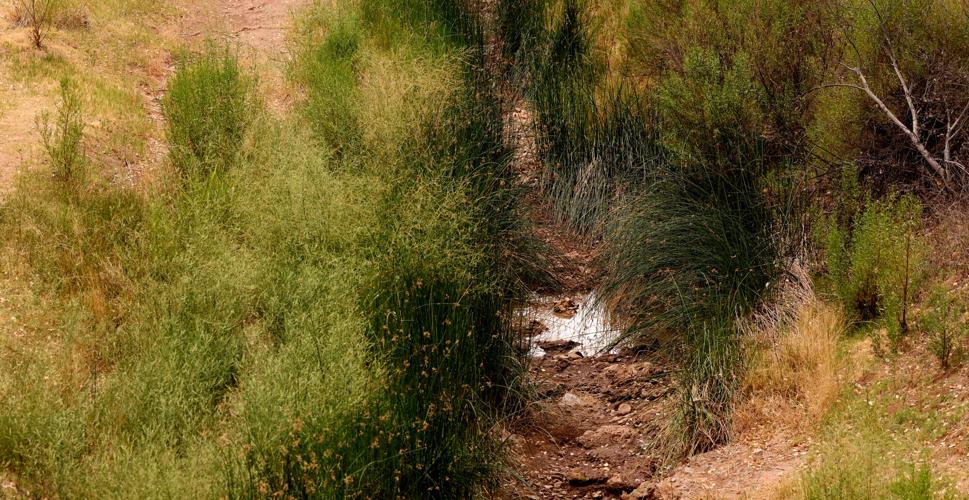
Where water normally flows continuously on the San Pedro River east of Sierra Vista, only ponds and puddles persisted last week.
You could hear the squeals of the Gila woodpecker and the clacking of the yellow-breasted chat along the river, but the sound of running water was absent.
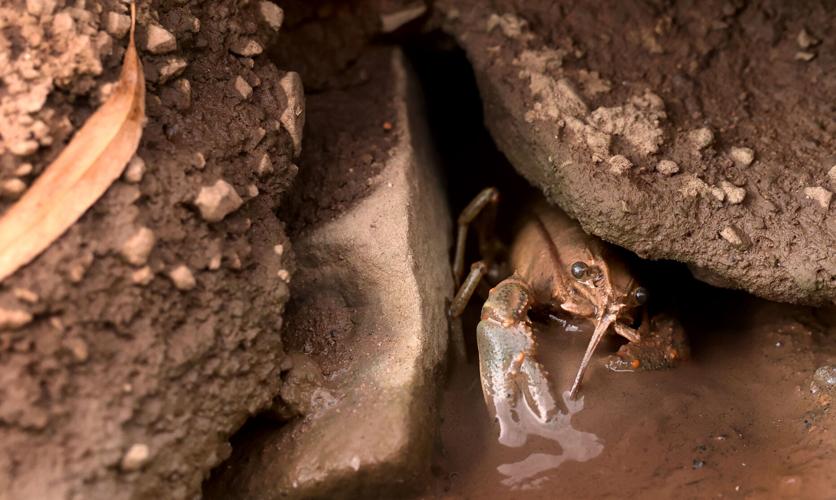
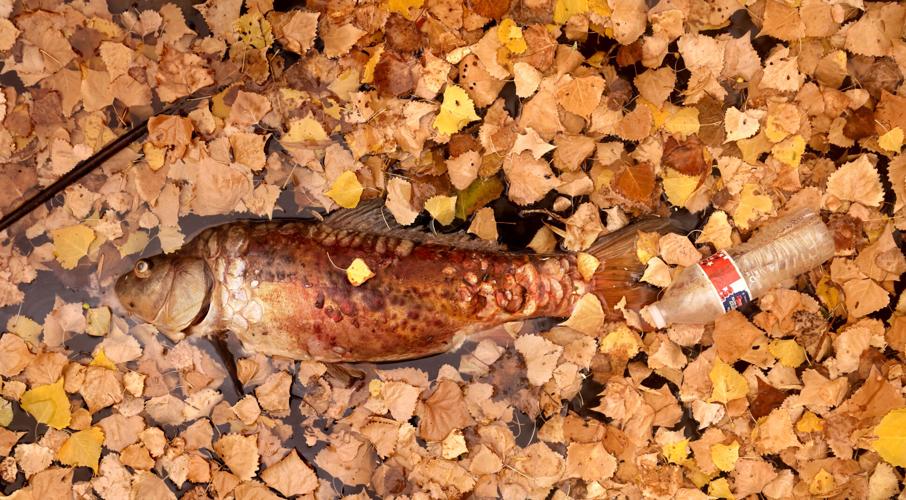
Some of the ponds and puddles were full of crawfish, but a dead carp also lay in a dry spot in the riverbed.
These scenes of a drying river occurred as a key federal stream gauge nearby registered "zero flow" for most of the past three weeks.
The Charleston gauge, long considered a key indicator of the San Pedro's health, dried up late last month for the first time in 21 years. And it stayed dry — or nearly dry — until water from a monsoon storm arrived Friday morning.
It was the latest blow to a river whose lush riparian groves and very high bird populations have long made it a global treasure in the eyes of many ecologists. But the river's declining flows and the lowering of neighboring groundwater wells over the years have also made it a political and legal battleground pitting environmentalists wanting to limit the area's growth and groundwater pumping and government officials who seek to keep the river flowing without curbing economic development.
People are also reading…
The drying at the Charleston gauge has also amplified many environmentalists' concerns about the impacts of warming temperatures and other forms of climate change on the river.

A small pool held on in the mostly dry river bed of the San Pedro River last week, just south of Charleston Road near Sierra Vista.
That's because much of Arizona this year experienced its warmest winter and spring on record. In March, in particular, statewide temperatures exceeded monthly averages by more than 12 degrees.
Just this past week, the National Weather Service reported that the entire Southwest saw its hottest January through June period this year since records started being kept in 1895. In Arizona, every county had its hottest January to June on record, the Weather Service found.
Operated by the U.S. Geological Survey, the Charleston gauge first registered no flow on June 20. On June 22, a U.S.G.S. technician who visited the gauge area used a device known as a flume to measure very minuscule flows at the gauge of .0001 cubic feet per second, even though the U.S.G.S. website still showed zero flow. Another technician recorded zero flow at the site on June 24.

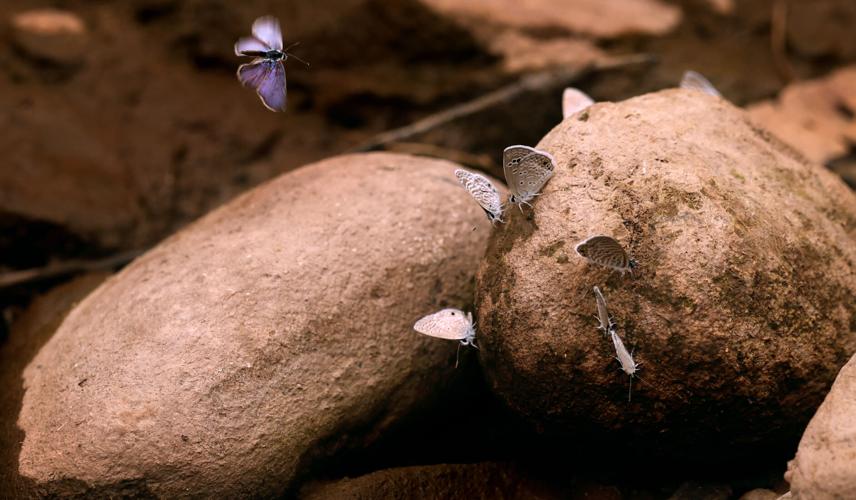
Western pygmy blue butterflies flit around a rock last week, which would usually be underwater along a mostly dry portion of the San Pedro River.
Flows resumed at very low levels from June 26 until the evening of June 29th, when they hit zero again. On June 29 and July 6, U.S.G.S. technicians visited the gauge again and verified the zero flow readings on the agency's website.
At 10 a.m. Friday, the gauge finally received significant flow, emanating from floodwater that struck the Palominas area near the Mexico border late Thursday night.
The San Pedro flows from south to north. The Palominas area is about 21 road miles south of Sierra Vista, which itself is about seven miles west of the river.
Commenting on Facebook on Friday's return of flow to the Charleston gauge area, the conservation group Friends of the San Pedro posted, "The return of flowing water is always a welcome sight in our desert river, regardless of its source. But as encouraging as these images are, they should also remind us of a sobering reality.
"Floodwaters are temporary. Beneath the surface, the aquifer that sustains the San Pedro during dry periods appears to be increasingly depleted.," the Friends group said.
In total, the Charleston gauge stayed dry, off and on, for more than two weeks this year. That's a much longer period than it did in 2005. That year, it dried up from July 10-16 -- the first time the gauge dried up during a century of record-keeping..
When the river did flow this year from June 26 through the 29th, it carried only 1 cubic foot per second of water, federal records show.

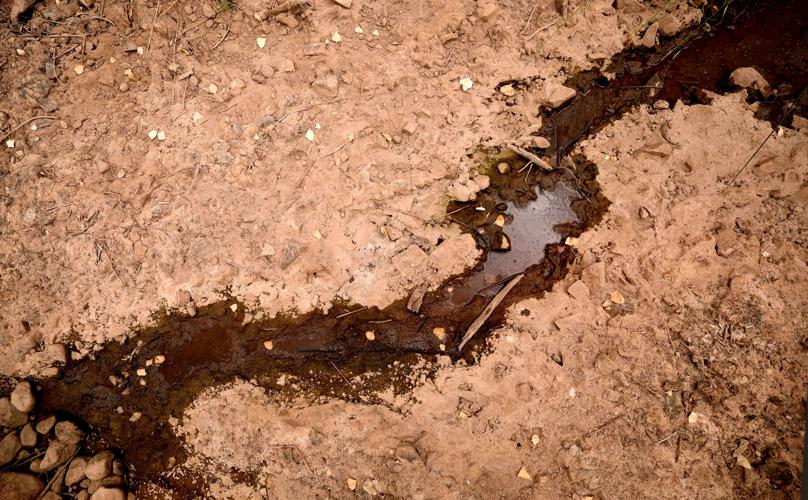
A tiny trickle of water drains one small isolated pool into another last week along a portion of the San Pedro River near Sierra Vista.
Typically, you can step over a stream flowing at 1 cfs "and not get your feet wet," said Jeff Simms, a retired U.S. Bureau of Land Management fish biologist who still regularly tracks the San Pedro's flows and who notified the Star of the Charleston gauge's zero flow.
By contrast, the U.S.G.S.'s stream gauge at Palominas peaked at 7,260 cfs at 11:30 p.m. Thursday, said Jamie Macy, acting director of the survey's Flagstaff-based Arizona Water Science Center.
The Charleston gauge is considered a key indicator of the San Pedro's health because it lies at a spot where bedrock underlying the riverbed rises very close to the ground surface. That means the river in that spot continues to carry water during dry periods when other parts of the river are likely to dry up.
'I don’t think I’ve ever seen it that dry'
The gauge's drying triggered major concerns from both environmentalists who have pushed for limiting pumping and/or downsizing neighboring Fort Huachuca and conservationists who have pushed hard for measures such as artificial recharge projects to supplement the river's flow by putting more water into neighboring aquifers.
One factor that was particularly important to many people long active in the San Pedro issue is that the drying occurred even though a city-managed effluent recharge program has been artificially discharging water into an aquifer lying upstream of the Charleston gauge for nearly 25 years.
The city's Environmental Operations Park is about 2.5 miles west of the San Pedro and covers about a square mile. It typically recharges about 2,700 to 2,900 acre-feet a year, both into constructed basins in the ground and by having some treated effluent recharge through man-made wetlands in the area.
Tricia Gerrodette, who has fought to protect the San Pedro for decades, said she started crying when she got to the river upstream of the Charleston gauge on Wednesday and saw mostly dry ground.
"I don’t think I’ve ever seen it that dry," Gerrodette recalled. "in 2005, even though the gauge wasn't registering any flow, I think there was at least some water in the river. There was almost no water now."
Kimberley Schonek, a Nature Conservancy official, called the drying of the Charleston gauge "alarming" and said the event warrants more investigation. She's the conservancy's Arizona water programs director.
"Aquifers are incredibly complicated. Aquifers can sustain you for 20-some years. The challenge we’re facing is that this is a 20-soimething year of a drought. I would say prolonged drought is a contributing factor. I would say climate change is a contributing factor."
Gerrodette, however, said she thought groundwater pumping was a bigger factor in the river's decline and the zero flows at the Charleston gauge.

A crawdad pokes out a crevice in one of the small puddles of water scattered last week along the San Pedro River near Sierra Vista.
In the past, "we had a river that flowed even when it didn’t rain. Now that the aquifer is depleted, it can’t supply the flow anymore. Now, it’s rainfall dependent," said Gerrodette, of Sierra Vista.
Overall, the river's situation is "a very complex puzzle of which the Environmental Operations Park is one piece," said Sharon Glissar, Sierra Vista's public works director, whose office manages the recharge facility. "There’s a variety of factors in play," she said, citing temperature, rainfall and terrain.
"Pumping would be a factor, not just directly around the river; but upstream at the headwaters in Mexico. absolutely could be a factor, all of it to some extent."
Monitoring wells under Fort Huachuca and leading from the fort to the river have shown declines in recent years, noted Robin Silver, co-founder of the Tucson-based Center for Biological Diversity.
Also, a Superior Court judge in 2023 set minimum water levels in nine monitoring wells up and down the river, and five of them now have water at levels below those minimums, as does a separate stream gauge — not Charleston — that also falls under the judge's minimum levels, he said.
"Climate is also the elephant in the room. We can’t change the weather, we can only change human actions, like the pumping. One-third of the country doesn’t believe climate change exists. We can’t control the drought. Locally, we can only control the amount of groundwater pumping."
'A banquet of consequences'
The San Pedro is hardly Arizona's only major river suffering during this hot, dry period in the Southwest. The Colorado River's spring-summer runoff is forecast to be among its driest levels on record.
Statewide, "everything is exceptionally low," said the Nature Conservancy's Schonek, speaking of the streams in the conservancy's extensive preserve network in Arizona. "We continue to see declines in stream gauges."
The U.S.G.S.'s Macy said the San Pedro's sharply declining flows are one example of declines his agency has observed at many of its monitoring stations and gauges across the state.
"The observations we are making across Arizona, this summer in particular, we're seeing record lows across the state in streams, reservoirs and groundwater levels," Macy said.
Retired biologist Simms noted that a stream gauge in Aravaipa Canyon, a San Pedro tributary in Pinal County, has now been dry for 46 days, since May 25. It's not unusual in recent years for the gauge located near the town of Mammoth to go dry during the summer. It was dry last year from June 15 to August 206th.

A dead carp floats in an isolated pool along with fallen cottonwood leaves and some trash last week on a portion of the San Pedro River.
But Simms contrasted those years' zero lows with those from 1997, when the creek carried at least 8 cubic feet per second from May through October.
"This is what the climate supported just a few decades ago. The new climate has resulted in dramatically different (river flows), with a dry stream bed in late spring and summer. The stream is contracting back into the canyon."
On Cienega Creek in the Las Cienegas National Conservation Area southeast of Tucson, a stream gauge has registered less than 1 cubic foot per second virtually all the time since May 7, Simms noted. BLM officials, who manage the conservation area and run that stream gauge, couldn't be reached for details about past flows at that gauge.
But Simms noted that the recent flooding that hit Palominas didn't bring any stream flows to the Aravaipa gauge and only raised flows at the Cienega Creek gauge to less than 10 cubic feet per second.
"I think humanity has set the table for a banquet of consequences. Climate change has a whole lot of consequences, and the loss of streams in the Southwest is one of those."
Holly Richter, a former, longtime Nature Conservancy official who now runs her own consulting firm, said she believes the problems of overpumping and climate change are linked. It may be necessary to recharge more water into the aquifer to compensate for the impacts of the warming and drying climate, she said.
One possible fix would be for officials to capture more precipitation and runoff from the increasing number of extreme weather events, such as flooding, that are linked to a changing climate, she said.
"I know it’s both (pumping and climate). It's gotta be both," Richter said. "The hydrologic regime of this river is so inextricably linked to the precipitation and the runoff in this watershed."
Contact Tony Davis at 520-349-0350 or tdavis@tucson.com. Follow Davis on Twitter@tonydavis987.

Tony Davis
Reporter


 Forest Service signs off on southern Arizona mine as cost skyrockets