

About 50 years ago, Jack Segurson's golden retriever led him to buy a big swath of Sonoran Desert towering over Bear Creek at the base of the Catalina Mountains northeast of Tucson.
Now the 151-acre property — which the local teacher lived on, cherished and molded into a naturalist's paradise — has become his legacy. It's been left to The Nature Conservancy with restrictions that it never be sold or developed.
Segurson died a year ago at age 90, and soon afterward, an appraiser valued his land at $3.9 million. The conservancy, which got the deed last Christmas Eve, plans to eventually turn the lush, creek-side land over to a public agency for management.
The site abuts Coronado National Forest and lies near an open-space parcel owned by Pima County. The conservancy controls development rights to three nearby private parcels.
People are also reading…
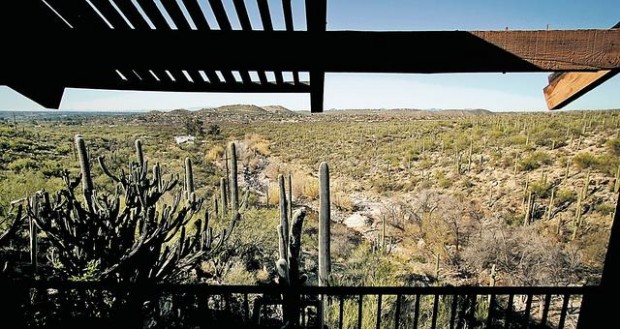
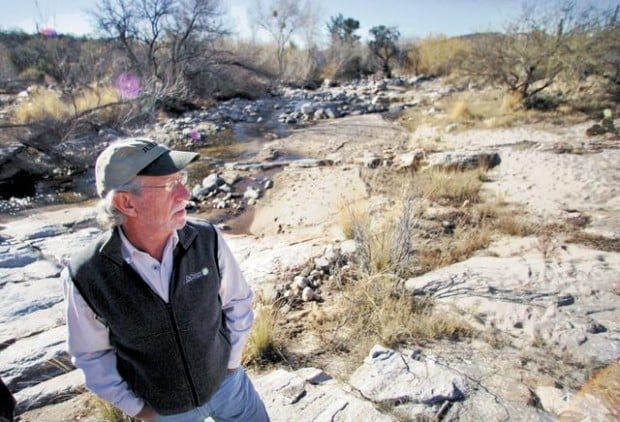
The donated land lies at the north end of Bear Canyon Road, shortly after the road becomes dirt. It's bedecked with saguaros, chollas, prickly pears and other cacti. It slopes uphill until reaching a 100-foot-tall cliff that offers a sweeping panorama of a burbling, rocky, 15-foot-wide creek lined with cottonwood trees along with the forest's rolling foothills.
Bear Creek runs about six months a year there, neighbor Elaine Stilb said.
The property is about a half-mile upstream from where Bear Canyon drains into Sabino Canyon, and about two miles downstream from the popular Seven Falls hiking destination.
This extraordinary property was owned and maintained by an extraordinary man, his friends say. They paint Segurson as a worldly, sophisticated, renaissance-like figure who had traveled extensively and had been a mentor as well as a teacher to many of them. He was an avid naturalist who had hiked the Himalayas. Having never married, he lived alone at his Tucson oasis after his adopted son grew up.
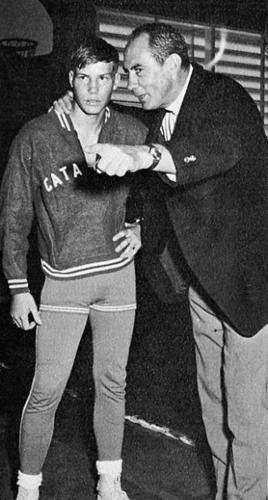
Segurson, a high school wrestling and swimming coach and teacher from the 1950s into the late 1980s, had moved to Tucson in the 1950s. He decided to buy this site after taking his retriever there several times.
"He noticed how much his dog loved the creek," recalled Frank Segurson, the son who now lives in Los Angeles.
He managed to salt away money to buy the prime property by having purchased swampland in the San Francisco Bay Area for $20,000 and selling it years later for $350,000, recalled Bob Reed, a lifelong friend of Segurson's and a Catalina High School wrestling team member in the late 1950s.
At 6 feet tall and about 185 pounds in his wrestling coach days at Catalina in the 1960s, Segurson was "solid as a rock, all muscle — he could pretty much beat anyone on the wrestling team no matter what their weight class," recalled Russell Long, a wrestling team member at the time who, like Reed, still lives in Tucson. Segurson named the property "Rancho Fundoshe," after a garment worn by sumo wrestlers in Japan.
He thrived with the wildlife on his land. He put feeders out to draw hummingbirds. A number of owls fed on mice that lived there, and his son recalled once seeing two owls put their beaks together in an apparent kiss while sitting on the outer branches of a tree.
Mountain lions regularly visited the property, Reed recalled, and deer would occasionally pass through. Ringtail cats often would come and sit on Segurson's deck and watch him at night, and he tamed and fed them. Desert tortoises and increasingly uncommon lowland leopard frogs have been seen there.
"One day, he laughingly told me he was getting like Grizzly Adams with all the animals as his friends, until a wasp came along and bit him on the face," Reed recalled. "Then he realized he wasn't quite in Grizzly Adams' state."
His connection with The Nature Conservancy dates back 15 years or so, when then-state Director Dan Campbell got a call from Segurson, who told him that he was wondering how he could ensure that his land would be preserved after his death.
"When you get 150 acres on the edge of town, you always look at it and say, 'Hmm, do you really want it?' " said Ken Wiley, the conservancy's director of stewardship for Arizona, because nearness to city life can make it questionable for habitat and species protection. "This one was easy. It's one of those properties that does a good job of selling itself."
"When you get 150 acres on the edge of town, you always look at it and say, 'Hmm, do you really want it?'
This one was easy. It's one of those properties that does a good job of selling itself."
Ken Wiley, The Nature Conservancy's director of stewardship for Arizona


