

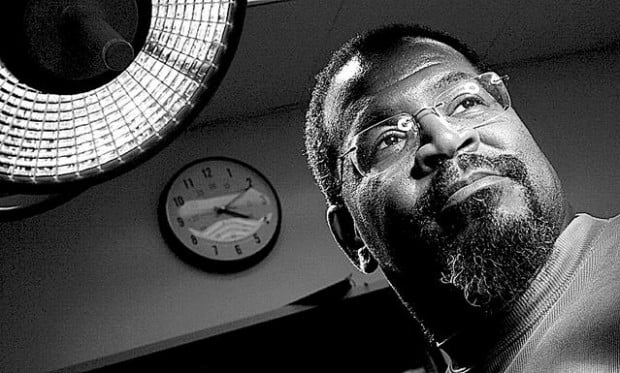
Tucson's only level-one trauma center — at University Medical Center — is losing three of its trauma surgeons, including its chief, Dr. John Porter.
It was Porter who guided the city's trauma system through its most troubled and uncertain time — when UMC became the city's lone trauma center, after Tucson Medical Center opted out of trauma care for financial reasons four years ago.
Although the loss of Porter, full-time trauma surgeon Dr. Kim Peck, and part-time trauma surgeon Dr. James Balserak is a major hit to UMC's busy trauma system, hospital officials emphasized that the center "won't skip a beat" in caring for Southern Arizona's most badly injured patients.
Serving a metro area of around 1 million people, UMC's trauma center sees 4,000 to 4,500 patients a year — those suffering severe, life-threatening injuries from car crashes, gun and knife wounds and other traumatic events.
People are also reading…
The duties of the exiting surgeons will be covered by "trauma-trained" physicians loaned from elsewhere in the hospital until new trauma surgeons can be recruited, said Eileen Whalen, UMC's vice president for trauma and emergency services.
However, the trauma center will be operating substantially short of the six full-time trauma surgeons UMC hopes to have, if that recruiting effort is successful.
The center now is staffed by four full-time trauma surgeons and one part-time, until Balserak leaves next week to serve in Iraq, and Porter and Peck leave at the end of June for new positions elsewhere.
Whalen declined to say who would fill in for the departing surgeons, or how long it would take to recruit new surgeons.
"There is no change in the trauma program or our commitment to it," she said. "We are working fast and furiously to assure a smooth transition plan, and there will be full coverage for the trauma center throughout the transition.
"The important thing for the public to know is we will not skip a beat with this trauma program or its future. There will be no change in our coverage ability or the quality of our trauma care."
However, those who have worked with Porter and the city's emergency-medical-services system raised concerns about the sudden and simultaneous loss of these trauma physicians.
"It's certainly possible this could put trauma care in jeopardy here," said Dr. Herbert McReynolds, emergency medical director at St. Mary's Hospital.
"It depends on who's going to cover at the trauma center and how they're going to do that — how they're going to rotate the doctors. It just sounds like this is going to be very tough to do."
Porter — who arrived at UMC in January 2002 — is widely credited for UMC's ultimately successful takeover of the entire trauma system in July 2003. He said he's in negotiations now for a new position elsewhere, which he declined to identify.
"I am leaving for a better opportunity, which happens all of the time in academic medicine. Moving can be one's best chance for advancement," he wrote in an e-mail this week.
"I have enjoyed my time in Tucson and believe that the trauma program at UMC has definitely served the community well."
Of the transition period, Porter, who serves as UMC's chief of trauma and critical care, said: "The public will not even notice a thing."
McReynolds pointed out that Porter has said several times that "the university has a hard time competing for trauma surgeons and neurosurgeons — that they can make more money in places other than Tucson."
"With the pressure these guys are under, it may not be surprising they would look for something not quite as intense, or somewhere they might get better reimbursement for that pressure."
With others, McReynolds strongly praised Porter for his leadership and surgical skills during his five-plus years here.
"He did a very solid job putting together a vision and a cohesive system for all of us. I think the system has dramatically improved, especially in the past year. Everyone over there is more confident and experienced . . . .
"That's why I'm concerned about this. I'd hate to see a step backward now."
In recent years, UMC's trauma center has surpassed national standards for saving patient lives, with only 2 percent who came to the center alive dying from their injuries. The average death rate for trauma patients nationally is 4.5 percent.
"John Porter has really elevated trauma care in Tucson and has won much-deserved awards for doing so. This is a huge loss for a tremendously busy service," said Balserak, a surgeon in private practice who works part time at the trauma center.
Balserak is leaving Tuesday for a second tour in Iraq as a battlefield trauma surgeon, this time for four months. Peck will join a trauma team at Scripps Mercy Hospital in San Diego in July.
UMC officials have "assured us all trauma calls will be covered and there should be no problems," said Taylor Payson, executive director of the Southeast Arizona Emergency Medical Services Council, which directs all ambulance and paramedic service in the region and must work closely with the trauma center.
"Some of the covering doctors may be pulling more shifts than normal for a while, but we don't have any real concerns about the situation at this time."
Describing Porter as a "dynamic guy," Payson said: "He did things his own way, but his heart was really in it. It was a scary time, going from two to one trauma center, no doubt about it, but he pulled it off, and I don't think we would have without him."
From the day Porter walked into his office in 2002, he became a close friend, said Tucson Mayor Bob Walkup, who worked closely with Porter to get through the crisis when TMC's trauma center closed.
"It was through his enthusiasm and strength that UMC got in gear to do this," Walkup said.
But even when UMC recovers from the loss of these surgeons, a more ominous issue faces the city's trauma system, Walkup said: We've outgrown the capacity of a single trauma center.
"The standard of care is one center per 1 million people, and we've passed that now," he said.
"It's time to talk about a second trauma center. That has to be on the agenda, on the front burner, within the next two years."


