
Swallowing button batteries can be fatal or cause serious harm, and research suggests that severe injuries in children, though relatively scarce, are on the rise.
The dangers are highlighted in a new medical report about 10 cases at a Utah hospital, including seven that caused severe damage, and in last week's recall of more than 1 million Chuck E. Cheese battery toys. There are no reports of children injured by the Chuck E. Cheese toys, but the toys were recalled because swallowing batteries can be so dangerous.
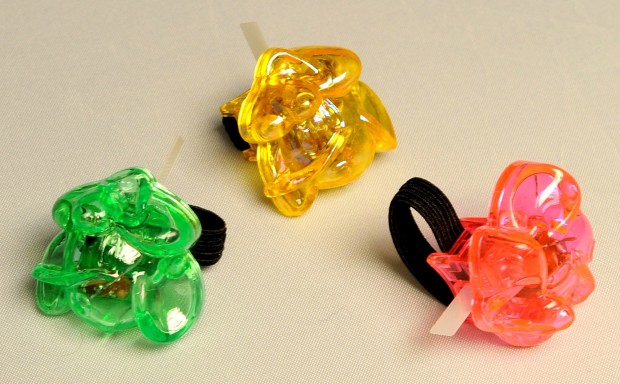
Button batteries are used in dozens of household products including toys, games, remote controls, musical greeting cards, cell phones, watches and lighted shoes. Batteries pose a special swallowing risk; even if they don't completely block the throat, they can trigger a chemical process when they lodge there that can burn through tissue within a few hours.
People are also reading…
"These are bad news. They have to be removed immediately," said Dr. Fuad Baroody, a pediatric ear, nose and throat specialist at the University of Chicago.
In the throat, "the window for safely removing batteries is only two hours," said Dr. Toby Litovitz, director of the National Capital Poison Center.
When surrounded by moist tissue, batteries can create an electrical current that combines with body fluids to form a caustic lye-like chemical, she explained.
Aidan Truett, a 13-month-old boy in Hamilton, Ohio, died last November when a dime-sized battery burned through his esophagus and burst his aorta.
No one saw him swallow the battery but his parents took him to the doctor when he began spitting up. Doctors suspected a stomach problem; several days later an X-ray revealed the battery in his throat, his father, Lonnie Truett, recalled.
Doctors surgically removed the battery and sent Aidan home, but he died a few days later when his aorta burst, Truett said.
"We have no idea where the battery came from," Truett said. Parents need to be aware, he said, and keep objects containing button batteries "behind lock and key."
The Archives of Otolaryngology published a report Monday from doctors at Primary Children's Medical Center in Salt Lake City about 10 cases treated there between 1998 and 2008. All were babies and young children; many required major surgery.
"We're continuing to see these problematic cases" at least once a month, said Dr. Albert Park, a report co-author and a head and neck specialist at the hospital.
Every year more than 3,500 people swallow button or disc-shaped batteries, according to Litovitz's center, an independent group affiliated with George Washington University Medical Center in Washington, D.C.
Lithium cell batteries at least 20 millimeters in diameter, a little bigger than a penny, are the riskiest.