

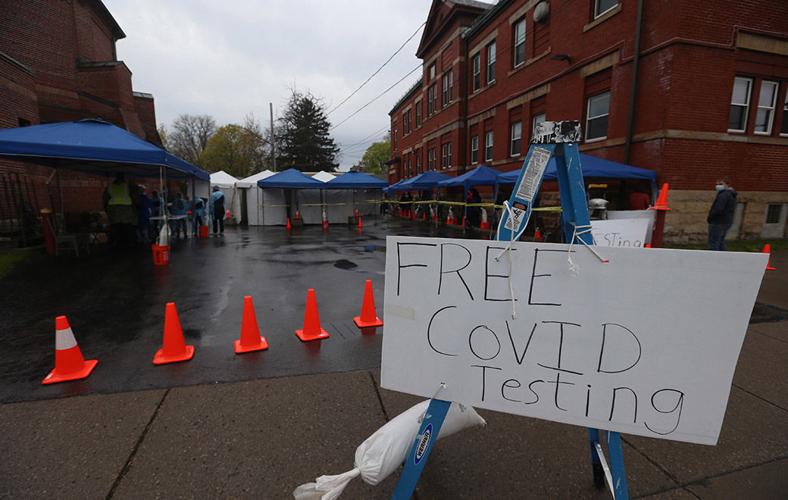
A cluster of white tents blocked rain showers late Friday morning in the parking lot of the Buffalo Myanmar Indigenous Christian Fellowship, a red-brick church in the Black Rock neighborhood of Buffalo.
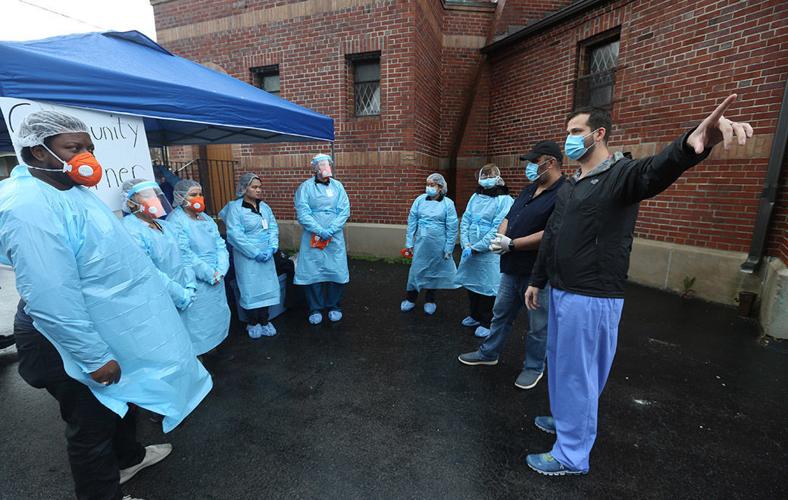
Nurses, doctors and other medical staff from Jericho Road Community Health Center wore face shields and masks as their powder blue medical gowns billowed in the breeze. A half dozen people wearing masks waited in a line, marked off at six-foot intervals with orange cones.
A handwritten sign posted on the sidewalk read “FREE COVID Testing.”
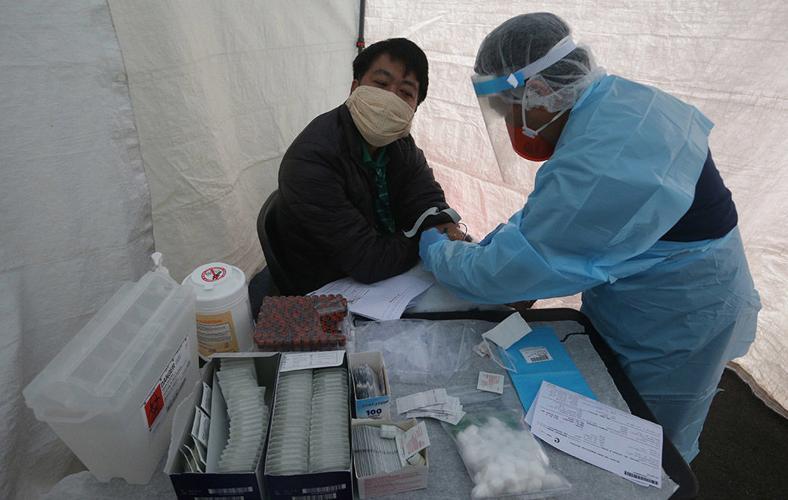
The pop-up testing operation was one of three Jericho Road offered this week to provide both virus and antibody testing to under-served communities.
Of particular concern for Jericho Road and Erie County health officials is an outbreak of Covid-19 in the Karen community, a minority ethnic group from Myanmar, which was once known as Burma. More than 8,000 refugees from Myanmar live in Buffalo. About two-thirds of those refugees are Karen.
People are also reading…
Erie County Executive Mark Poloncarz said at his Wednesday briefing that the community has been testing positive for Covid-19 at higher rate than the rest of the county.
Han Moe, a registered nurse with Jericho Road and church leader with Buffalo Myanmar Indigenous Christian Fellowship, said he’s noticed a spike in coronavirus cases in the community of resettled refugees.
“I would say more than 100,” Moe said.
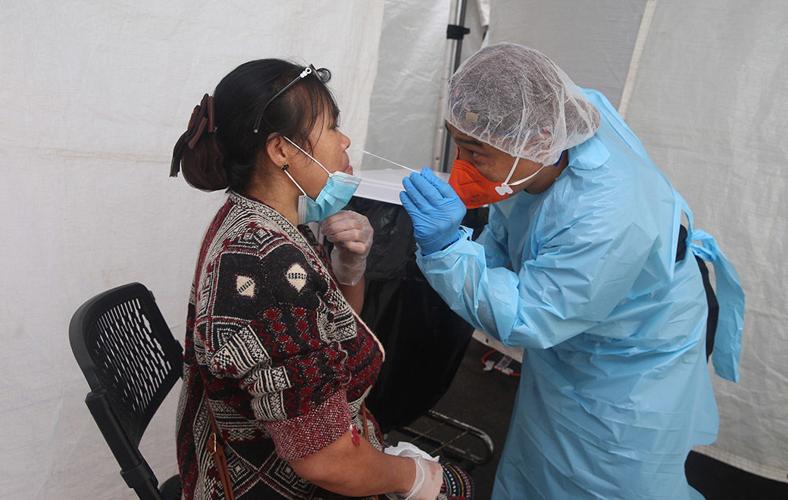
Moe conducted nasal swab testing Friday in one of the white tents, carefully inserting one long, thin swab into each nostril of his patients.
The pop-up site, which was open to the public and provided testing without a prescription or insurance, started at 9 a.m. By 10:30 a.m., at least 50 people had come to get tested, Moe said.
Across the country, Covid-19 has disproportionately impacted low-income people of color. In Erie County, preliminary testing data show that cases have clustered in black neighborhoods and that black patients represent a disproportionate share of Covid-19 deaths. As of May 7, per capita case counts were 88% higher in the county's five majority black ZIP codes than they were in the rest of the county, according to a Buffalo News analysis of county Health Department data.
Dr. Myron Glick, the founder of the Jericho Road, said the spike within the refugee community mirrors what’s going on in neighborhoods that are predominately black.
“Many of them are ‘essential’ workers,” Glick said outside the testing site. “They’re working in places that are cramped.”
Then there are those who have lost their jobs and are risking exposure as they search for new work.
Also, many Karen families live in multi-generational homes, said Dr. Allana Krolikowski, the medical director for Jericho Road.
“So when people do turn out to be positive, how do they isolate from their family?” Dr. Krolikowski said. “It can depend on how many people are living there, how many bathrooms there are. … Some families are better equipped to isolate but some aren’t and the entire family is turning positive.”
Jericho Road Chief Medical Officer Alana Krolikowski speaks about performing Covid-19 tests for the Burmese and Karen refugee communities and anyone else who needs it in Buffalo. (John Hickey/Buffalo News)
Moe said the Burmese Karen people have a tradition of living closely and taking care of each other. They watch each other’s children. They give each other rides.
“They help each other out,” he said.
Moe himself was sickened by Covid-19 back in mid-March, as the virus was just beginning to spread in Western New York.
He had been volunteering to work screening patients coming into Jericho Road’s clinic on Barton Street when he got sick.
“I had a little fever, some malaria-like symptoms,” Moe, 49, said. He stayed home for two weeks, then came back to work in April.
During the pandemic, Jericho Road – which serves many low income people, including refugees on both the West and East sides of Buffalo – has had more than 370 patients test positive for the virus, Dr. Glick said, “which is way too high.” That represents about 29% of all the patients tested, he added.
About 18 patients have ended up hospitalized with Covid-19, Glick said. Five of Jericho Road’s patients have died.
Some staff have been stricken too – 16 in March, 4 in April and 3 in May.
Jericho Road’s staff wanted to stay open, so they made strategic changes to limit potential exposure to the virus.
The consolidated their offices on the East Side, closing down their facility on Genesee Street and moving those operations to their new building at 1021 Broadway, next to the Broadway Market. They also established two sides to each remaining clinic, one for healthy patients and another for sick patients. Each side has its own entrance and there’s no co-mingling inside. In addition, every person, from staff to patients, wears a mask.
“It was a big learning curve,” Dr. Glick said.
Han Moe, RN, talks about Covid-19 testing at Jericho Road test center, serving the Burmese and Karin community of Buffalo. Testing was free to anyone who wanted it.
Moe wanted Friday’s testing outside his church to not only help identify who is sick, but also to serve as a way to teach his community about the dangers of Covid-19.
As he swabbed their nasal cavities, he said, he explained to them about how the virus is transmitted, ways to prevent infection and what to do if they or someone in their family gets sick.
“I will teach them,” Moe said.


