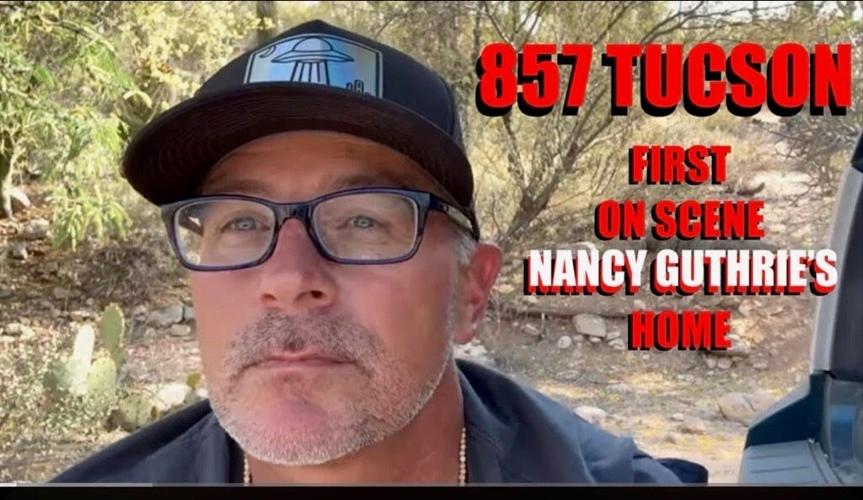
When three YouTubers were arrested outside Nancy Guthrie's house in Tucson in early June, claims of a YouTuber's "pee tent" seemed to leave little confusion about the reason for the arrests.
But a review of law enforcement records detailing the citations raises questions about whether all of the arrests were warranted, and if the Pima County Sheriff's Department retaliated against some of the streamers' First Amendment rights.
Sheriff Chris Nanos told a radio show host weeks after the arrests that he'd "had enough" and "you just can't do that." He'd hit a breaking point and wasn't shy about saying so.
"I said, ‘That’s it, they’re going to go to jail,'" Nanos told the Buckmaster Show on KVOI AM 1030 in Tucson on June 26.
He wasted no time. Within hours of complaints coming in accusing Alexander Zabel, from the Criminal Network YouTube channel, of public urination and acting erratically, deputies were called into a meeting with their supervisor.
People are also reading…
They were "ordered to locate anyone in front of the house live streaming and to cite them for ... Public Nuisance," a deputy wrote in an incident report. The Arizona Republic obtained the report through a public records request.
The frustration wasn't surprising. Nanos had told media outlets that complaints from neighbors had tripled and were inundating the department. Zabel alone generated more than five complaints in one day — including from Savannah Guthrie, the "Today" show anchor and daughter of Nancy.
The deputies did as they were told. Both Troy Bradshaw of "DaaJuice" on YouTube and Damian Enderle of the account "857 Tucson" were cited with public nuisance on June 8.
But unlike Zabel, neither Enderle nor Bradshaw were accused of urinating in public. They were not on private property, and, on this day at least, they were not obstructing the roadway. Incident reports of their arrests list the crimes as "live streaming and lingering" and "causing a nuisance to others who resided in the neighborhood."

Damian Enderle, the YouTuber behind "857 Tucson," said he began reporting on Nancy Guthrie's abduction from the start. He was later arrested by the Pima County Sheriff's Department on suspicion of being a "public nuisance," but prosecutors later dropped the charge.
But recording from public property is a protected right under the U.S. Constitution's First Amendment.
Even as law enforcement officials grow sympathetic to the grievances of Guthrie's neighbors, First Amendment attorneys told The Arizona Republic that live streaming alone from a public space is not enough to warrant arrest or prosecution.
David Bodney, an attorney who has represented The Arizona Republic, said comments in the deputies' incident reports "raise serious questions about the validity of any arrest or prosecution based on those facts."
In one incident report, a detective described the streamers as "so-called journalists" who were exploiting tragedy "to increase their social media followers and potentially benefit financially." In another, a deputy said he didn't think the YouTuber had done anything wrong.
The Pima County Attorney's Office has since voluntarily dismissed several of the public nuisance charges against the streamers. A spokesperson for the office declined to explain the decision.
Fallout from the arrests and remaining charges, however, are likely to fester.
The months-long investigation into Guthrie's abduction has provided few answers, and the arrests of the YouTubers have left the streamers and their followers distrustful of law enforcement and the press. They worry about the chilling effect the highly publicized arrests could have on other YouTube streamers, and if other police agencies will also turn to nuisance laws to crack down on filming.
Shift in tactics leads to at least one deputy disagreement
Pima County deputies' frustration with live streamers percolated for months before the arrests.
The Feb. 1 abduction of 84-year-old Guthrie instantly became a media circus. Hundreds of news reporters, live streamers and curious onlookers flooded the streets of Guthrie's residential neighborhood for weeks. Deputies had to implement parking restrictions to try to keep the area clear for residents to enter and exit.
Months of no answers in the case paved the way for armchair speculation by viewers online. Conspiracy theories sprouted that led to real harm — at one point, amateur investigators set their sights on an elementary school teacher who had been questioned by law enforcement. That man and his wife told the New York Times they resorted to keeping their child away from home and hiding with lights turned off to avoid the content creators.
Nanos said complaints from neighbors skyrocketed and that he had tried to work with the YouTubers but was unsuccessful. The complaints came to a head in early June.
On June 4, a caller complained about Bradshaw sitting and filming from a camping chair in the roadway. The responding deputies said Bradshaw wasn't in the roadway, but his tripod was, so they cited him for "obstructing a thoroughfare."
On June 5, a caller from Tennessee complained about Zabel sounding drunk and acting erratically on his live feed. The caller said he was destroying a wheelbarrow, throwing rocks, and threatening to go to someone's home. Deputies responded but said they “did not observe any criminal activity.”
Three days later at 4:22 p.m., a detective cited Zabel for public nuisance and obstructing a thoroughfare. They said his own stream showed him sitting on a chair in the roadway with a "pee tent" erected and cones set up around him.
By 4:45 p.m., Sgt. Jorge Morales called a meeting with three other deputies for a special assignment.
"We were told that we needed to review ARS 13-2917 A1 Public Nuisance, regarding YouTube streamers near the Nancy Gutherie residence. I was told Criminal Investigative Division and the Sheriff's Department legal advisor had been consulted regarding the use of that statute," Deputy Scott Woodworth wrote.
In Arizona, an action becomes a public nuisance — and therefore a crime — when it becomes "injurious to health, indecent, offensive to the senses or an obstruction to the free use of property that interferes with the comfortable enjoyment of life or property ..." The nuisance is supposed to be felt by an entire community.
The deputies then cited Bradshaw and Enderle. The reports note that Bradshaw reacted in confusion; he said deputies had told him just hours earlier that he was OK to film where he was.
Woodworth appeared to question the use of the public nuisance law. In his incident report, he wrote, "I then issued Mr. Enderle his citation explaining that despite my thinking he hadn't done anything wrong, I had been ordered to do so."
On June 11, records show the department got at least five complaints about Zabel's live stream — including one from Savannah Guthrie.
"Ms. Guthrie was extremely upset that Mr. Zabel was back in front of her mother's residence. Over the last couple of months she has expressed to me her displeasure about what has been going on with these vloggers and has on multiple occasions told me that she fears for her and her family's safety with some of the actions that they have been taking," Sgt. David Stivers wrote.
Guthrie wasn't aware "of what Mr. Zabel was doing or saying on the live stream but his mere presence was upsetting to her," Stivers wrote.
Other callers said Zabel was "being vulgar," spewing profanities and insulting the sheriff. Supplemental reports say Zabel's own stream showed him stepping over a chain and trespassing onto private property.
Deputies responded to the scene and immediately placed Zabel under arrest. Video of the incident shows Zabel repeatedly asking what he was being arrested for, but Deputy Robert Avila and Sgt. Michael Aragon didn't answer. In his incident report, Aragon said they were planning to tell him but wanted him in handcuffs first.
"Get on the freaking ground!" one said while grabbing him. Zabel was arrested again on suspicion of public nuisance and resisting arrest, a felony.
In the June 11 incident report about Zabel, Detective Michelle Perez wrote, "Due to the Nancy Guthrie case, the residents in her neighborhood are exhausted from the constant observation, media scrutiny, and the invasion of so-called journalists who have been taking advantage of someone else's tragedy to increase their social media followers and potentially benefit financially ..."
Where the streamers' First Amendment rights come in
The incident reports back up Nanos' claim of frequent complaints related to YouTubers burdening the neighborhood. However, they also paint a picture of growing frustration that resulted in questionable charges, several of which were later dropped.
Bodney and Nora Benavidez, senior counsel with Free Press, a nonprofit focused on digital media and the law, said the First Amendment can't shield someone from the consequences of real criminal or civil wrongdoing, such as public urination.
But comments that suggest law enforcement may have been driven by personal value judgments against the streamers' journalistic credibility could hamper a prosecution.
Whether something is or isn't newsworthy, "that would never negate people's constitutional and First Amendment rights to stand in these public places," Benavidez said.
"Actual evidence of criminal activity ... should be the key ingredient of any arrest or prosecution," Bodney said.
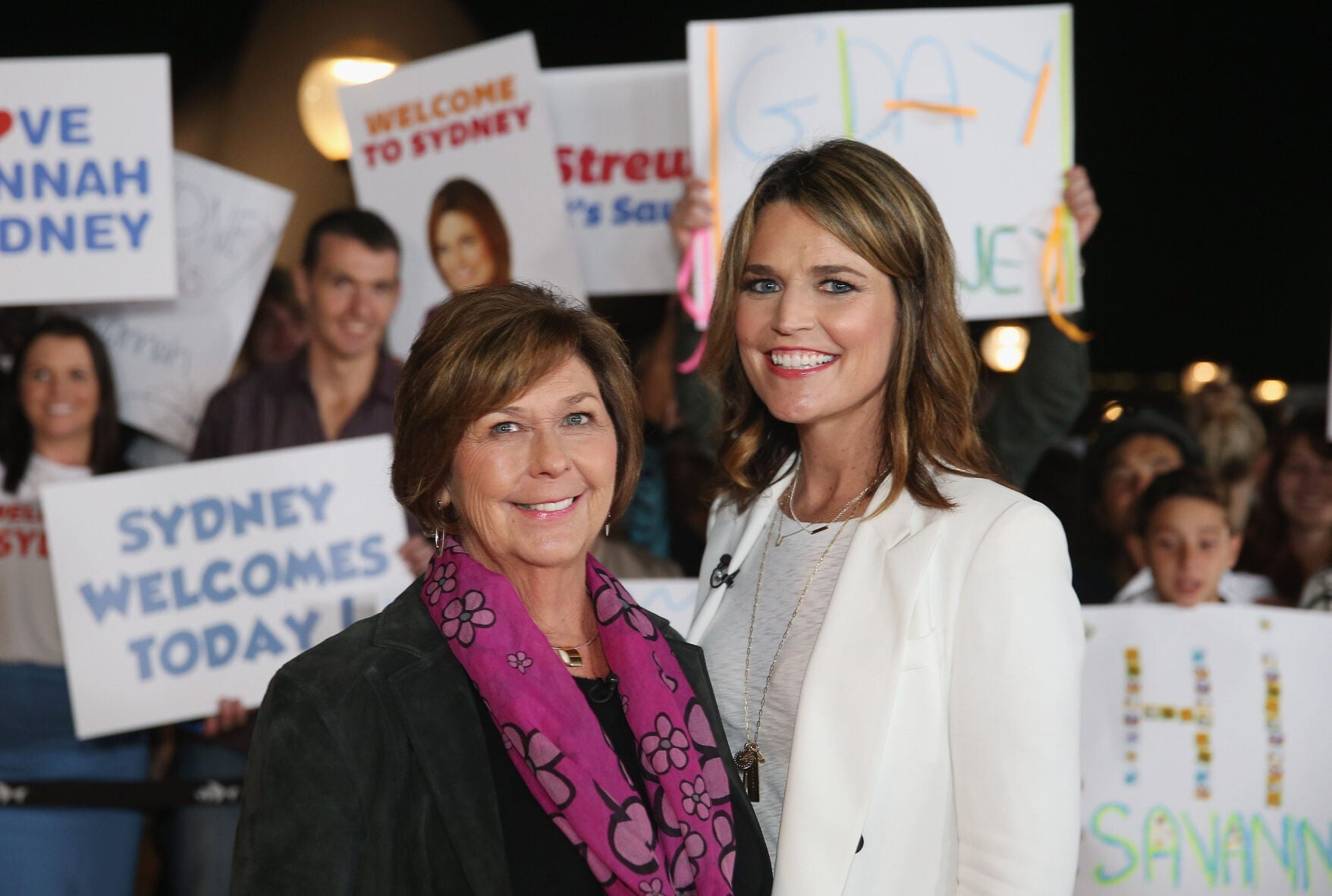
The family of Nancy Guthrie, mother of "Today" show coanchor Savannah Guthrie, reported missing from her Tucson home on Feb. 1.
And even if law enforcement believes the streamers' activity qualifies as a public nuisance violation, Bodney said, that code must still comply with constitutional protections for speech. "That's one of the risks of prosecuting under these statutes," he said.
Pima County Attorney Laura Conover dropped the public nuisance charge against Enderle in late June, although the Sheriff's Department could refile. County Attorney's Office spokesperson Kelvin Ringold said Bradshaw's public nuisance charge would be dismissed too. Bradshaw's charge from June 4 for obstructing a thoroughfare remained as of July 7.
Zabel said his public nuisance misdemeanor charge and resisting arrest felony charge from June 11 were dropped, but his June 8 charges for public nuisance and obstructing a thoroughfare remain. Ringold said prosecutors were reviewing "additional charges" related to the felony incident and that "a charging decision has not been made on that."
A spokesperson for the Sheriff's Department declined to answer questions from The Arizona Republic about the arrests.
Fallout among online followers after Guthrie streamer arrests
The arrests immediately sparked alarm and backlash among the YouTubers and their global following.
"The government is going around arresting people for reporting," Enderle said in an interview with The Republic. "A lot of people see what happened to me as it could happen to them, if they have their own channel in their own city."
Brenda Walsh, a woman from Canada, launched a petition calling on the Pima County attorney to uphold the streamers' First Amendment rights and drop all of the charges.
Many of the petition signers expressed skepticism about mainstream news outlets and said they believe the streamers play a critical role in holding law enforcement accountable to solve Guthrie's case. They rebuked the arrests as retaliatory, and they, along with the streamers, have criticized the mainstream media's coverage as improperly scrutinizing YouTubers over law enforcement.
"I am terrified that if Pima County sets this precedent, that streamers aren't allowed to be in neighborhoods where breaking news is happening ... then it's going to snowball across the USA and Canada," Walsh said.
Scores of comments supporting the petition called the streamers "independent journalists" who provided the truth in real-time. Some said they wouldn't have access to the news otherwise.
Still, even as First Amendment experts advocate for the streamers' legal rights to record in public, some worry about long-term ramifications.
"This is the question we've always worried about: Like yes, you can be on a public street to report news. (But) what if you do it for eight hours straight and for no reason, and then it starts to become unreasonable?" said Gregg Leslie, executive director of Arizona State University's First Amendment Clinic.
He added, "That kind of thing is really gonna undermine this idea that of course there's a public interest in being able to be in a public space and record."
Benavidez said standing up for streamers' legal rights, even amid personal objection to their content, was important in the current political environment.
"On the law, we are seeing increased efforts by the federal government and by local and state authorities to criminalize and go after people who use their cameras and other devices to film government officials," she said. "That attempt to remove inquiry or documentation is something that I am incredibly troubled by."