

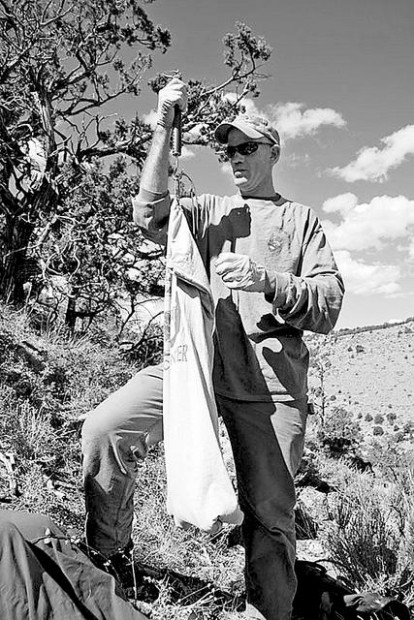
PHOENIX — A wildlife biologist at Grand Canyon National Park most likely died from the plague contracted while performing a necropsy on a mountain lion that later tested positive for the disease.
Eric York, 37, who worked in the park's cougar collaring program, became ill on Oct. 30 and called in sick from for a couple of days before he was found dead in his home Nov. 2. Tests for pneumonic plague were positive .
Officials said Friday that 49 people who came in contact with York were given antibiotics as a precaution. None have shown symptoms of the disease.
York, whose family lives in Massachusetts, had skinned the cougar and was exposed to its internal organs during the necropsy he performed three days before developing symptoms, said David Wong, an epidemiologist for the U.S. Public Health Service.
The cougar, which had died from the plague, was believed to have remained in back-country areas where park visitors wouldn't normally go, officials said.
People are also reading…
The National Park Service is planning to review its safety guidelines for wildlife biologists and possibly make recommendations for improvements. Park Superintendent Steve Martin said authorities were checking whether guidelines were followed in York's case.
An average of 13 plague cases are reported in the United States each year. Fourteen percent of cases are fatal, according to the Centers for Disease Control and Prevention.
While Arizona health officials say plague cases appear to be on the rise, CDC spokeswoman Lola Russell said that's not the case nationally.
Plague is transmitted primarily by fleas and direct contact with infected animals. When the disease causes pneumonia, it can be transmitted from an infected person by airborne cough droplets. Cases are treatable with antibiotics.


