

BOYNUYOGUN, Turkey - Syrian tanks pushed toward more towns and villages near the Turkish and Iraqi borders on Tuesday, expanding the crackdown against a 12-week uprising to the north and east as more Syrians flee their homes.
Syrian President Bashar Assad appears to have abandoned all pretense of offering reform, sending tanks, helicopter gunships and only his most loyal forces into population centers to crush dissent.
Anti-government activists reported tanks in the northern market town of Maaret al-Numan and in smaller villages near Jisr al-Shughour, a town stormed Sunday by Syrian elite forces backed by helicopters.
Human-rights activist Mustafa Osso said tanks were also moving in the large eastern province of Deir el-Zour, which borders Iraq. The Syrian government claimed to have thwarted cross-border weapons smuggling in that area.
People are also reading…
The growing military campaign has sent 8,000 Syrians fleeing for their lives to neighboring Turkey.
Some analysts have said Assad is trying to keep the opposition from establishing a base, as happened in Libya, where the rebels trying to overthrow Moammar Gadhafi took over the coastal city of Benghazi.
In other developments related to the Arab world's unrest:
Yemen
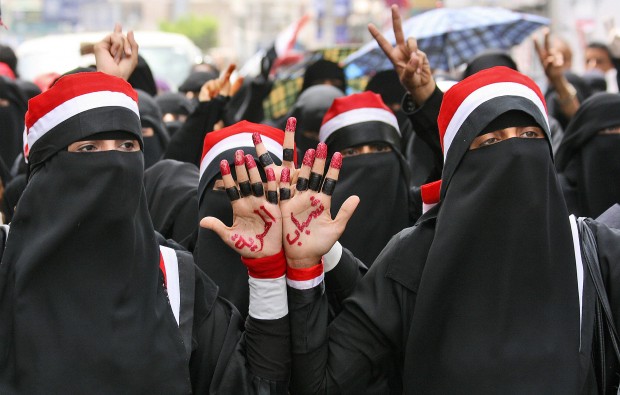
Hundreds of thousands of Yemenis protested in several major cities on Tuesday, demanding that embattled President Ali Abdullah Saleh and his relatives face trial and calling for the creation of a transitional presidential council to run this poor but strategic nation.
The protests were the largest since Saleh flew to neighboring Saudi Arabia for medical treatment for severe injuries sustained in a June 3 attack on his presidential compound. The demonstrators are seeking to take advantage of Saleh's absence to install a new government that would end his nearly 33-year rule.
Libya
NATO resumed its airstrikes on the Libyan capital of Tripoli late Tuesday, blasting at least two targets just before midnight, after military leaders voiced concerns about sustaining the operations if the alliance mission drags on.
The targets of the airstrikes were not immediately clear, and there was no word on casualties.
Jordan
King Abdullah II said Tuesday that it may take "at least two or three years" to put in place an elected government to replace a royally appointed one.
The monarch's remarks came in a meeting with young Jordanians two days after a nationally televised address in which he endorsed the idea of prime ministers and Cabinets elected from parliamentary majorities, conceding to a major demand raised in six months of pro-democracy street protests.
Egypt
Political activists announced the formation of three new parties, the first groups with no religious affiliation to emerge from the popular uprising that toppled Hosni Mubarak.
The new parties, two of them liberal and the other social democratic, have attracted a following among Egypt's protesters, who were seeking to find a counterbalance to the country's largest Islamic group, the Muslim Brotherhood in advance of elections set for September.
Many fear the Brotherhood, outlawed under Mubarak, will sweep the elections and set an Islamic tone for the country's new constitution, to be written by the new parliament.


