

The news of a new full-body X-ray system to be tested at Phoenix Sky Harbor Airport drew mixed opinions about its effectiveness and privacy from travelers at Tucson International Airport Friday.
The new system will be in use in Phoenix by Christmas, Transportation Security Administration officials said.
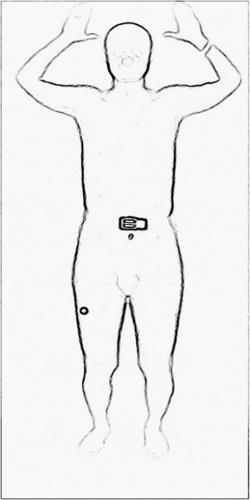
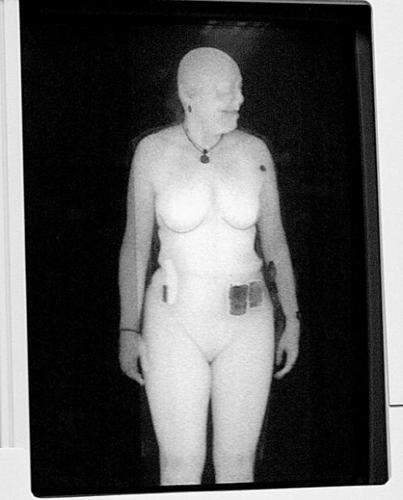
It uses low radiation levels to X-ray a person who warrants secondary screening — more than just the metal detector everyone passes through— and shows a full-body image to a security screener. Any plastics or metals show up, but clothing becomes invisible.
The radiation is lower than the kind a doctor would use to look at organs or bones, said Jennifer Peppin, a Transportation Security Administration spokeswoman. It's low enough it can be used safely on a pregnant woman, she said.
The X-ray system, called a backscatter, will help detect plastic explosives, which can go unrecognized through metal detectors and in some cases even during pat-downs, Peppin said.
People are also reading…
The machine and its usefulness are "still very much in the experimental, pilot phase," she said.
Tucsonans Garry Bryant and his wife, Margy McGonagill, said they liked this use of technology, but they both thought it could be applied differently.
"If they could do that to the checked baggage, that would be better," said Bryant, while he was waiting for his bags to arrive. "The use of the equipment is not offensive to me."
McGonagill agreed that checked baggage poses more of a risk.
"If you clamp down on people walking on with stuff, the bags will be a more critical piece," she said.
The technology has been around for years, but TSA officials weren't completely happy with how it worked until now, Peppin said.
"It was in existence, but there have been real issues with privacy," she said.
TSA didn't want to start using the backscatters until they could be sure that privacy issues were eliminated, said Nico Melendez, an agency spokesman.
Three years ago, the images were more invasive than officials were comfortable with. They showed more intimate details and dimensions of a person's body. The current image is similar to a chalk outline of someone's body. That's the result of a privacy filter on the backscatter machines. Security officials cannot change the filter settings to show a more detailed image, Melendez said.
The person viewing the X-rays will be in a private room, Peppin said. Others will not be able to view the screen, and images will be deleted as soon as they are reviewed.
Melendez said deleting the photos will not interfere with law enforcement because when prohibited items show up on a person, they will be patted down and the prohibited item removed on the spot.
The X-ray will be used on people who have been designated to go through secondary screening, TSA officials say. This can happen after the first screening or at random.
It is also optional. Those who are subject to more intense screening can choose the X-ray or the long-used pat-down process to search for weapons or prohibited items.
Even with the toned-down images, invasion of privacy is a concern for some.
Janette St. Rose, from Calgary, Alberta, flew to Tucson on Friday and said the X-rays sound intrusive. She also said she is concerned about how well they work.
"Is this another level of security?" St. Rose said. "Does this make me safer?"
She questioned whether the equipment would keep travelers safe from terrorist attacks, and whether it is necessary.
Like any new prescription drug approved, she said effectiveness is her main concern.
"If they decide to do it (in all airports), we won't be able to stop it, but I have questions."
Tucsonan Frank Chavez, who flies about once a month, said he thinks the system is less intrusive than a pat-down.
"Versus someone touching you? It's better," he said. "I'm fine as long as it's safe, not harmful to your health and nobody touches you."
For him, it's more invasive for a stranger to touch you than to see your body in an X-ray. Issues can arise when a screener does not know a person's personal and cultural values and background, Chavez said.
Some said that in a post-9/11 world, feeling safe is important and these machines can make people feel more confident about flying.
Dennis Wegman, a Tucsonan who flew in from Texas on Friday, likes the backscatter technology and said he wonders why security hasn't been tightened even more.
"Here it is, five years later, and where are we?" said Wegman, who flies a couple of times a month. "Nothing's really changed to help TSA to identify people. It's still kind of antiquated."
For others, expediency is most important.
Mary Brundage, who spends part of the year in Tucson, flew here Friday from Las Vegas. She said she waited in long lines at the Las Vegas airport. She was greeted by Mark and Kelly Mainvielle, who both said that as long as the system doesn't slow down the security lines, they were "all for it."
"As long as, if you need the extra security, you can go to a separate line," Kelly Mainvielle said.


