The following is the opinion and analysis of the writers:

Natalie Jayroe

L'Don Sawyer
In October, the Community Food Bank of Southern Arizona and Mobile Meals of Southern Arizona joined forces after months of planning, conversation and reflection. For many in our community, the merger raised an understandable question: Why would two respected organizations choose this path?
The answer is simple: our success is not about our organizations becoming bigger. We came together to serve people better.
At first glance, our organizations appeared quite different. The Community Food Bank delivers groceries and meals through a broad regional network of partners and programs. Mobile Meals spent more than 55 years building a trusted, volunteer-driven model, delivering nutritious meals directly to neighbors who often could not access traditional food assistance.
People are also reading…
Through the merger, we recognized that we were trying to solve the same problem from different directions.
Food insecurity looks different to different people, and the challenges faced by so many struggling people are becoming more complex. Rising costs continue to strain household budgets, while demand for assistance remains high and public resources face uncertainty. Southern Arizona's population is also aging, and many people live with health conditions, disabilities or transportation barriers that make obtaining food difficult.
These realities underscore the truth that has long guided our work: Food availability is not the same as food access.
Groceries available at a food pantry or distribution site cannot help someone who cannot leave home or lacks transportation. A nutritious meal can improve someone's well-being only if it reaches them.
The future of food security requires more than strong individual organizations. It requires strong partnerships.
For nonprofit leaders, conversations about collaboration can be uncomfortable. Organizations invest years, often decades, building community trust, donor relationships, volunteer support and program expertise. There is understandable pride in that work, and a responsibility to honor it.
But stewardship is not simply about preserving an organization. It is about preserving and strengthening its impact.

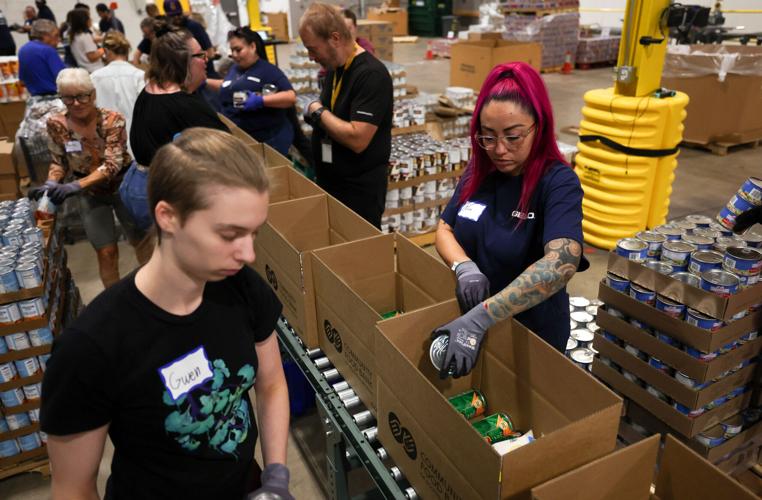
Gwen Scetlar, left, and Zalina Pedrin packed boxes of non-perishable goods late last month at Community Food Bank of Southern Arizona.
As leaders, we must be willing to ask a difficult question: What structure will best serve the mission and the people who depend on it? Sometimes the answer is independence. Sometimes it is partnership. Sometimes it is a deeper integration of resources, expertise and operations. What matters is whether the community benefits.
Equally important is protecting what made a program successful in the first place.
Discussions about nonprofit collaboration often focus on efficiency, scale and financial sustainability. Those considerations matter, but they are not what matters to the people being served.
People remember the volunteer who delivers a meal and checks on a neighbor or client living alone. They remember the driver who notices when something is wrong. They remember the relationships that offer reassurance, dignity and connection.
These human connections are not secondary benefits. They are an essential part of the service itself.
One of the most important lessons from our merger is that collaboration does not require sacrificing what makes a program special. Successful partnerships should protect and strengthen those qualities. The goal is not to erase histories or identities. It is to combine strengths while preserving the heart of programs that communities value and trust.
The challenges facing Southern Arizona are too interconnected for any one organization to solve alone. Hunger intersects with health, transportation, aging, disability, isolation and economic stability. Meeting those challenges requires sharing knowledge, building trust and working together in new ways.
The lesson from our organizations’ merger is not that every nonprofit should merge. It is that every nonprofit should be willing to ask how it can best advance its mission in a changing world.
When we place community needs ahead of organizational boundaries, new possibilities emerge.
The future of food security and, ultimately, communities where we all thrive in Southern Arizona will not be built by any single organization. It will be built by partners committed to preserving what works, embracing innovation where it is needed and ensuring that every neighbor has access to the food and support they need to thrive.
Follow these steps to easily submit a letter to the editor or guest opinion to the Arizona Daily Star.
Natalie Jayroe is President and CEO of the Community Food Bank of Southern Arizona. L'Don Sawyer led Mobile Meals of Southern Arizona through its merger with the Community Food Bank.