

You can mark it on your calendar.
Every four years – Olympics. Every 17 years – locusts. And every 10 years – politicians incensed over reapportionment mandated by the Constitution.
Back in the 1780s when the Founding Fathers crafted that document, it seemed like a good idea to adjust representation according to population. It still is, because things change. New York boasted 45 congressional districts in 1950. But other places outpaced even the Empire State in ensuing years, and the new plan calls for only 26.
Similar population shifts have affected representation in the State Legislature, and now Republicans – especially – are howling over the unfairness of a process dominated by Democrats. State Sen. Ed Rath is unhappiest of them all.
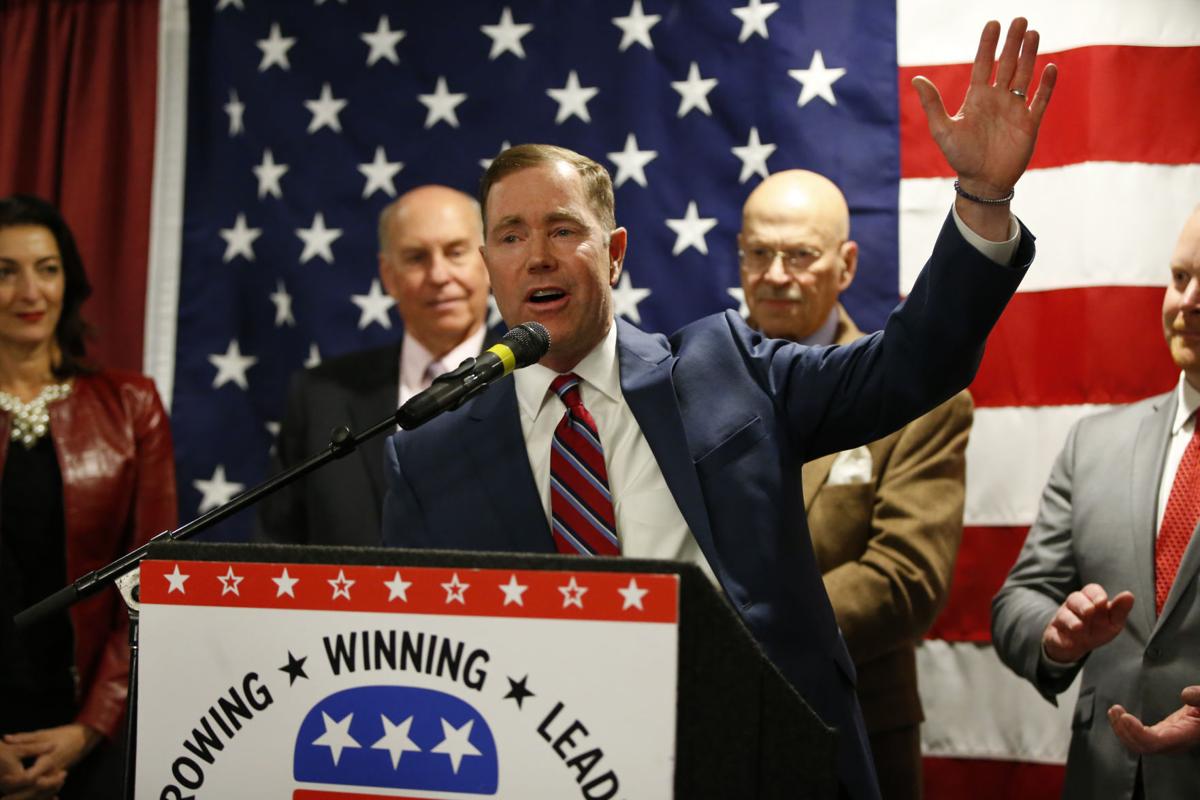
Finishing his rookie term in Albany, the Amherst Republican looms as a major redistricting casualty. Rath must work hard to compete in increasingly Democratic Amherst, relying on other towns and Republican turf in Genesee County. But now his home is lumped in with a Buffalo dominated district represented by Democrat Tim Kennedy.
People are also reading…
Chairman of the important Transportation Committee, Kennedy has almost $1.5 million in his campaign treasury. Some tout him as a future Buffalo mayor. And in the new overwhelmingly Democratic district, even the most optimistic Repubs believe that barring court action, Rath faces bleak prospects.
For sure, the senator recognizes the politics involved – he comes from a long line of GOP pols. But he notes voters have twice in the last seven years endorsed the Independent Redistricting Commission concept at the polls, only to have the Democratic Legislature and governor control the process this year.
“We said we didn’t want partisan gerrymandering, and that’s exactly what we now have,” he said. “And what’s really frustrating is the lack of inclusion from the other side of the aisle. They had a partisan strategy and they fulfilled it to the Nth degree.”
But wait a minute, Sen. Rath. Didn’t your partisan Republicans carve out their own ruby red districts during all those years they dominated the Senate?
“Please show me when Republicans had a super-majority in the Senate and Assembly and also held the Executive Mansion,” he counters. “There’s no way you can say they did the same thing.”
It all leads Rath to freely quote the “absolute power corrupts absolutely” mantra.
Another old chestnut enters this conversation: “Elections have consequences.” And voters elected those super-majorities and a Democratic lieutenant governor who is now governor. Some Dems in the Assembly, like Pat Burke of Orchard Park and Monica Wallace of Lancaster, emerge stronger from the process – just like Politics 101 dictates.
Burke acknowledges some “cutthroat politics” at work here, and also that the new lines strengthen him from the former district where the GOP occasionally pulled off a win. But he remains disappointed by a congressional reapportionment that could see two Republicans representing Democratic Erie County.
“I don’t like to see Democrats throw in the towel on the working class groups we have to bring back,” Burke said last week, noting that Reps. Chris Jacobs and Claudia Tenney voted against certifying President Biden’s 2020 victory.
“It allows a dangerous ideology to dominate our media market,” he said. ”I made my displeasure known.”
Burke noted the phone call he received last week from Sen. Elizabeth Warren of Massachusetts, whom he supported for president in 2020. The prospect of reducing New York’s Republicans in the House of Representatives from six to three causes that kind of consternation in Washington.
For Republicans like Rath, arguments about separating communities represented together for the last six decades probably won’t sway the map makers of the moment. Many in the GOP are now looking to the courts for consideration, though veteran observers say raising money for such efforts rarely succeeds.
It all raises another tried and true mantra quoted by philosophers throughout the ages: “Politics ain’t beanbag.”


