

The following is the opinion and analysis of the writer:
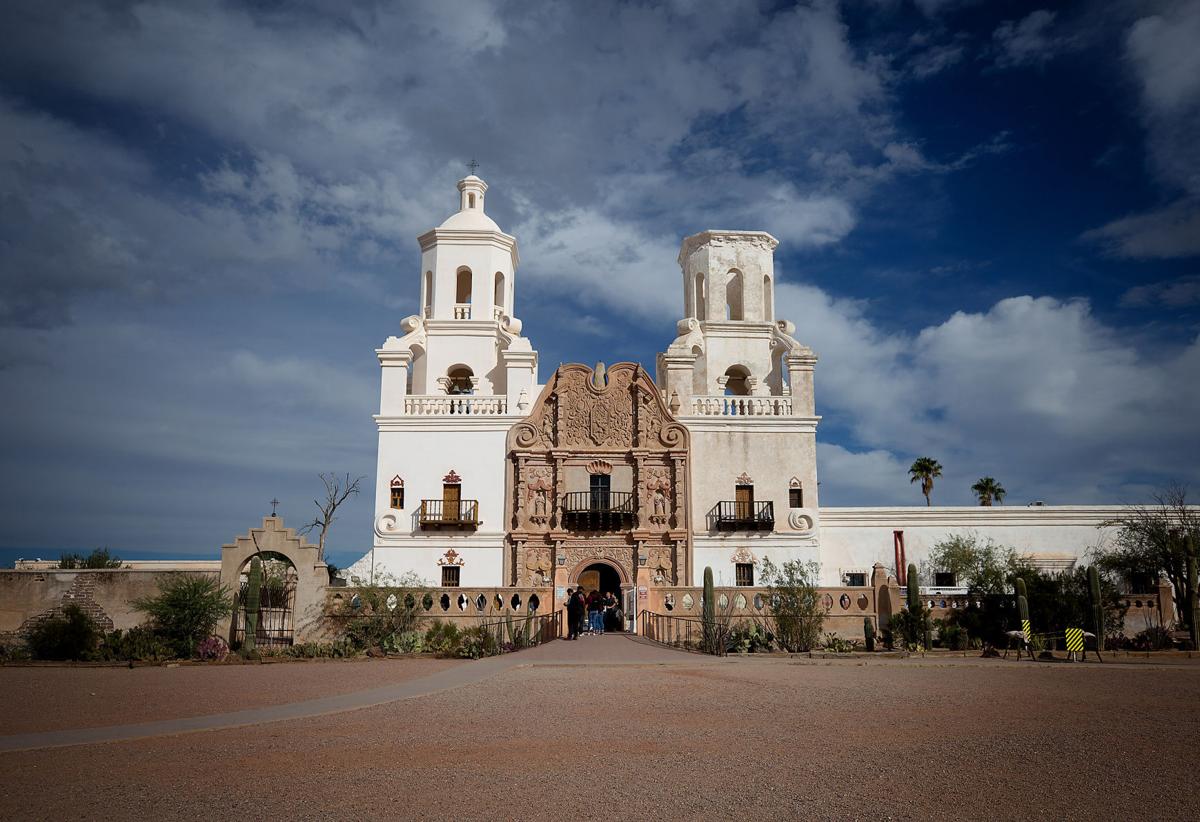
As head of an organization stewarding one of the nation’s most significant heritage sites, Mission San Xavier, determining how to sustain preservation workers and continue conserving one of the world’s most important and culturally at-risk buildings during these uncertain times is complicated. Other more urgent human needs take the headlines.
May I make the case that both needs are priorities? Our humanity demands we support our neighbors; at the same time we must honor the importance of caring for fragile and irreplaceable cultural heritage.
It is easy to take for granted the beautiful 18th-century Spanish Colonial mission, whose image appears on so many logos and businesses across our state and town. We should not. But for the intervention of the Patronato four decades ago, it is likely the church would now be damaged beyond repair, its precious interior art lost forever.
People are also reading…
Recently we hosted Dr. Brent Glass, a national leader in the preservation, interpretation and promotion of history, and Director Emeritus of the Smithsonian’s National Museum of American History. Glass had just written a book, “50 Great American Places,” highlighting places of exceptional significance, underscoring key themes in American history. The only place to make his list in Arizona: Mission San Xavier.
Glass describes how, as a nation, we approach the history of European colonization through the lens of east to west expansion, with the eastern seaboard states pinpointing where “European” history begins. But as he points out, at the same time the English were establishing settlements in Jamestown (1607), and the French, Quebec (1608), the Spanish were founding Santa Fe (1610).
This preoccupation with things “Eastern” impacts how we consider historical structures. After American independence, as the infrastructure of the new nation was being built, 1797 saw construction begin on the original White House, while in Philadelphia, Alexander Hamilton’s first bank of the United States was completed. That same year on the other side of the continent, workmen were packing up their tools and artisans were abandoning their scaffolds, leaving Mission San Xavier with an unfinished tower and incomplete interior art. His point: We don’t have to go east to see the roots of our European history. We have essential history in our own backyard.
The conservation at Mission San Xavier is ongoing, and, just as we entered the era of COVID-19 virus, the Patronato was gearing up to begin a number of important projects. While funding is in place for some, others depend heavily upon the steady support we anticipate throughout the year. At this time, that support is diminishing. While I understand the reason, I am also aware that at-risk heritage cannot wait.
Miles Green is the executive director of Patronato San Xavier. Mission San Xavier is a National Historic Landmark and was included on the World Monuments Fund’s “Watch” list in 2015. The mission is Arizona’s oldest European-inspired building and is currently undergoing a multimillion-dollar conservation. www.patronatosanxavier.org
