

Tucson's housing market has fallen so hard so fast that more than one in three homes sold last year went for less than $100,000.
Nearly 6,400 homes in Pima County were sold for five figures in 2011 - that's more than 35 percent of the 18,000 homes sold last year, an Arizona Daily Star analysis shows.
Only five or six years ago, at the height of the housing boom, not a single home in the market could be had for less than $100,000, said University of Arizona economist Marshall Vest, who tracks the housing market and the economy.
"A few years ago, it was just unthinkable," Vest said. "There just weren't any properties at that price."
The five-figure home sales push down the prices of other houses on the market, making this an awful time to sell a home. But they create great deals for someone who can qualify for a mortgage, and are a bonanza for all-cash investors who can scoop up properties for 15 percent to 40 percent of what the houses were once worth.
People are also reading…
"It's 10-years-ago prices," said John Strobeck, of Bright Future Business Consultants, which tracks the local housing industry.
Some properties have sold for prices that go much further back than that. Hundreds of homes sold last year at what can only be called extreme prices: 800 homes sold for under $35,000, nearly 300 of them going for under $25,000 and 15 going for under $10,000.
Investor Gary Zimbler, of Riviera Investments, bought a beat-up manufactured home on the far west side last year for $8,000 and a south-side townhome for $10,500. He's bought several for about $25,000, prices that would have been scarce in the late 1980s and have not been widespread since the early 1970s or late 1960s.
"In '06, I can't remember any properties that were selling for under $100,000," Zimbler said. "Houses are being purchased for a third or 25 percent of their value of five years ago."
Strobeck said many of the homes priced under $25,000 are tiny, aging one- and two-bedroom houses in bad condition. But he called the idea that Tucsonans could buy houses for less than the price of a new car amazing.
"It shocks you, doesn't it?" Strobeck said. "It's a sign of the times."
Ultralow prices
The 6,400 homes that went for less than $100,000 include more than 2,300 foreclosed homes that were sold at auction to a third party or went back to the bank that made the loan on the property. Another 4,050 homes were sold through more traditional methods, mostly a homeowner selling to a new owner.
Zimbler, who has purchased 120 homes over the past three years, specializes in buying properties under $100,000. He usually rents the houses rather than reselling them, he said, because of low prices in the market. He's sold only about a third of the roughly 60 homes he bought last year.
His lowest-priced purchase was $8,000 - for a manufactured home at 9130 W. Dudley Road, near West Bopp and South San Joaquin roads. He bought it in October and rented it back to the previous owner for $300 a month. Wells Fargo had a mortgage on the home for nearly $65,000, before the home was foreclosed on and sold at auction.
"It was in real rough shape. But for $8,000, it's not a lot of money," he said.
Zimbler bought a townhome at 4959 S. Highland Drive near East Irvington Road for $10,500 in May, and then rented it back to the previous tenant for $425 a month. HSBC previously had a mortgage of $59,000 on the property. "I've never been inside the house," Zimbler said.
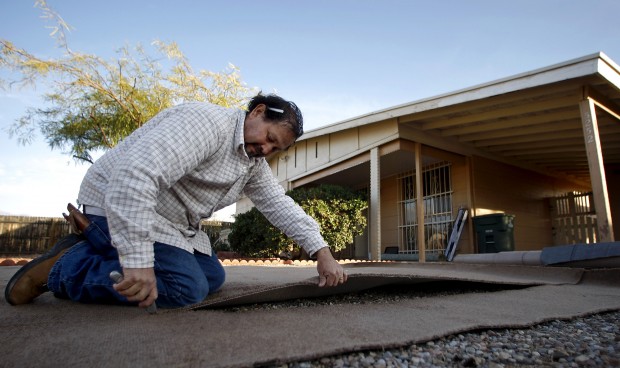
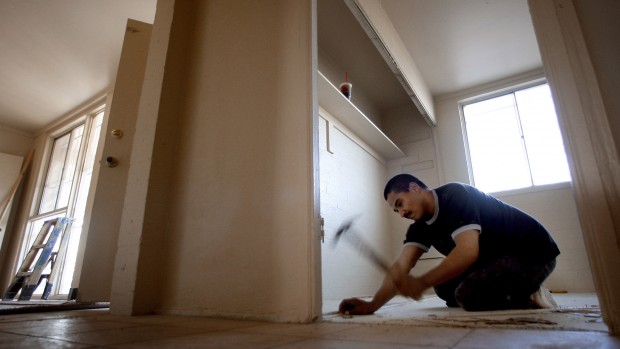
In mid-December, he had a crew doing work at a home on 5252 E. 32nd Street, just south of East 29th Street. He bought it a few weeks ago for $22,500, although mortgages and debt on the property added up to $160,600.
"That much was lost on one property," Zimbler said. "If you look at the whole country, can you imagine the scope of it all?"
Investors often buy "after the previous owners have pretty much destroyed the properties" - the reason for their low price, he said.
Selling a home
Low-priced homes are driving down the prices of homes in their surrounding areas, making it tough for anyone selling a house at anything other than a cut-rate price to catch buyers' attention.
"It's awful for anyone who wants to sell their home," said Strobeck, of Bright Future Business Consultants.
Foreclosures and short sales are seen as comparable sales by appraisers and home buyers, even though in many cases the distressed sales are in far worse condition than other homes in the area.
"The price is determined by the latest and lowest sale in your neighborhood. It's beyond reason," Vest said. "As long as we have distressed sales you're going to have downward pressure on prices."
Julie Bailon, a case manager at COPE Community Services, can relate. For a year she's tried to sell her home near East Benson Highway and South Palo Verde Road, which is surrounded by a sea of foreclosures.
"I didn't look good. Everything around there was for sale by banks," she said. "There was no way I could sell it for what I wanted."
Bailon has a mortgage of $150,000 on the one-story, 1,350- square-foot house and was willing to sell it for $100,000. But for a year, she said, she "didn't have anybody, not one person, come look at it." Large two-story houses in her neighborhood are going for $80,000.
She can't afford to live in the house but found renters and incurs a small loss every month. She has resources, but said she feels anxiety and shame about the house and that she doesn't know how to navigate the way toward a solution.
Bailon hears talk the market could turn around but doesn't believe it. "I'm not hopeful," she said. "Everything around it is distressed now."
Current conditions are horrible for sellers, Strobeck said, but with prices low and interest rates low, "It's great for anybody who wants to buy a house.
"Investors are gobbling up low-priced houses like crazy," he said.
The courthouse steps
About 35 percent of homes sold for under $100,000 are auctioned from the steps of the Pima County Superior Court at 110 W. Congress.
Bidding on foreclosed houses generally starts at 11:30 a.m. and goes as long as there are houses to auction, usually until about 1 p.m. It can be chaotic as different companies auction off houses at the same time and bidders sometimes must track and bid at several auctions simultaneously.
Bidders buy properties for themselves, for investors or both. They must bring a cashier's check for $10,000 and must have done research to decide which houses to bid on. They buy houses as is, and can't see inside the homes before they bid.
Zak Anderson, of Empire Management LLC, paid $35,200 at a December auction for a home at 3257 W. Paseo de las Aves, near South Camino de la Tierra and West Valencia Road. Two bidders went back and forth over the house, raising the price in $100 increments, until one of the bidders dropped out and Anderson swooped in. He won the house after several more rounds of bidding.
Although the price was low, it ended up not being a good buy, Anderson said.
"It's in tougher shape than what we thought," he said. "You can't get in to see them. That's the way it goes."
Chris McLean, of American Capital Assets, one of the largest buyers in the auctions, said it's all about the value of the houses. If a house is high-priced but could sell for more, people will bid. They will do the same for lower-priced houses, he said, but if it is perceived to be priced above its value it likely will revert back to the bank.
Christina Esala, a Realtor for Tierra Antigua Realty who represents KMS Enterprises at the auctions, said plenty of buyers are interested in lower-priced houses, many of them investors. She said investors help the community by fixing up homes in disrepair and allowing the Federal Housing Administration to insure the loan on the property or allow the mortgage to be sold off to Fannie Mae or Freddie Mac. Many homes are in such disrepair they can't qualify for financing, she said.
"We do a service to the community," Esala said. "A lot of the houses are messed up. We buy them, fix them up and get them to qualify."
Pennies on the dollar
Some homes in Tucson went for the price of a trip to the grocery store - three were sold back to the bank for only $100.
The sales likely could not have been made by an outside investor - they were advertised for $100 to entice investors to come and bid on the houses. These so-called "jump bids" are intended to get investors to attend the auction, where the price jumps to another price that isn't announced until the auction. If no investors are interested in the price the bid "jumps" to, the property is sold back to the bank for the advertised price: $100.
Many of the jump bids occur at a biweekly auction run by auction.com, which is different from the normal 11:30 a.m. daily auction.
Will prices stop falling?
In 2006, if someone had told a room full of real estate professionals that prices would crash 35 percent to 50 percent, and that a third of the market would be made up of houses under $100,000 in five years, that person would have been laughed out of the room, Vest said.
Previously, homes prices had never declined in the modern age: They had only flattened when the economy faltered and then rose when it recovered.
"The declines are unprecedented," Vest said. "This is territory we've never seen before."
Eventually home prices will stop falling, but it's unclear exactly when, Vest said. Bubbles in other assets have made prices fall as much as 80 percent, he said, noting the overall market has fallen 35 percent in Tucson and 50 percent in Phoenix. However, the prices for many houses sold for $25,000 and $35,000 have fallen 70 percent to 85 percent from their peak - meaning they would have sold for three to seven times more at the height of the housing market half a decade ago.
Strobeck sees prices seesawing for the next decade, periodically rising but then falling again after homeowners and investors decide to sell their houses to take advantage of rising prices, increasing the supply of homes available and again driving down prices.
But Vest has high hopes for a new plan by the federal government to let homeowners refinance their mortgages even if they have zero or negative equity - as long as they are current on payments.
More optimistic than Strobeck, Vest predicts that prices will stop falling in 2012 and may even start to rise. "Of course that was my forecast last year, the year before that and the year before that."
How we got the story
While looking through recent home sales, Arizona Daily Star reporter Rob O'Dell noticed an unusual number of homes sold for less than $100,000.
To determine how many, O'Dell built a database of traditional home sales - mainly sales between two homeowners - from weekly home sales data from Real Property Information Inc. In addition, he acquired a database of foreclosures - both homes sold back to banks and to third parties at auction - from ForeclosureRadar.com
The homes data include sales from Jan. 1 through late October, while the foreclosure data includes sales through Dec. 9 - the latest available for both data sets able to be analyzed.
After stripping out the sales of raw land, O'Dell combined the databases to get 18,038 total homes sold in 2011 - 6,376, or more than 35 percent, were sold for less than $100,000.
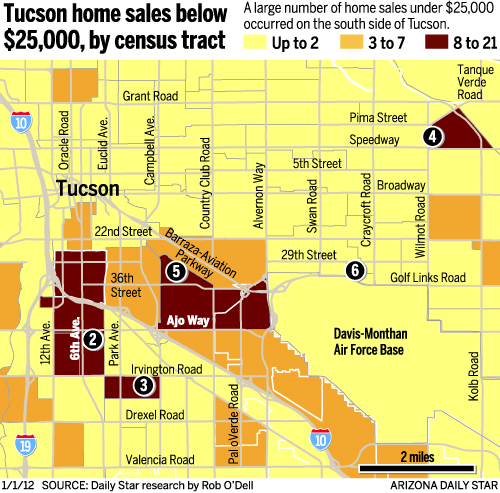
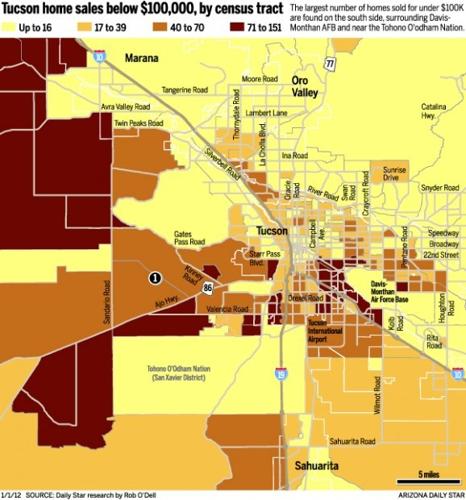
O'Dell mapped home sales by U.S. census tract to determine the areas of town with the most sales under $100,000 and under $25,000. Starnet Senior Programmer Sean Kasun built a searchable online map of those sales a link for which is at the upper left.
Contact reporter Rob O'Dell at 807-8465 or rodell@azstarnet.com


