

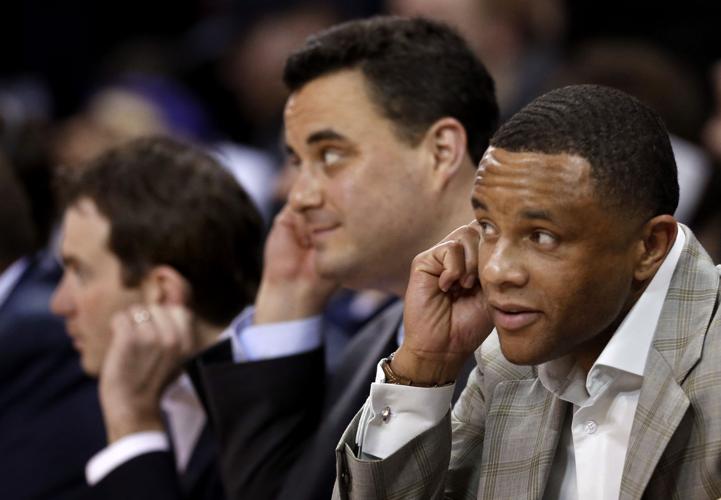
STOCKTON, Calif. — At every step of Damon Stoudamire’s coaching career, one question can always pop out.
Why?
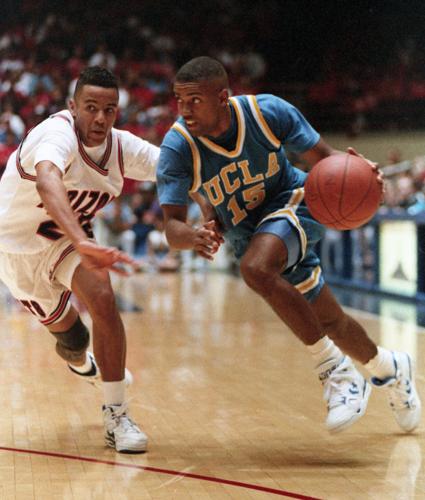
Why would a guy who made $99.6 million playing in the NBA after leaving the University of Arizona want to return to his alma mater to scout games and chase recruits as an assistant for the Wildcats, sometimes even in some random gym on a hot late night in July, as he did for two seasons from 2013-15?
Why would the dynamic former NBA guard known as Mighty Mouse want to move to Memphis to join the staff of former Arizona Wildcats player Josh Pastner in 2015-16 to do essentially the same thing?
And now, why would Stoudamire want to take over the basketball program at the University of the Pacific, a private San Joaquin Valley school still under NCAA investigation for academic issues while facing a mid-major gauntlet of a schedule as a fourth-year member of the West Coast Conference?
People are also reading…
Why?
“It’s a challenge,” Stoudamire said.
Pacific athletic director Ted Leland asked the question, too. The answer prompted him to fly out East and interview Stoudamire late in Memphis’ season and eventually offer him the job.
“One of the members of our search committee said, ‘If you hire Damon, you’re hiring a baller,’” Leland said. “He’s like an artist who’s just into what he’s doing. His connections among coaches in high school and professional leagues is incredible. He’s always on the phone talking about basketball.”
Leland said Dell Demps, the former Pacific standout who is now the GM of the New Orleans Pelicans, told him that he worked with Stoudamire during a clinic in San Antonio, where Stoudamire finished his playing career in 2008, and noticed that when the clinic ended, Stoudamire did not.
“He would stay there another three hours,” Leland said, relaying what Demps told him.
But here’s the problem: At Pacific, as the head man, it can’t be all about basketball.
The Tigers not only narrow their recruiting pool somewhat with tough admissions standards, but they are also operating with an NCAA cloud over their heads. In a joint investigation with the NCAA over the past year, the university found several basketball players received improper academic assistance with correspondence courses they had taken to meet NCAA eligibility requirements.
Pacific self-sanctioned itself out of the WCC tournament last spring and took away six scholarships over three seasons, meaning Stoudamire would be slightly handcuffed in restocking the program. The NCAA could still add more sanctions in the next few months, too.
All this on top of taking over a team that won just eight games last season.
“Well, you know, probably the biggest thing more so than (the sanctions) honestly has been to try to get the guys to kind of let go of last year, to kind of cleanse themselves,” Stoudamire said in his modest office after a recent preseason practice. “You come in and you want to create a different culture.
“You want to do different things, but they’re gonna have to see success because once they get down by 10 or 12 points, it’s, ‘Are they going to revert to who they were last year or are they gonna move forward to get to the place where I’m trying to take them?’ ”
That journey started unofficially in August, when Stoudamire took the Tigers to Croatia and Germany for an exhibition tour.
Pacific went 3-1 against mid-level European competition and gained a measure of confidence, Stoudamire said.
Then they took care of non-NCAA opponent Bristol University 106-39 in an exhibition game last Friday and will ramp it up just a bit this week — by playing UCLA on Friday at Pauley Pavilion to open the regular season.
They just might be down by more than 10 or 12 in that one.
But that may be OK as long as there is underlying change, something Stoudamire learned under Arizona coach Sean Miller.
“When Sean got to Arizona, the reason he was able to withstand the first year there, when he didn’t have the players yet, was because of the culture he created,” Stoudamire said. “And as he’s gotten better players, it’s allowed him to be an even better coach because now he has the players to go with his system. That would have never to me been created had he not created the culture out of the gate.”
While Miller helped give Stoudamire a blueprint for that culture, it may be Lute Olson who gets some credit for the eventual system the Tigers might run: That is, an up-tempo style that gives players a long leash.
Stoudamire says he’s always felt that 70 percent of the game is played out of transition and is intending to simply give his guys some options and let them adjust as they read what’s happening on the floor.
“My biggest thing for these guys is you’ve gotta play on instincts,” Stoudamire said. “It’s too hard to play basketball looking over your shoulder and calling a set play every time down the floor. I tell them I don’t want to do that.
“I want to give them a little bit of freedom, but you’ve gotta have discipline. Disciplined freedom is what I call it.”
The irony is that Pacific was known for years for using discipline, period.
Under well-respected former coach Bob Thomason, who won 414 games over 25 years at Pacific to become the winningest coach in school and Big West history, the Tigers featured tightly wound offensive sets that emphasized ball movement and a stubborn, man-to-man defense.
Thomason’s Tigers would grind away at their much more up-tempo Big West Conference opponents, causing even freewheeling former UNLV coach Jerry Tarkanian to fear games at the Spanos Center back in the early 1990s.
Now Stoudamire is planning to flip the switch, which again could make the Tigers an antithesis — this time of generally more-structured WCC teams.
Leland chuckles with delight at that thought.
“Generally, in sports if you want to make a mark, sometimes it’s good to be out of cycle,” Leland said. “The last few years (with Thomason) were tough because nobody wanted to come to Stockton and play us. We wouldn’t ever not run a play. … Now Damon says, ‘I want to focus on tempo.’”
That up-tempo promise and Stoudamire’s reputation is already attracting fans and money. Leland says the program has sold over 200 new season tickets and fundraising has spiked.
Over time, Stoudamire is hoping to pay the fans back.
“This is a blue-collar city and I think if the team was to have some success, they’d definitely ride with what we’re doing,” Stoudamire said. “Since I’ve been here they’ve really embraced me and the team.
“They want to hang their hat on something and I think that — I tell the guys this every day — we have an opportunity to surprise some people.”