

Some of the coverage surrounding the NFL draft is absurd.
That’s true of mock drafts, which have a batting average lower than Michael Jordan’s with the Birmingham Barons.
Mock drafts, however, have at least some value. They give readers some idea of who might be chosen in the first round, even if nailing the exact pick is exceedingly difficult. They’re also fun.
That’s the same reason draft grades are so popular. Of course, judging a team’s draft class before any of its members have played one down of professional football is ridiculous. We live in a world of instant gratification, though, so rushing to react to each team’s class is never going to change.
In reality, it’s fair to give those players who are drafted three years to establish themselves as NFL players. In most cases, that’s enough time to have a pretty good feel for who they are.
People are also reading…
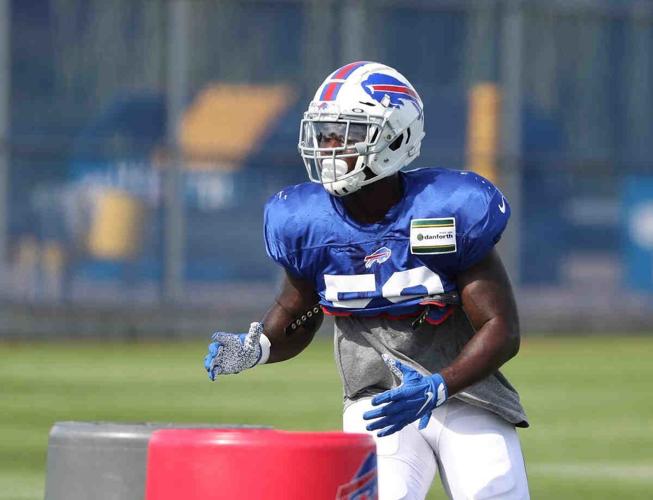
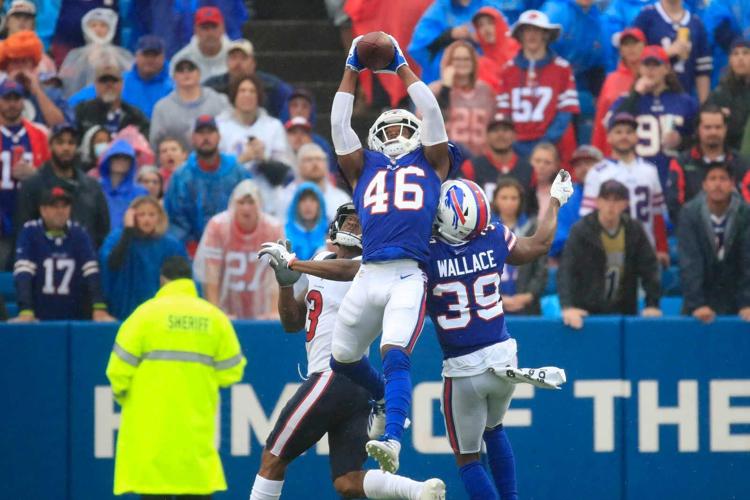
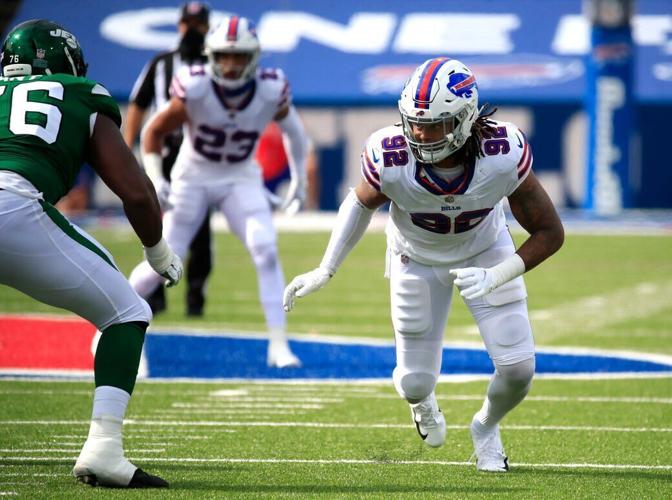
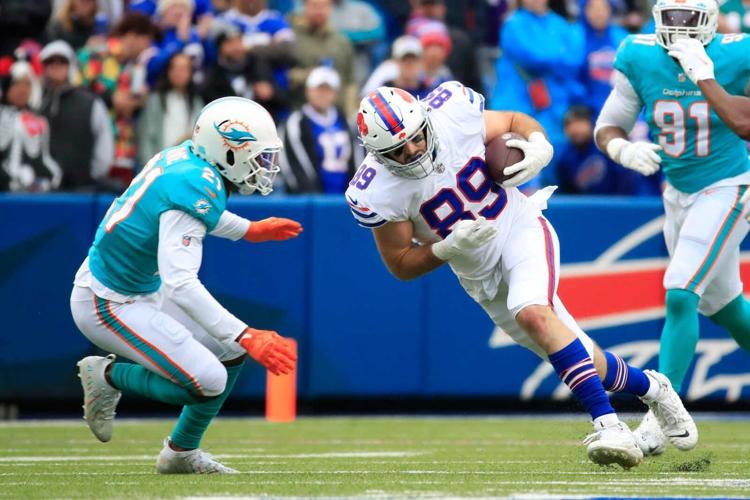
With that in mind, here is how The Buffalo News would grade each of the picks from Brandon Beane’s 2019 class – his second as the Buffalo Bills’ general manager:
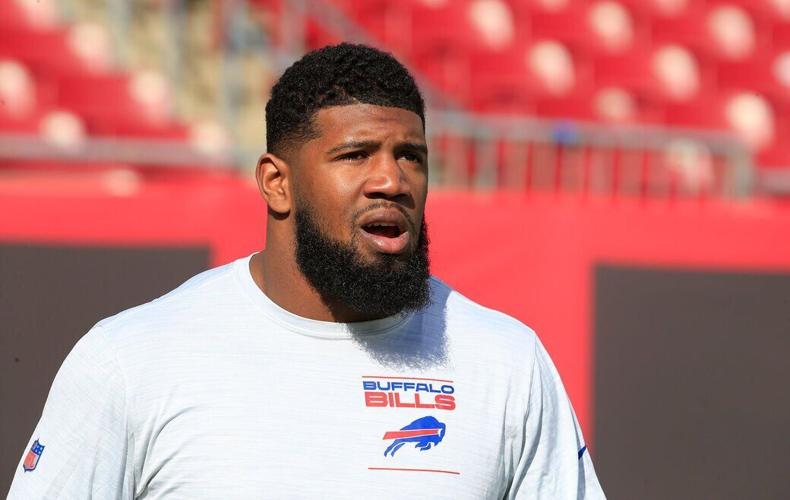
First round, No. 9 overall: Ed Oliver, DT, Houston
Grade: B+
Oliver is exhibit A when it comes to not rushing judgment on draft picks. His first two years in the league maybe didn’t quite live up to the lofty expectations that come with being a top-10 pick, but Oliver turned a corner in 2021.
“I thought he was our best, most consistent D-lineman all year from start to finish,” Beane said at the conclusion of the season. “I think he trended up all year. The game slowed down for Ed this year. He was a huge factor in our success. … Ed really helped the back end with his disruption, having the quarterback get the ball out, or at least get him off the spot, having to throw on the move turns into an incompletion or an interception.”
Oliver’s stats might not jump off the page – he had 41 tackles, four sacks, three passes defensed and one forced fumble last season – but they don’t tell the whole story. He had a few sacks that were called back because of defensive penalties, and his 14 quarterback hits were four more than anyone else on the team. That shows he was in the backfield quite a bit. Coach Sean McDermott has consistently pointed out that defensive tackles in his scheme are not always going to produce big numbers. Oliver, however, became a player that opposing offenses had to account for every week in 2021.
It’s a foregone conclusion the Bills will pick up their team option on his rookie deal for 2023, giving both sides some time to try and work out a long-term extension.
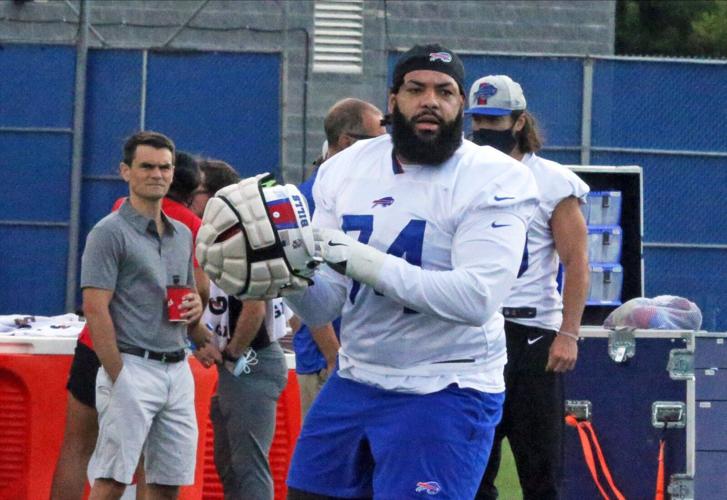
Second round, No. 38 overall: Cody Ford, OL, Oklahoma
Grade: D
To borrow a golf term, Ford is the clubhouse leader for worst pick of the Beane era. It’s bad enough the team used an early second-round draft pick on him, but it looks even worse now that they traded up to do so, giving up a fifth-round pick to the Raiders to move up just two spots. Ford was chosen with the idea he’d be a fixture at right tackle opposite Dion Dawkins. During Ford’s rookie season, he appeared in all 16 games in the regular season and started 15 of them, rotating with veteran Ty Nsekhe. That’s been the high point of his career, though, as Ford has managed to start just seven games in each of the past two seasons. He had a variety of injuries in 2020 before ultimately landing on injured reserve because of a torn meniscus in his knee. By that time, he had been moved inside from tackle, spending time at both right and left guard. He opened the 2021 season as a starter at left guard, but was sent to the bench after a particularly brutal showing against Houston in Week 3. The rest of his starts came in emergency situations as the Bills dealt with injuries and positive Covid tests along the offensive line. Ford is mostly a forgotten man heading into the final year of his rookie contract. He gives the team an experienced backup option with some positional versatility, but has fallen far short of expectations from when he was drafted.
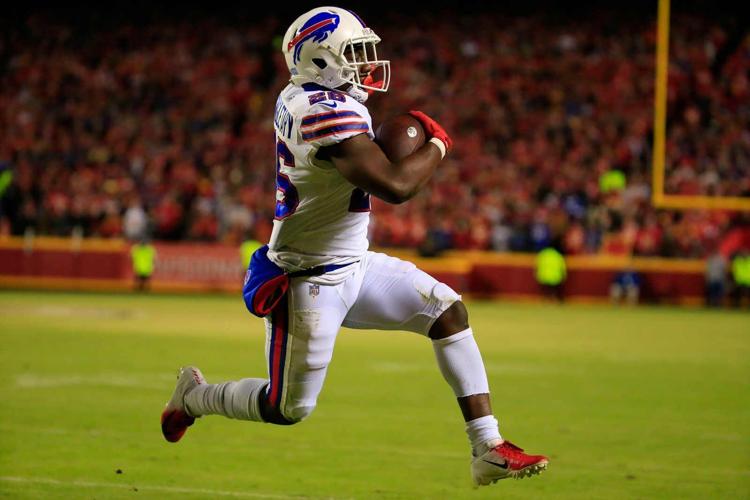
Third round, No. 74 overall: Devin Singletary, RB, Florida Atlantic
Grade: B-
Singletary has had an up-and-down start to his professional career. He gained 775 rushing yards in just 12 games as a rookie, but took a significant step back in 2020, finishing with just 687 yards despite playing in all 16 games. His yards per carry also dropped from 5.1 to 4.4. The 2021 season started reasonably well, as Singletary scored on a 46-yard carry in Week 2 against his hometown Miami Dolphins. He hit a big-time rut in the middle of the year, though, going eight straight games without cracking 45 rushing yards. Singletary, however, found another gear late in the regular season. He had six touchdowns from scrimmage over the final four games, finishing with 323 rushing yards on 76 carries over that time. Then, he scored three more times in two postseason games as the Bills clicked on all cylinders offensively in late December and January. That stretch of football was the most productive of Singletary’s career, and sets up an interesting question for 2022: Can he sustain it? If so, it would help his case when negotiating for a second contract.
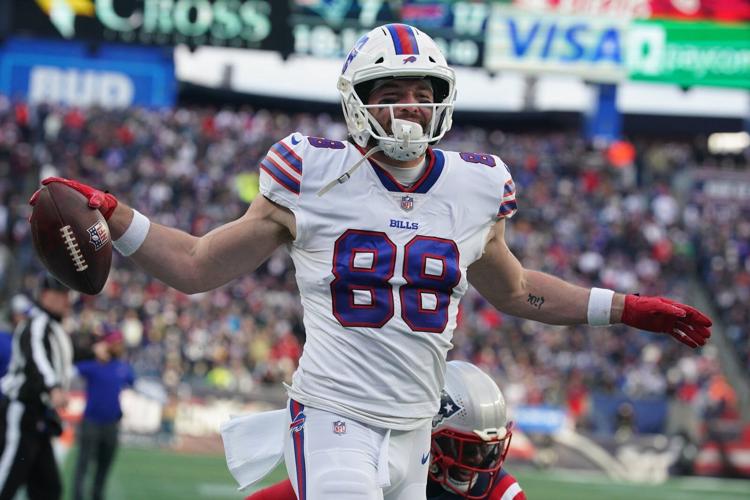
Third round, No. 96 overall: Dawson Knox, TE, Ole Miss
Grade: B+
If Oliver is Exhibit A for not rushing young players, Knox is Exhibit B. It was clear from the moment the 6-foot-4, 254-pounder was drafted that Knox had the physical tools needed to play the position, but potential doesn’t always turn into production. It wasn’t until his third season that it really did for Knox. He had a breakout 2021 season, finishing with 49 catches for 587 yards and nine touchdowns – a single-season franchise record for a tight end. Those numbers would have been higher if it were not for a broken hand that cost him a couple of games. Knox played in every situation for the Bills, finishing the 2021 season as the only true tight end on the game-day roster. That speaks to the trust the offensive staff has developed in him as both a receiver and blocker.
Fifth round, No. 147 overall: Vosean Joseph, LB, Florida
Grade: F
Nothing to see here. Joseph spent his rookie season on injured reserve and then was cut at the end of training camp before the 2020 regular season. He never got so much as a sniff with another NFL team and is currently in the Canadian Football League with the Hamilton Tiger-Cats. A total miss of a pick.
Sixth round, No. 181 overall: Jaquan Johnson, S, Miami (Fla.)
Grade: C
A team that employs Jordan Poyer and Micah Hyde simply doesn’t have much room for a safety – especially considering how durable and productive those two starters have been. As such, Joseph’s playing time has been limited on defense. He has played in 44 career regular-season games, but the bulk of that time has been on special teams. He played 62% of the special teams snaps in 2021 and finished with eight tackles there – fourth most on the team. In limited defensive opportunities, Joseph has 26 tackles and one interception. One sign the Bills do like him came last offseason, though. Instead of signing a veteran safety, they were comfortable with Johnson being No. 3 on the depth chart going into the regular season. That meant if something did happen to Poyer or Hyde, he’d be first in the lineup. For where he was chosen in the draft, Johnson has met expectations.
Seventh round, No. 225 overall: Darryl Johnson Jr., Edge, North Carolina A&T
Grade: C+
It’s never a bad idea to roll the dice on an edge rusher late in the draft. That’s what the Bills did with Johnson, who at 6-6 and 250 pounds had desired measurables. He played in 31 games in his first two NFL seasons, making a pair of sacks and 29 tackles in that time. After the Bills invested heavily in edge rushers over the next two drafts, though, Johnson became expendable. The Bills traded him to the Carolina Panthers last summer, netting a sixth-round draft pick in return. Johnson played in just three games for the Panthers.
Seventh round, No. 228 overall: Tommy Sweeney, TE, Boston College
Grade: C
Sweeney appeared in six games as a rookie, making six catches for 114 yards. He missed all of his second season after contracting myocarditis – a heart ailment – following a positive Covid-19 test. Thankfully, Sweeney made a full recovery and was able to return to the field in 2021. He appeared in nine games, making three starts, and finished with nine catches for 44 yards, including his first career touchdown. Sweeney’s a great fit in the Bills’ locker room – you won’t find a teammate of his with a negative thing to say – but his spot on the roster in 2022 is in jeopardy. By the end of the 2021 season, he was a regular inactive, and the Bills signed former first-round draft pick O.J. Howard this offseason to provide depth and competition behind Knox.
Overall grade: B
A year ago, this grade would not have been nearly as favorable. A year from now, it might look low. The arrow is pointing up for Oliver, Singletary and Knox. Ford is a bust, and the contributions from the four Day 3 selections has been minimal, but overall, Beane can feel reasonably good about the production from his second class. If Oliver and Knox build on what they did last year, he might even feel great about it.


