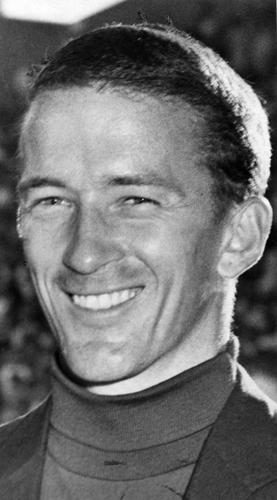
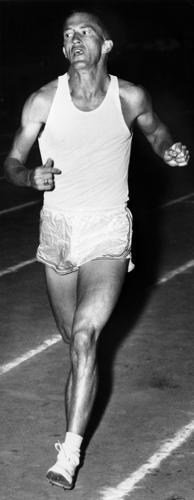

Oct. 16, 1969: George Young Becomes first UA athlete to win an Olympic medal
Because he didn’t have a track scholarship at Arizona, George Young worked as much as he ran. He unloaded freight cars at the railroad station and had a part-time shift at the dog track. He took tickets at Bear Down Gym and helped with field maintenance at Arizona Stadium.
In the summer of 1955, UA track coach Carl Cooper didn’t offer Young a scholarship because his best time in the mile at Silver City High School was 4 minutes 40 seconds.
“Nothing sensational,” Cooper said.
But by the time he was 34, Young became the oldest person in history to break the four-minute mile (3:59.6). By then, he had won an Olympic bronze medal in the steeplechase and made the Olympic team in 1960, 1964 and 1968.
People are also reading…
Young retired to teach school and coach in Casa Grande, but by 1972 he was back on the USA Olympic team for a fourth time. The great Steve Prefontaine called Young “America’s greatest runner.”
America’s greatest runner was one of America’s greatest success stories.
He was coached by his high school math teacher in Silver City, and, without a scholarship or much money, chose to enroll at Arizona because his girlfriend and her sister enrolled at the UA. As a freshman, he washed dishes at a fraternity house to pay expenses.
Running shoes? Young wore his old Converse basketball shoes. Had he not won the UA’s intramural track meet of 1956, wearing his basketball shoes, Cooper may not have offered him a spot on the school’s cross-country team.
In 1975, after his competitive career ended, Young wrote a book, “Always Young.” It was fitting for an athlete who, at 35, was second in the USA 5,000 meter Olympic Trials finals, 1972.
Young might’ve won Olympic medals in 1960 in Rome and 1964 in Mexico City if not for a strain of misfortune.
“In Rome,” he said, “I hit a hurdle in the steeplechase. If not for that, I think I could have won.”
“In Tokyo,” he continued, “I did a stupid thing. I wavered from my pre-race plans and ran too fast, too soon. Again, it cost me the race.”
He once told me he sometimes wakes up at night and reflects on how he should’ve won the gold medal at the ’64 Olympics.
But in Mexico City in 1968, having won 20 consecutive races, Young qualified in both the steeplechase and the marathon. Nobody attempts that double any more, but Young felt he could win the gold in both races; he was the American record holder in the steeplechase and won the U.S. Olympic marathon trials.
He led Kenyan teammates Amos Biwott and Benjamin Kogo most of the steeplechase final. It became one of the classic finishes of the entire Mexico City Olympiad.
Biwott won in 8:51.0.
Kogo was second in 8:51.6.
Young was third in 8:51.8.
A few days later, gassed, he finished 16th in the Olympic marathon.
“The lack of experience cost me the gold medal,” he told Running.com four years ago. “I hadn’t consumed enough liquids and even though I was running a pace I could handle, I got cramps in both legs from my hamstrings down to my heels with about 4,000 meters to go. I had to hobble in due to my lack of experience and not having anyone to tell me what I needed to do. All I knew was to go out and race.”
In 1969, when Carl Cooper left the UA to become executive director of USA Track and Field, Young was offered a chance to be Arizona’s head coach. He was 32, coaching and teaching at Casa Grande High School. He had announced his retirement from competitive running.
Young declined a chance to return to his alma mater, choosing to join the Dallas Smith Transportation Co. of Phoenix, a firm that transported automobiles. Two years later, working on his doctor’s degree at NAU, he resumed training for the 1972 Olympics.
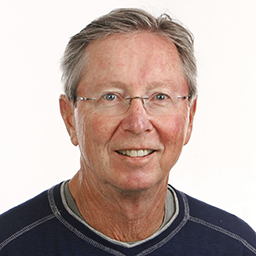
Where is he now? At 78, Young is retired and lives in both Casa Grande and Pinetop. For years he was the next-door neighbor of UA softball coach Mike Candrea, who lived in Casa Grande until 2005. In 1988, Young coached Central Arizona College to the NJCAA cross country championship; he would become athletic director at CAC.
How he did it: During Young’s UA track days, 1955-59, the Wildcats held track meets at Arizona Stadium. It wasn’t outfitted with two water jumps necessary for the steeplechase. Cooper created a makeshift steeplechase course for Young by spreading bales of hay where water should have been. In the first year of jumping into hay, Young finished second in the AAU national finals.