Shiann Darkangelo called LECOM Harborcenter home when the professional women’s ice hockey player helped the Buffalo Beauts win the Isobel Cup in 2017, which made the Northtown Center in Amherst a downgrade from the facilities she once enjoyed downtown, and those she’s afforded as captain of the recent expansion team, Toronto Six.
“We have an off-ice trainer, we have a gym for workouts and you have access to it when you want, pretty much. We have our own locker room,” Darkangelo said. “We have a coaching room, training room. As we continue to grow, I think some of these things are imperative for it to stay professional and to keep it at a high standard.”

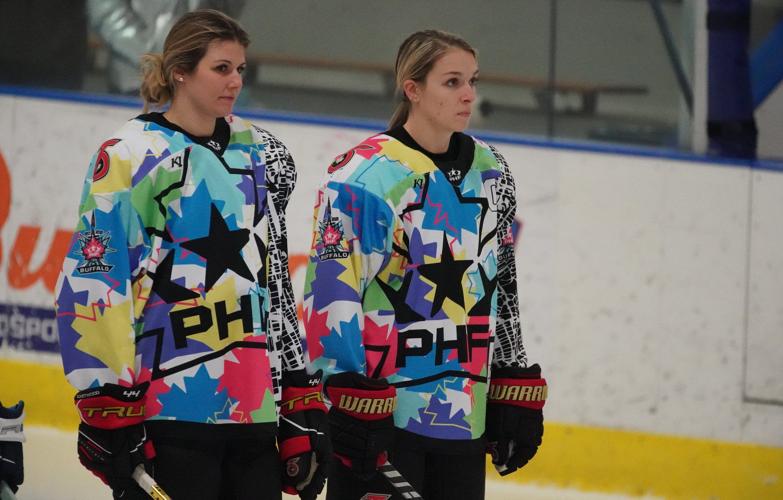
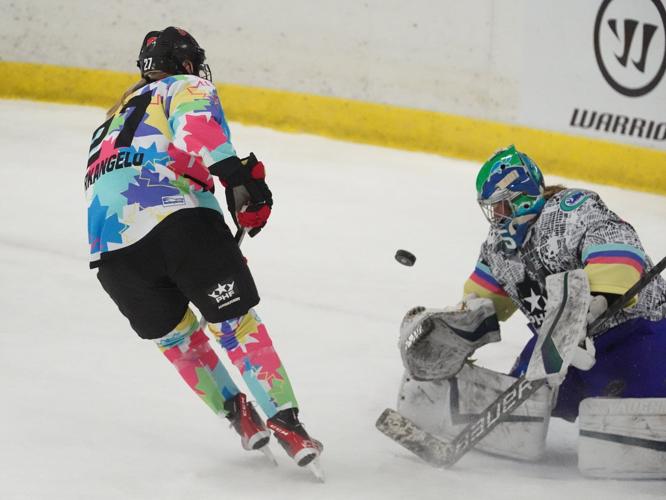
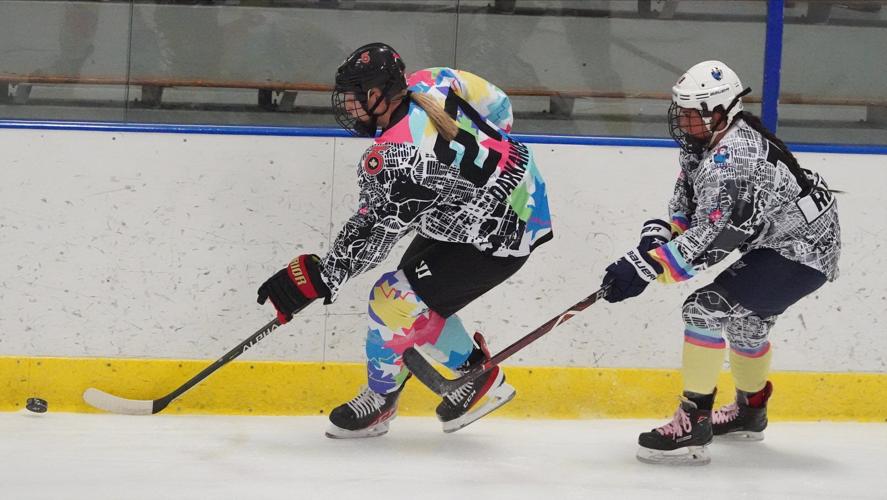
Team Darkangelo's Shiann Darkangelo lines up for introductions against Team Thunstrom in the first game Saturday at Northtown Center in Amherst.
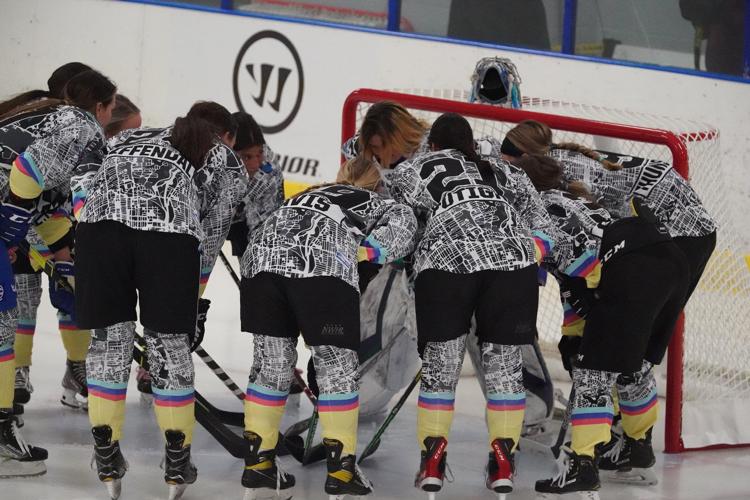
Darkangelo, 28, was among three All-Star captains and 37 players, including eight Beauts, to compete in the Premier Hockey Federation All-Star Showcase on Saturday night before a couple of hundred spectators at “Fort Beaut,” the multipurpose rec center near the University at Buffalo North Campus, where the franchise has called home since it was relinquished to the league in 2019 by Buffalo Bills and Sabres owners Kim and Terry Pegula. The event, which was moved from Toronto because of Covid-19 restrictions, was streamed on ESPN+.
People are also reading…
The PHF, formerly known as the National Women’s Hockey League, last week announced a $25 million investment from its board of governors and owners over the next three years. The infusion of cash will allow North America’s lone professional women’s hockey league to more than double its annual salary cap from $300,000 to $750,000, which should boost average salaries from about $15,000 to more than $30,000 per year and allow the league to provide players with full medical coverage.
“It’s a huge step in the right direction to more than double our salary cap, to know that the players will receive full health coverage,” Beauts General Manager Nate Oliver said. “And it’s getting it to that point where players, and certainly your higher-end players, don’t necessarily need to work an additional job in order to make ends meet.
“This season we have a player who’s a police officer. We’ve had players who are nurses and teachers. They’re doing a full-time job in addition to playing professional hockey.”
The six-team PHF, which doubled its salary cap from $150,000 to $300,000 last season, is attempting to capitalize on the attention women’s hockey receives during the Winter Olympics, which begin Friday in Beijing. The league also plans to add two expansion franchises next season, one in Montreal and another to be announced in the United States, improve facilities, provide players with 10% equity in their respective teams and control over their likenesses for marketing opportunities.
“Overall, what that does for growth of the game is create a sustainable environment going forward …” PHF commissioner Tyler Tumminia said. “I have a lot of admiration for these women. They’re Renaissance women. To be able to multitask at the level that they’re doing it and still perform the way that they do, with the energy that they do, I know I don’t have that. That’s passion, and that’s what they and the generations coming up deserve going forward. That is what a pro athlete looks like, and we hope to be able to provide that now and tomorrow.”

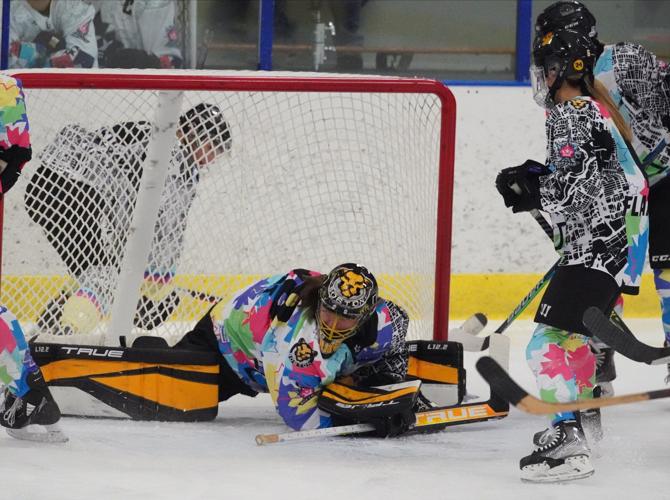
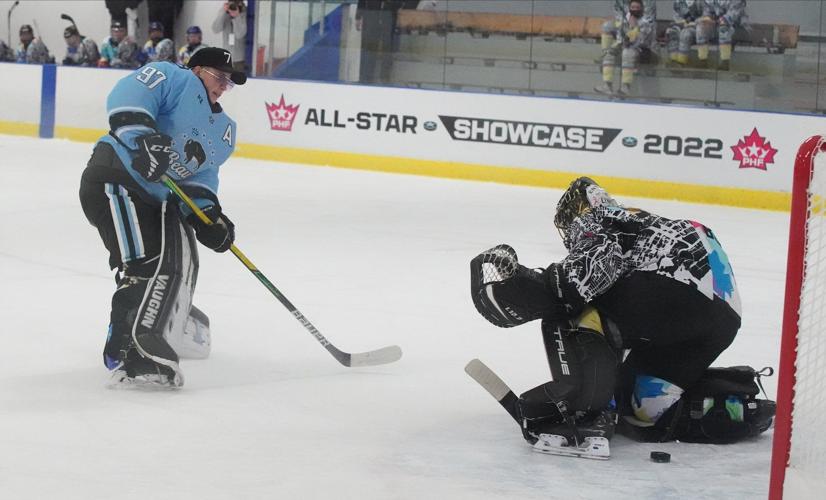
Team Darkangelo's Kaitlin Burt lets in a goal by Team Thunstrom's Jonna Curtis.
The Beauts and Minnesota Whitecaps were sold in June to NLTT Ventures, LLC, a joint partnership between NL Sports and Top Tier Sports, which are led by Andy Scurto and Neil Leibman, respectively. Scurto founded the insurance software firm ISCS, and Leibman is the president of business operations and chief operating officer of Major League Baseball’s Texas Rangers. Both are longtime investors in women’s hockey and members of the league’s board of governors. They paid less than $1 million per team.
“It’s giving younger girls something to look forward to,” Beauts alternate captain Dominique Kremer said about the investment, “knowing that Division I hockey isn’t the end-all, be-all. It’s not like once you graduate from college, you either play in the Olympics or you’re done playing hockey at a high level. This league will give women an option as far as post-college goals and something to look forward to and something to work for, and it’s really cool to be a part of that.”
Kremer, 24, said she sells insurance during the day and like many players is grateful to have a job and boss that allows her to have a flexible schedule. The defender said the Beauts have three practices per week, along with a group workout session, multiple Zoom meetings and a game on the weekends.
Metropolitan Riveters forward and captain Madison Packer, 30, a five-time all-star and the league’s second all-time leading scorer, said women’s pro hockey in North America is “just on the brink of taking off” and that the investment in the league shows players there’s “real money there” and that it’s possible to make a living wage.
“We’re not done,” Packer said. “It’s a huge step in the right direction. The hope is to continue to grow. But for now, it’s something to be pretty proud about and we’re excited. There’s a lot of people who finish a 12-hour shift at their job and then they go to hockey practice, they go home, they get two hours of sleep and they do it all over again. And those are the players when you look back in 10, 15, 20 years, we’ll remember as the people who really made this whole thing work.”