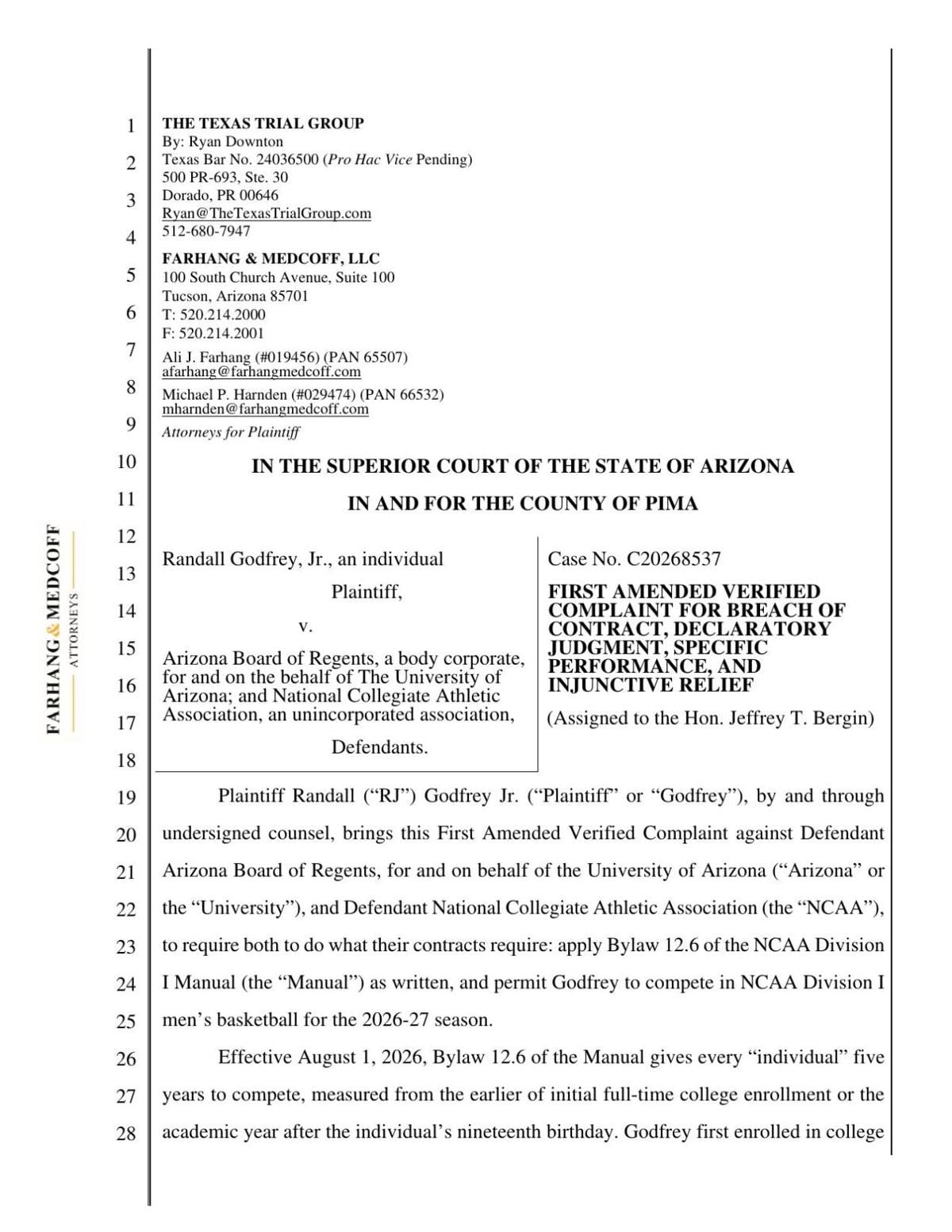
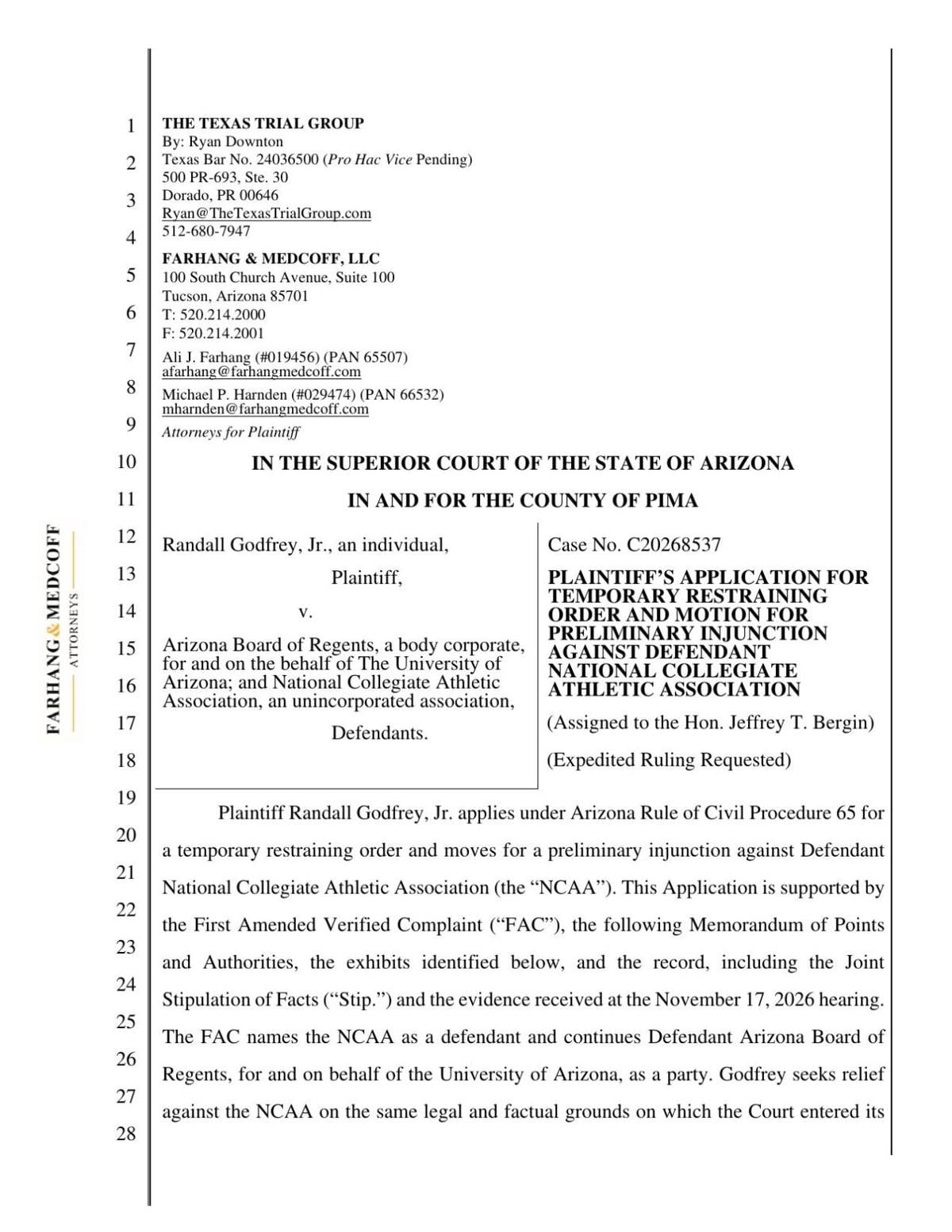
Attorneys for Arizona's RJ Godfrey have filed an amended eligibility lawsuit in Pima County Superior Court that adds the NCAA as a co-defendant and requests a temporary restraining order that might allow Godfrey to play in next week's Maui Invitational.
Godfrey had received a temporary restraining order and preliminary injunction on Tuesday that ordered UA to certify him as a result of its contract with the NCAA rulebook — but that lawsuit was only against UA, not the NCAA.
In an email from NCAA outside counsel that was filed as an exhibit by Godfrey's attorneys, the NCAA maintained that Godfrey was still ineligible and that Arizona would be playing him “at its own risk.” UA opted not to play Godfrey on Wednesday against UConn.
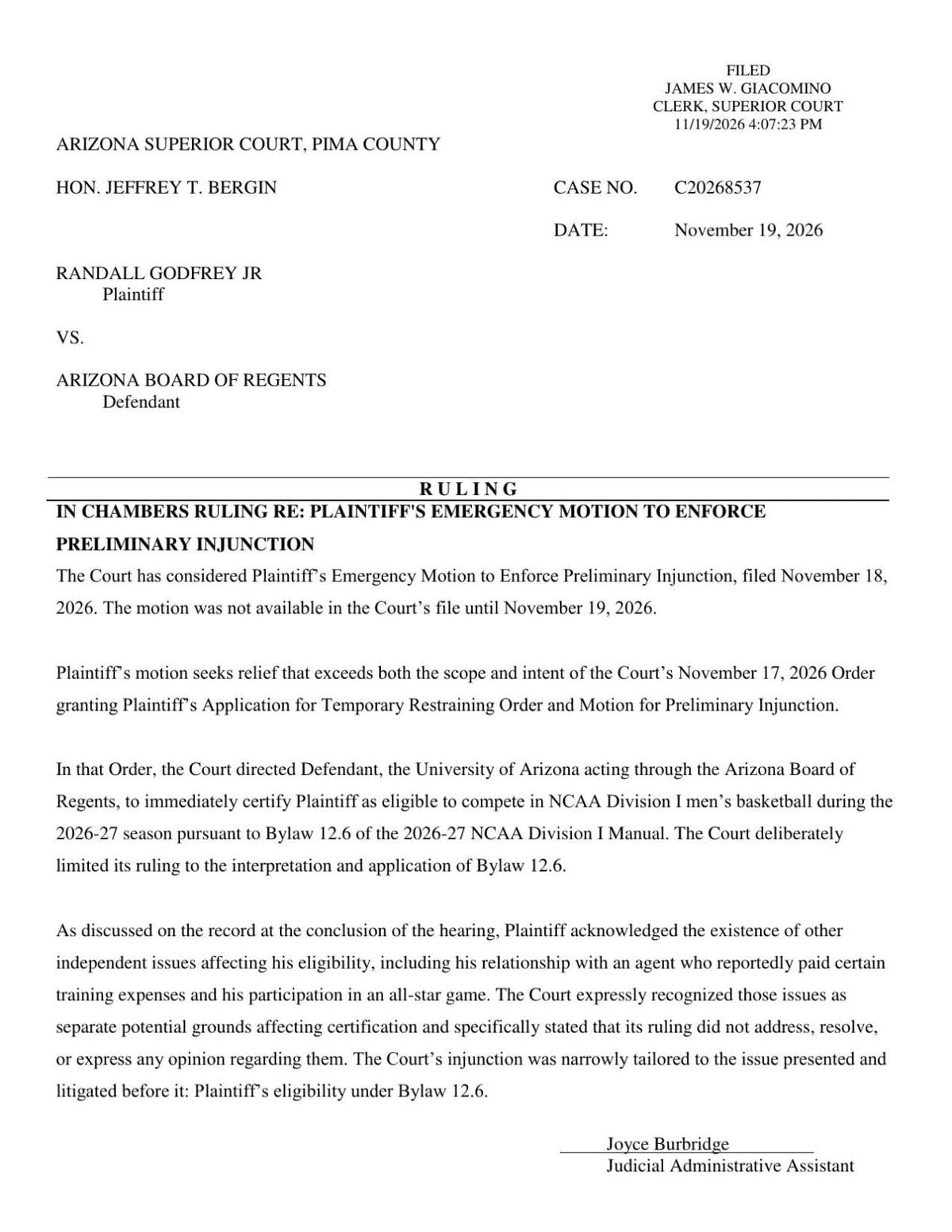
The move to add the NCAA as a defendant on Friday came a day after Pima County Superior Court Judge Jeffrey Bergin denied Godfrey's emergency motion to enforce the preliminary injunction he received Tuesday.
People are also reading…
Bergin wrote that the emergency motion “exceeds the scope and intent” of the temporary restraining order and preliminary injunction he issued during an evidentiary hearing Tuesday. Bergin had expressed concern during the hearing that the initial lawsuit could affect a non-party, since Godfrey was suing UA and not the NCAA.
Bergin said his ruling was limited only to ordering UA to certify Godfrey under NCAA Bylaw 12.6, the NCAA's new eligibility rule allowing athletes to play five seasons, and that he did not rule on Godfrey’s other potential eligibility issues for playing in a college all-star game and receiving benefits from an agent.

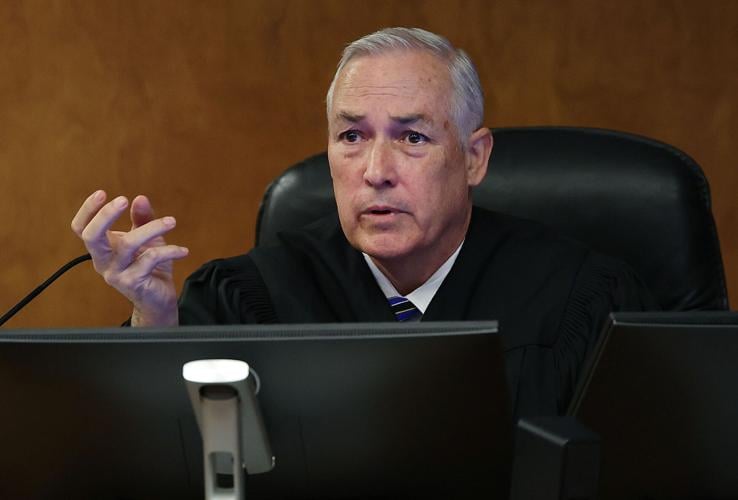
Judge Jeffrey Bergin speaks during a hearing at Pima County Superior Court in Tucson on Nov. 17, 2026.
Those secondary issues do not appear to be a problem anymore, at least with UA. Godfrey’s attorneys said he has since repaid benefits received, while UA said it has applied for Godfrey’s reinstatement over the issues.
Instead, the hangup is that the NCAA is still declaring Godfrey ineligible despite UA’s move to certify him under the court order, and threatened the school if it played Godfrey.
In their emergency motion filed Wednesday evening, Godfrey’s attorneys wrote that “the NCAA has refused to engage with Arizona” on the agent and all-star game issues because of its position that he is already ineligible because he played four years already. While 12.6 now allows players five seasons of eligibility, it did not go into effect until June, after Godfrey finished his fourth college season.
The NCAA has “instead disregarded this Court’s order,” Godfrey's attorneys wrote.
In response, Bergin said the relief Godfrey’s attorneys requested would require the court to adjudicate matters that were intentionally left out of its ruling.
“The Court recognizes that much of the Plaintiff’s frustration appears to stem not from actions taken by the Defendant but from the continued inaction of the non-party NCAA,” Bergin wrote. “Nevertheless, the existence of that frustration does not change that a motion to enforce is not a vehicle to enlarge the substance of an injunction or to obtain additional relief that was neither requested nor granted in the underlying order.”
Bergin’s original court order forced UA to certify Godfrey — and gave UA protection against potential NCAA retribution because it could argue that it had to certify Godfrey — but the NCAA threatened the school anyway.
In an exhibit filed with its emergency motion, Godfrey’s attorneys included an email in which NCAA outside counsel Rakesh Kilaru said Godfrey is not eligible “despite his forum-shopping attempts” because he remained in a Georgia five-for-five case and because the NCAA is a party to a similar case in Pima County Superior Court in which two UA football players are currently ineligible.

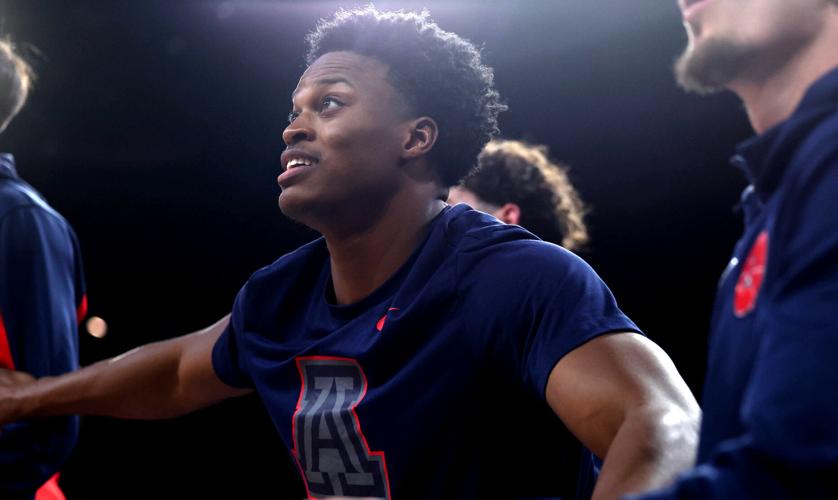
Arizona forward RJ Godfrey prepares to react to a Wildcat three in the second half against NAU at McKale Center on Nov. 10, 2026.
“Because Godfrey has exhausted his eligibility and the Age-Based Eligibility Rule does not apply to him there is no basis for reinstatement or any other eligibility relief for the NCAA to consider,” Kilaru wrote. “If Arizona permits Godfrey to compete, it does so at its own risk.”
Godfrey's Tucson-based attorney, Ali Farhang, said Godfrey withdrew from the Georgia case last month. On Thursday, the Georgia Court of Appeals also denied the NCAA’s motion to bind Godfrey to the Georgia case.
Contact sports reporter Bruce Pascoe at bpascoe@tucson.com. On X(Twitter): @brucepascoe

Bruce Pascoe
Reporter