An athletic trainer and physical therapist at UA for more than a quarter century, Jenny Allen has seen her fair share of bumps and bruises. She worked full-time with the Wildcats athletic department for years and traveled with the football program as a trainer for 15 years. The amount of athletic tape she’s used in her career could wrap the state of Arizona twice over. Now the 1989 University High graduate splits her time between campus health services and athletics.
But it is her work with the Justin Sports Medicine Team at La Fiesta de los Vaqueros Tucson Rodeo and almost a dozen other rodeos across the country that has perhaps left the biggest imprint.
Strains, sprains and automobile accidents — that’s what life is like for a PT who moonlights as a rodeo doc.
“When we talk about this with the staff, these are car accident-type forces,” Allen said of that crucial moment when cowboy and bull collide.
People are also reading…

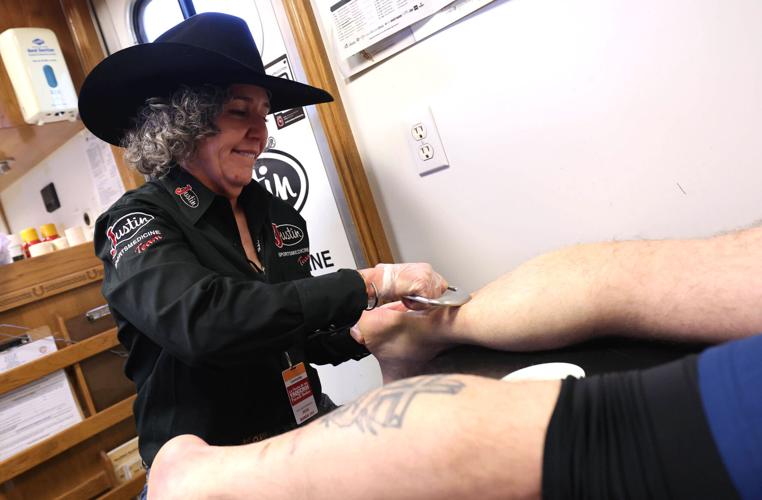
Jenny Allen, head med tech with Justin Sports Medicine works, on a patient at the 101st annual La Fiesta de los Vaqueros at the Tucson Rodeo Grounds on Saturday, Feb. 21, 2026.
It’s a bit different from club volleyball.
“For the most part we see the same sprains and fractures,” Allen said. “But this is the most dangerous sport they'll cover, and the most dangerous environment they'll work. The arena is fluid all the time, so many moving parts. When you go to a UA game, the game is the main focus. At the rodeo, it’s a performance. There's a bunch of other competing demands, the acts and the flag girls and the wagon and the junior rodeo. There is a time component that, at times, can make it challenging.
“The guy on the gate is like, we've got to pull the gate. I've been pulled into a bucking chute with an athlete who, you know, needs a minute.”
Allen got her start with the Tucson Rodeo in 2004, when she began as a volunteer. She grew up in Tucson, where the rodeo is quite literally a holiday, yet she’d never gone to the rodeo before. She didn’t know what to expect, but she learned quickly, it’s not the 160-pound saddle bronc rider who has the advantage. Ten years later, she reached out to Justin Sports Medicine Executive Director Mike Rich and told him she’d love to pick up some rodeo work over the summer. She’s now one of 11 program managers around the country for the program, which is sponsored by Justin Industries at no cost to the cowboy or the rodeo.
That’s right, in a world with skyrocketing medical costs, this is about as close to free as it gets.
As such, the role is daunting. So is the attire.
“It's funny because our staff, the majority are not western people; they feel goofy in their cowboy hats and boots, but it builds a level of credibility,” she said. “We're sometimes the only medical personnel they deal with all year. So wearing the attire is important. They'd rather deal with the vet than doctors. Any regular doctor would say, you probably shouldn't do that even if you're healthy.”
Healthy? These cowboys ain’t been healthy in years.
Praying for the best, expecting the worst
For the Tucson Rodeo, the Justin Sports Medicine team is as important as the stock contractors and the popcorn vendor. For the cowboys, they can be the difference between life and death.
“When you mix a 160-pound cowboy and a 2,000-pound bull, you know who’s going to win in that deal,” Tucson Rodeo chair Mark Baird said. “It doesn't take a rocket scientist to figure that out.”

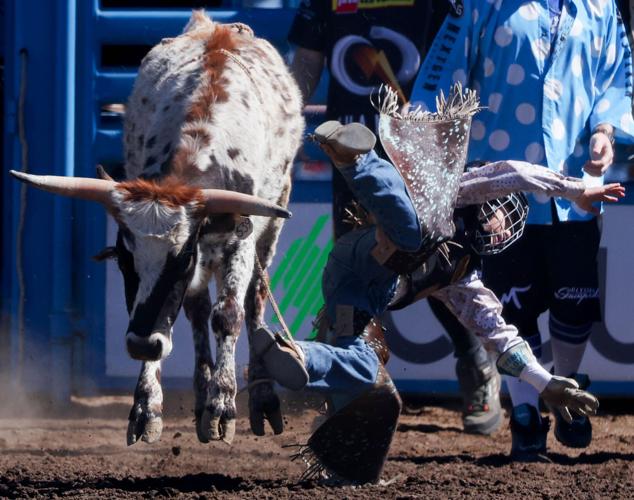
A junior rider gets knocked off during the steer wrestling event at La Fiesta de los Vaqueros at the Tucson Rodeo Grounds, Feb. 21, 2026.
This isn’t picking daisies. But the cowboys and cowgirls aren’t naive. They understand the deal. One wrong move goes from picking daisies to pushing daisies. Heck, one right move can lead to catastrophe, too.
“The possibility exists, when you're doing the math,” Baird said. “The potential is there. These guys all know the risks. Everyone who gets on the back of a bucking bull or a bronc, they know what’s at risk. They understand it, they accept it, it's part of the game. They know it's not a matter of if, it’s when. Anything from a broken finger to a broken back and anything in between. These medics are trauma specialists. It's not a surprise to them. They're prepared for the worst, and hopefully we never have to see that end of it.”
Although not her full-time job, Allen is involved with rodeo throughout the year, learning about the latest technology and techniques. Every year, the Tucson rodeo reviews emergency action plans. They made some changes this year in part because of a recent incident at the World’s Largest Outdoor Rodeo, the Cheyenne Frontier Days.
“Cheyenne had a contract personnel kicked in the chest, and he went into cardiac arrest,” Allen said. “Part of how they saved him is how they’d updated their emergency plan. Cheyenne had Layne Frost, one of the most famous deaths in rodeo history. Well, the physician who was there when Layne died took care of this guy and saved his life.”
Allen said that before every Tucson rodeo, she says a little prayer. She prays for the best but expects the worst.
She knows who she’s dealing with, after all. Some of these cowboys are more ornery than the bulls they’re riding. Saddle broncs are often more broken in than their riders.
“There is a cultural acceptance they are going to get injured,” Allen said. “A cowboy mentality is, it’s not that bad. Part of it is helping them understand, ‘Hey, you were concussed today. You're dizzy, you're out of balance. If you keep running on a sprained ankle, you get slower and slower. It swells and becomes a three- to four-week process. Same with your head.’ Some of it is understanding where they are going next, and also understanding the sport enough. If I'm testing your balance, there's no way you're going to be able to adjust to the back of a bull.
“I will tell guys and gals, I don’t think you should get on. The right thing is not to get on. But if you do get on, here’s what you should do. It's a lot about education.”
In that way, Allen shines, Rich said.
“They’re not gonna stop,” said Rich, a trainer and sports medicine specialist for more than four decades. “You tore your ACL, we’re going to tape it, brace it and teach you how to tape it yourself. Education is huge and Jenny is an excellent educator. It’s not about dummying it down, but it’s about the lingo. Explaining a broken collarbone is like a broken strut in your car. A ligament is a rope, not taffy. Once it tears and frays, it doesn’t shrink back up.”
From repairing boots to repairing bodies
The Justin Boots Co. traces its lineage back to 1897, when Herman Joseph Justin began repairing boots in Spanish Fort, Texas. A half-century later, annual sales reached $1 million. In 1980, the company began sponsoring the Justin Sports Medicine Team.
In 2000, the company was acquired by Warren Buffett’s Berkshire Hathaway conglomerate. Rich wasn’t sure if the complimentary Justin Sports Medicine services would be continued.
“I did this talk on return on investment, how many people are in the stands, and I said this advertisement is way more than what it’s costing, and I showed them the numbers,” Rich said. “Warren Buffet said, 'How many people did you help?’ Well, I didn’t do those numbers. So we did some quick math, how many rodeos, how many cowboys, you know, and some guy said 10,000 people. Warren said, ‘That’s all I needed to know, carry on.'”

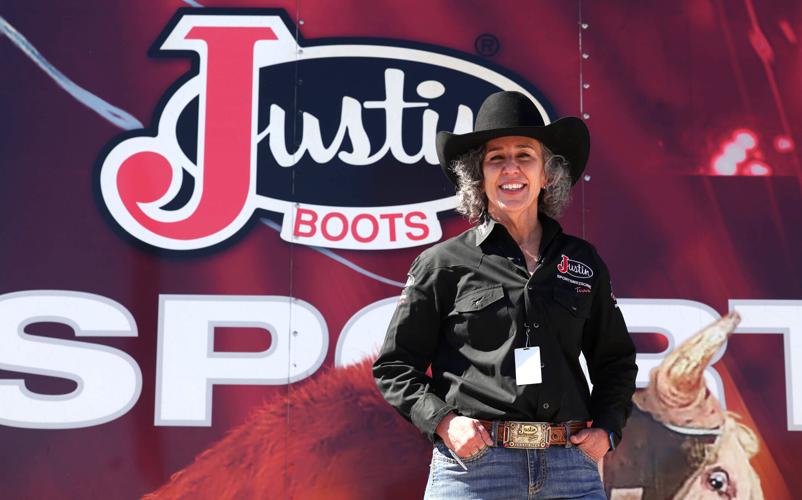
Jenny Allen, head med tech with Justin Sports Medicine, poses for a portrait at the 101st annual La Fiesta de los Vaqueros, Feb. 21, 2026.
In modern athletics, with the rising costs of health care — Rich said that athletic tape is three times as expensive as it was, and don’t get him started on the fuel — this may be the only outfit of its kind.
And speaking of kind, that’s what Rich says sets Allen apart.
“The biggest thing is she’s a very empathetic person, in all of our medical fields,” he said. “The athletes at UA love her, because she has compassion. Patients in physical therapy love her, because she has compassion. The cowboys love her, because she has compassion. She volunteered 20 years ago, helped a day or two. She was super tough, super appreciative and just needed some guidance. She just had to learn the rodeo world, and she jumped in with both feet.
“In the early days, when she’d be down at the chutes, there was a lot of flinching. Just jumpy. After you do it for a long time, you quit flinching. So many near misses. Now Jenny’s not flinching.”
More than two decades in, Allen knows the ropes. And the chutes. And the animals, and the people.
The admiration? It’s mutual.
“One of the reasons I enjoy this so much is I've never not been thanked in the rodeo trailer,” she said.

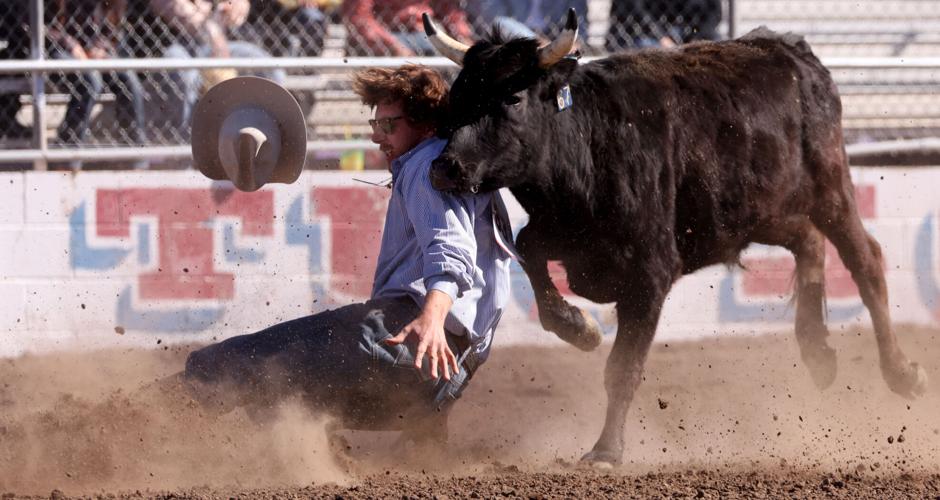
Danger Browning narrowly avoids getting run over after missing his target in steer wrestling on the opening day of La Fiesta de los Vaqueros in Tucson on Saturday, Feb. 21, 2026.


 The delicate dance: Inside the mind of the Tucson rodeo’s favorite voice