


The Tucson Greek Festival came out of its pandemic slumber last year for a one-day event at downtown’s Mural Lot on East Congress Street.
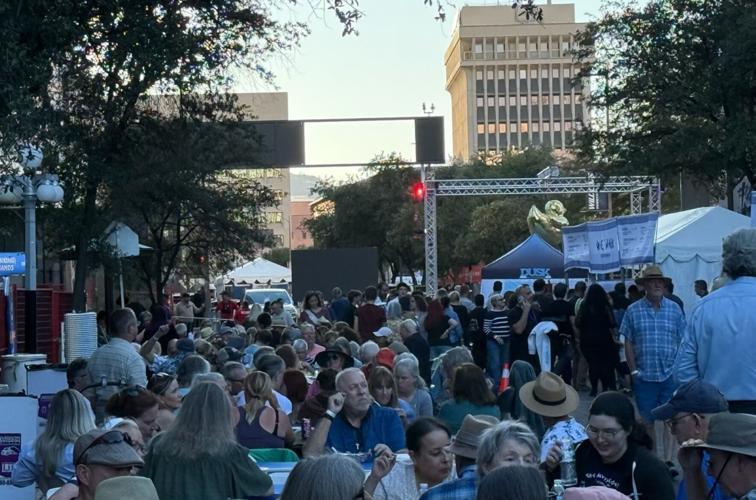
Organizers had anticipated they’d attract a crowd after the festival’s five-year hiatus — courtesy of COVID-19 and St. Demetrios Greek Orthodox Church, where the festival had been for decades, moving from its East Fort Lowell Road home. But they never imagined they would have to turn away 2,000 people.
“We thought we'd have lots of tickets at the door, and then boom, you know, they were gone,” said Peter Anadranistakis, who coordinates and hosts the festival with John Rallis, one of the founders of the popular Dusk Music Festival. “And so as people started coming and everybody started coming early, we could start seeing all the bottlenecks.”

Thousands turned out for the 2025 Tucson Greek Festival, the first in eight years, held at the Mural Lot on East Congress Street.
That shouldn’t be a problem this year, Anadranistakis said.
The festival is setting up in the much larger footprint of Jácome Plaza, 101 N. Stone Ave. (where Dusk will take place Nov. 13-14).
The bigger venue and the festival’s extended hours — 3 to 10 p.m. Friday, Nov. 6, and 11 a.m. to 10 p.m. Saturday, Nov. 7 — will give the festival wiggle room to accommodate far more people.
Organizers decided last year to bring the festival downtown to build on the success they had a year earlier when a crowd showed up for its concert with a Greek-American vocalist at downtown’s Museum of Contemporary Art.
“That gave us the resilience to say, OK, well, if we can put on this great concert for 400 people in our community, and everybody had a great time and everybody enjoyed being downtown, then we can bring back the Greek festival downtown,” Anadranistakis said.
With the help of Rollis and fellow Dusk founder Page Repp, the 2025 festival set up in the Mural Lot, where Dusk was hosting a secondary stage for its event the following day. That meant the space already had the infrastructure, including the stage, lighting and fencing.
”Without Dusk's infrastructure last year … we couldn't have done it,” Anadranistakis said.
Rollis said putting on the Greek festival was a heavy financial lift for the church, which hosted the event going back to the mid-1970s, but “we just knew it's something that had to be done.” The fully equipped Mural Lot reduced a big chunk of those costs.
Last year’s event brought in 1,748 unique guests, generating just shy of $74,000 in gross revenues, according to the festival’s “2025 Proof of Concept” economic report, provided by Anadranistakis.
Rollis and Anadranistakis are building on that success this year thanks in part to the financial support of more than 35 sponsors, including Tucson Appliance.
“They love it because of the demographic that it brings downtown,” Anadranistakis said. “It's bringing families. It's bringing food and people and faith and all of those things together.”
New to this year’s festival are kids zones with activities including face-painting and traditional dance performed by youth troupes; a sports lounge where visitors can pop in and watch the Arizona Wildcats take on TCU from Casino del Sol Stadium Friday night; and an expanded Yiayia’s House that will include Pappoús’ Kafeneio (grandfather’s coffeehouse).
In Greece, pappoúdes (grandfathers) gather to drink coffee or raki, a Greek moonshine, and talk politics.
“We created a pappoús kafeneio like you would see in Greece passing by with all these older pappoús talking and debating,” Anadranistakis said.
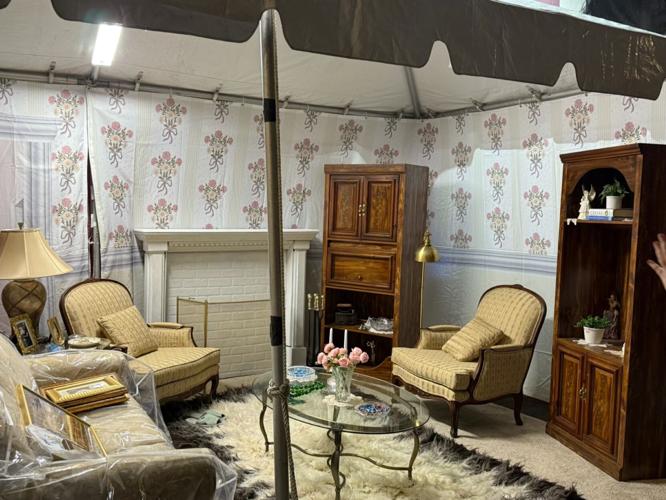
Yiayia’s House, introduced to the festival last year, feels like walking into a Greek person’s home.
“The number one thing you would notice if I invited you to my Yiayia's house is everything is perfect, and by that I also mean that the furniture is still brand new,” Anadranistakis said. “And why? Because there's plastic all over the furniture. There's plastic on the lamps. There's plastic on the carpet. This is not a joke. There's plastic on the furniture, and then on top of the plastic, there's doilies.”
Anadranistakis said the organizers thought replicating their grandmothers’ homes as part of the festival would be something of an inside joke for Greeks.

One of the big attractions at last year’s Tucson Greek Festival was Yiayia’s House, a space filled with plastic-covered furniture reminiscent of what you would experience visiting your Greek grandmother.
It turned into a surprise hit with festivalgoers that resonated beyond what Anadranistakis and his team could imagine.
“People came and said, ‘Oh, this could be a Hindu house.’ ‘This could be an Italian house.’ ‘This could be a Filipino house.’ ‘This could be my abuela's house in Hermosillo’,” he said.

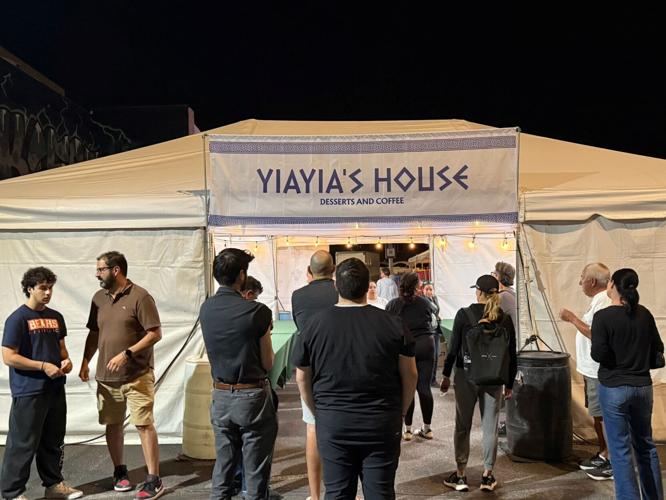
There were lines of people waiting to get into Yiayia’s House at last year’s Tucson Greek Festival. Organizers were surprised to see the interest, especially from young people.
Pappoús’ Kafeneio will have for sale Greek coffee — a boldly intense brew that has a thicker silt at the bottom —while YiaYia’s House is where festivalgoers will find desserts and sweets.
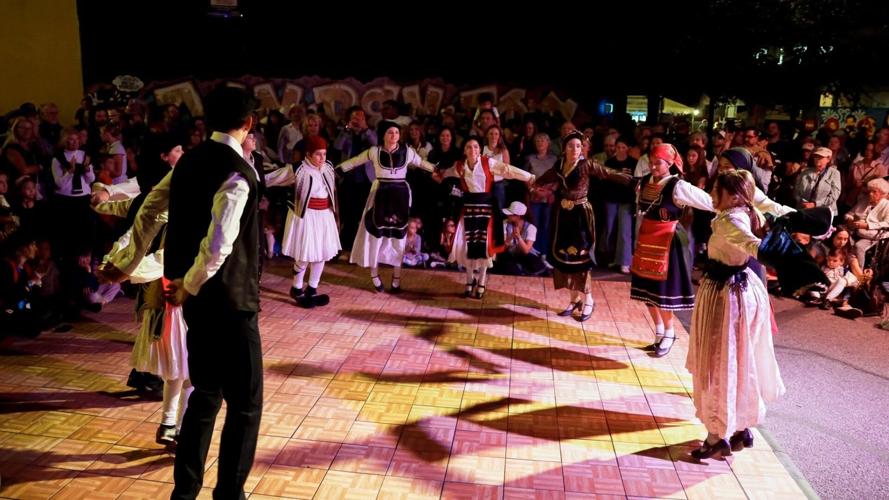
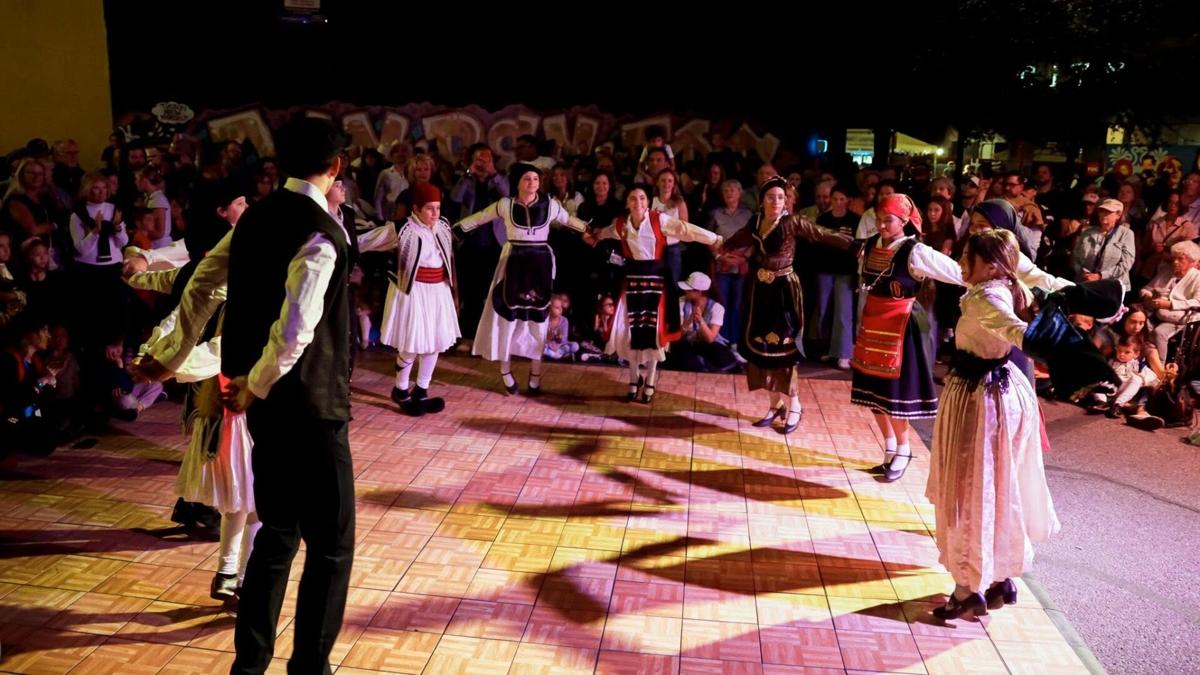
The festival also features a number of cultural experiences including traditional Greek dancing and music, as well as a display of the Greek Orthodox Church, central to Greek life, that was sponsored by the Timothy J. Joannides and Joannides Family Properties and Foundation.
“A big part of Greek culture is their faith. If you go to Greece, you're going to experience churches,” Anadranistakis said. “They're literally everywhere: small ones, big ones, medium-sized ones, small chapels. They're everywhere.”
But, of course, the Tucson Greek Festival’s biggest draw is the food.
Whenever anyone asked Anadranistakis about the festival returning, the number one thing they mentioned was the food.
“The food was the thing that we heard that people wanted and the reason why they came,” he said. “They like the dancing, they like the refreshments, they like the entertainment, they like the music. They love the food.”
For the uninitiated, here’s a little tutorial on what the vendors will be serving.
Savory

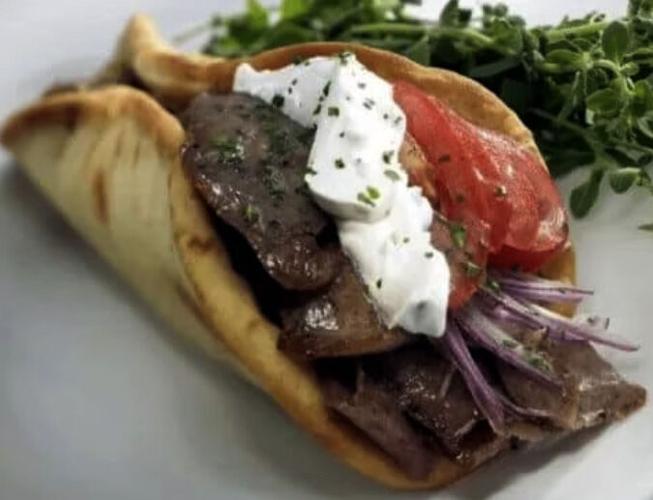
Gyro will be among the foods at the Tucson Greek Festival.
Gyro — Seasoned lamb, beef or chicken roasted on a vertical rotisserie and shaved thin and served wrapped in warm pita bread.
Chicken souvlaki — Marinated chicken chunks threaded on a skewer and served with a warm pita and tzatziki sauce, tomatoes and onions.
Tzatziki — Traditional creamy yogurt and cucumber dip, seasoned with fresh herbs, olive oil and a splash of lemon juice or vinegar.
Greek salad — Traditionally made with tomato and cucumber chunks, green bell pepper, Kalamata olives and salty feta cheese.
Pastitisio — Greece’s answer to Italy’s lasagna, this baked pasta features layers of tubular pasta with spiced meat sauce that’s topped with a thick, creamy béchamel.
Tiropita — Flaky phylo dough filled with cheese (feta and other, milder cheese, including ricotta) creates a rich, savory pastry that can be eaten hot or cold.

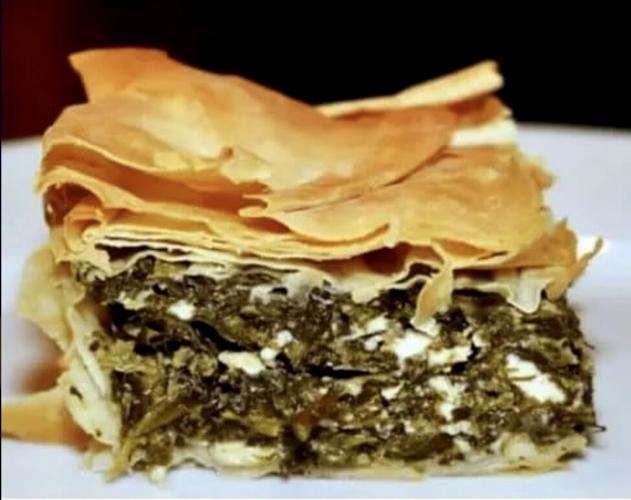
The Tucson Greek Festival next weekend is all about the food, including the savory spanakopita spinach and feta pie in a flaky phyllo dough.
Spanakopita — As described by Anadranistakis, it’s spinach pie that has “this beautiful flaky phyllo crust on top and filled with spinach and usually feta cheese.” It’s salty, crispy, chewy and earthy, or, in his view, “absolutely delicious.”
Saganaki — Flaming Greek cheese that “gets a little bit of a crust to the top” that’s eaten on its own or with pita bread. “Last year it was one of the most popular foods at the Greek festival,” he said.
Sweet
Loukoumades — “They're like little mini fried donut balls, and they're drenched in a honey orange syrup with sesame and cinnamon. They're absolutely delicious,” Anadranistakis said.
Baklava — Layers of crispy, flaky phyllo filled with chopped nuts and drowned in sticky sweet honey or syrup.
Kourambiedes — Traditional Greek almond butter cookies made with roasted almonds, fresh butter and rosewater, dusted with iced sugar (or powdered sugar). They call them Christmas cookies because they are usually served around the holidays.
Ouzo cake — The Greek apertif ouzo is central to this sponge cake that’s soaked in a sweet ouzo syrup and dusted with powdered sugar.
Kouloria — Traditionally shaped like a ring, this decadent buttery pastry boasts a delicate flavor with a hint of vanilla and earthy finish from sesame seeds sprinkled on top.
A buffet is included with the VIP tickets and includes small plates of most of the dishes being served by festival vendors as well as roasted lamb and dolmades — grape leaves filled with ground beef, lamb or pork and rice; the vegetarian version features long grain or arborio rice, onions, scallions and fresh herbs.
The entertainers
Performers at this weekend’s Greek Fest include:
Jim Kaparanis, playing bouzouki, which resembles a guitar.
Popular Greek DJ Anastasios Vlahos spins the latest Greek hits, creating “Athens by Day” and “Mykonos by Night” vibes.
Traditional Greek folk dance with dancers donning authentic Greek costumes with Oi Sporoi junior dancers, middle and high school level Pyrotechnimata and the adult troupe Pepromeno, which will teach dance moves to the audience and encourage crowd participation.
A Tucson tradition
The Tucson Greek Festival goes back at least 50 years to the first event in 1976 on the grounds of St. Demetrios Greek Orthodox Church at 1145 E. Fort Lowell Road.
The Rev. Anthony Moschonas organized that first event primarily for his parishioners at Tucson’s lone Greek Orthodox Church, but the excitement extended beyond the church halls into the community. Every year after saw the festival grow, expanding to three days, before the COVID hiatus that put the event on hold.

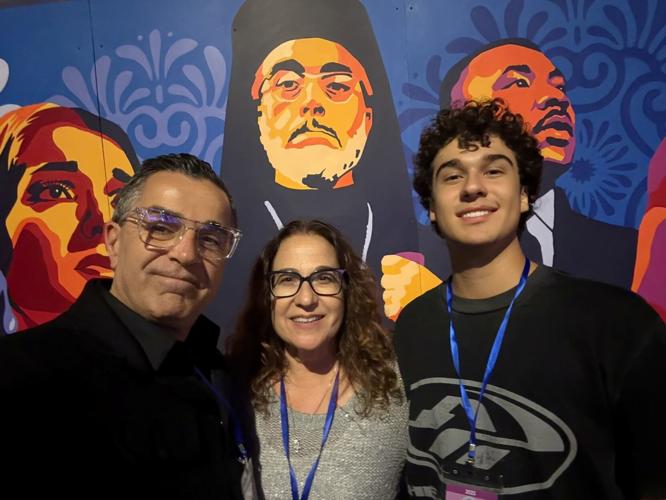
Tucson Greek Festival organizer Peter Anadranistakis, left, with Tina Elipoulos and her son Niko at the 2025 Tucson Greek Festival. Elipoulos’ father, the Rev. Anthony Moschonas, started the annual Greek festival in 1976. His daughter and grandson volunteer with the event to carry on Moschonas’s legacy.
In addition to the festival, Moschonas, who died in 2011 at the age of 71, also helped to establish the Hellenic Cultural Foundation to promote Greek education. The foundation was largely responsible for the University of Arizona launching its Modern Greek Studies program.
Today, Moschonas’ descendants, including his daughter, Tina Elipoulos, keep his memory and vision alive by volunteering with the festival, according to Anadranistakis.