

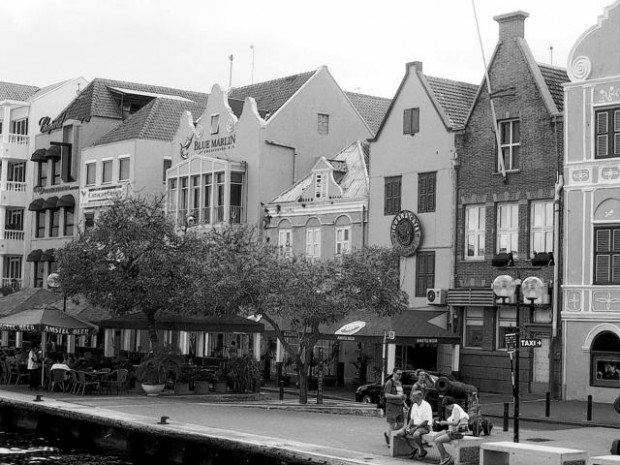
WILLEMSTAD, Curaçao, Dutch Antilles
The colorful waterfront is the heart of bustling Curaçao, one of the most unknown islands in the Caribbean to most Americans.
Even if you don't know of Curaçao, odds are you have seen photographs of the Caribbean-colored, Dutch-looking offices and storehouses that grace Willemstad's waterfront.
The waterfront looks like something out of a fairy tale — with buildings painted blue, pink, citrus yellow, pistachio and other pastel tones. They feature Dutch gables and red-tiled roofs.
The row of stately buildings from the 17th and 18th centuries flanks what some call the prettiest harbor in the Caribbean, with a floating 700-foot pedestrian bridge that connects the two banks and swings to shore when a ship enters the harbor.
Around the corner from the buildings on the waterfront's Handelskade is the Floating Market, where produce, fish, spices, dried meats and fabrics arrive daily via small boats from nearby Venezuela and Colombia.
People are also reading…
Not far away, Afro-Carib artists sell their wares on a crowded plaza.
Curaçao (it's pronounced kur-a-SOW) was once dubbed the isla inutil, or useless island, by the Spanish, after they found no gold.
Today Curaçao has a lot going for it, and it remains a cultural crossroads in the Caribbean, with a diverse and ethnically mixed population representing 50 countries.
It is a place where a beach-and-surf vacation can get mixed with Dutch-flavored culture and history.
Curaçao is an island of cactus forests and oil refineries, lizards and stray goats, 38 secluded beaches and world-class diving and snorkeling, a little-known slavery museum and a historic synagogue, casinos and nighttime partying.
It features 360 days of sunshine a year, gentle trade winds and water temperatures from 75 to 82 degrees.
The island even produces its own citrus liqueur: Curaçao of Curaçao.
The liqueur comes in different colors and is derived from the peel of the laraha orange. Tours are available at the Senor & Co. distillery on weekdays.
With its sister islands of Aruba and Bonaire, Curaçao is a small island that is off the beaten track in the southern Caribbean.
The island is 38 miles long and 9 miles wide with a population of 140,000. It lies 35 miles north of Venezuela and away from most hurricanes.
Curaçao gets 23 inches of rain a year, and its average daily temperature is 82 degrees.
The official languages are Dutch and Papiamentu (a combination of Portuguese, Dutch, English, Spanish and African dialects), although English and Spanish are widely spoken.
You may dine on goat, iguana or some of the best Indonesian fare in the Caribbean.
Curaçao is known for its oil refining and its offshore banking. But tourism is growing.
The island is flat and arid — like Arizona on the edge of the always-blue Caribbean. Its main plants are 20-foot-tall cacti and wind-shaped divi-divi trees. The coast features rocky coves and craggy cliffs.
The beaches — known locally as "bocas" or "playas" — feature silky white sand and water so clear you can count your toes in shoulder-deep water.
Curaçao seems to be jealous of Aruba and its booming tourist industry, and Aruba seems to look down on Curaçao. There are some very strained relations between the two islands.
Curaçao's Mambo Beach on the southwest shore features swaying palm trees, sand, surf and coral reefs. It is one of the prettiest beaches you will ever see. At night, Mambo Beach becomes party central, with music, dancing and lots of revelry.
Curaçao was discovered by the Spanish in 1499, but the Dutch seized the island in 1634. It became a major Dutch trading center because of the natural harbor at Willemstad.
The harbor features a long channel, Sint Annabaai, that divides the Punda (the point) area on the east bank and the Otrobanda (the other side) neighborhood on the west bank.
It's the Punda's waterfront that you see in postcards of Curaçao.
The buildings got their eye-popping paint job in 1817 after a governor got migraines from the sun striking the then-white surfaces. The governor also had financial investments in a paint company, according to local stories.
You can reach the Punda via the wood-decked Queen Emma Bridge, the wide pontoon bridge that was built in 1888 and rebuilt in 1939. Free ferries cross the bay when the floating bridge is moved for ships.
During the day, the Punda is filled with low-priced shops, restaurants, stores and souvenir stands. At night, it is a world of open-air bars and karaoke cafes. The whole area with its 750 buildings officially is a UNESCO World Heritage site.
That includes the yellow Mikve Israel-Emanuel, the oldest synagogue in continual use in the Americas. It was built in 1732. It features white sand on the floor to symbolize the Jewish trek through the desert for 40 years. The synagogue has elaborate mahogany and silver in its interior trimmings. There is a central courtyard. Next door is the Jewish Historical & Cultural Museum.
The Hotel Kura Hulanda on the Otrobanda bank takes the form of a village, where you can walk the original lanes and alleys, relax in courtyards, and stay in rooms that would have been shops and homes 300 years ago. It covers eight blocks and features some of the island's best and most expensive restaurants.
The hotel also houses the African History Museum, which is generally considered the best look at slavery in the Caribbean. It fills 15 buildings and more than 16,000 square feet with artifacts and displays. One display takes you inside a replica of a slave ship.
The museum traces slavery from Africa to the Americas and looks closely at Curaçao's role as a slave market from the 1600s to 1863. More than 500,000 slaves from Africa were shipped through Curaçao.
The island also features the remains of Dutch colonial "land-huizas," or plantation houses, from when Curaçao was a tropical playground for wealthy industrialists and traders. They were built on hilltops across the island.
Divers love the reefs in the 12-mile-long Curaçao Underwater Park along the island's southwest coast. Other attractions on Curaçao include the Curaçao Sea Aquariumwith 400 species of tropical fish, corals and sponges, and the 4,650-acre Christoffel National Park.
On the net


