Meta Platforms said in a court filing that four states seek $1.4 trillion in penalties over accusations the company designed its Facebook and Instagram platforms to addict young users and misled the public about their safety.
Meta put forward the figure Monday in its response to the attorneys general's filings on how penalties should be calculated if the states prevailed at trial.
The number, which wasn’t previously disclosed and is close to Meta’s market capitalization of about $1.5 trillion, comes ahead of an August trial in Oakland, California over the claims brought by California, Colorado, Kentucky and New Jersey against the company.
Meta said the amount was unsupported by the evidence.
"A sanction of that size has no analog in the history of consumer protection enforcement," the company said in the filing.
People are also reading…
Representatives for the attorneys general did not immediately respond to requests for comment after the filing.
Tallying damages
The states' filings are sealed, but at a court hearing in June they said they were calculating the penalties by multiplying the number of violations by fine amounts set by state law. The number of violations is based on the estimated number of teens and young users affected by Meta's actions, the states said.
Twenty-nine states sued Meta in federal court, most of them alleging the company violated the federal Children's Online Privacy Protection Act by collecting data from children without proper parental consent. The trial in August before U.S. District Judge Yvonne Gonzalez Rogers will address all claims brought under that law, plus the four states’ allegations that the company violated their state laws protecting consumers by misleading them about the safety of their platforms.
Meta denies the allegations, saying the attorneys general have no evidence it misled consumers about its platforms' alleged addictiveness because "social media addiction" is not an established psychiatric condition, and therefore statements that its platforms were not addictive could not be false.
A further 14 states have brought claims under their own laws, which will be heard at a separate trial in February.
Last month, Rogers rejected Meta’s bid to cancel the trial, saying there remained factual disputes over whether its social media platforms were addictive, whether Meta falsely denied it designed them that way, and whether it "partially" directed the platforms at children.
California Attorney General Rob Bonta said after Rogers' ruling that Meta put profits ahead of children's safety and broke consumer protection laws, promising to hold the company "fully accountable" for its role in the teen mental health crisis.
Meta, Snap Inc., Alphabet Inc. and ByteDance face thousands of lawsuits in both federal and state court over claims they knowingly designed their platforms to have features that addict children and teens, fueling a mental health crisis.
States across the country sued the companies, some as part of the case before Rogers and others in their home state courts. New Mexico was the first to go to trial, and a jury awarded the state $375 million in March after finding the company misled New Mexico consumers.
A judge in New Mexico is weighing the second portion of the state’s case, which seeks additional damages and a court order directing the company to make changes to its Instagram, Facebook and WhatsApp platforms.

The Meta logo is seen May 20 at the Meta Lab in Los Angeles.

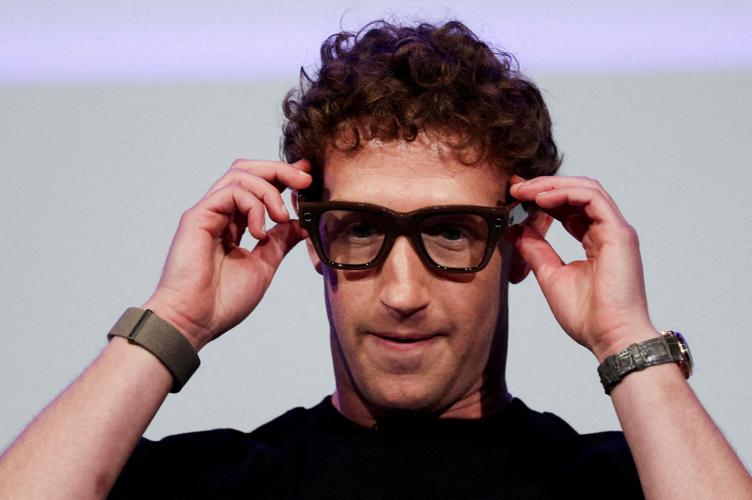
Meta CEO Mark Zuckerberg wears the Meta Ray-Ban Display glasses Sept. 17 as he delivers a speech during the Meta Connect event at the company's headquarters in Menlo Park, Calif.

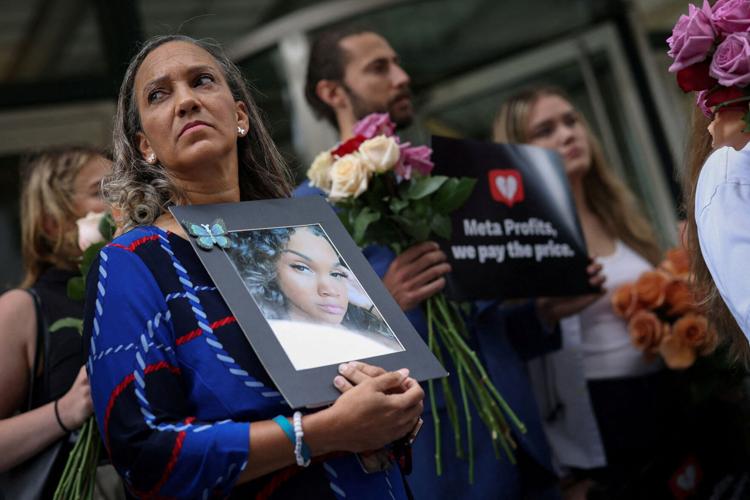
Brandy Roberts, who lost her 14 year old daughter Englyn Roberts to suicide in 2020, joins other family members of victims and activists Sept. 17 outside the New York headquarters of Meta, the parent company of Facebook and Instagram, to demand more safeguards for children on social media platforms.

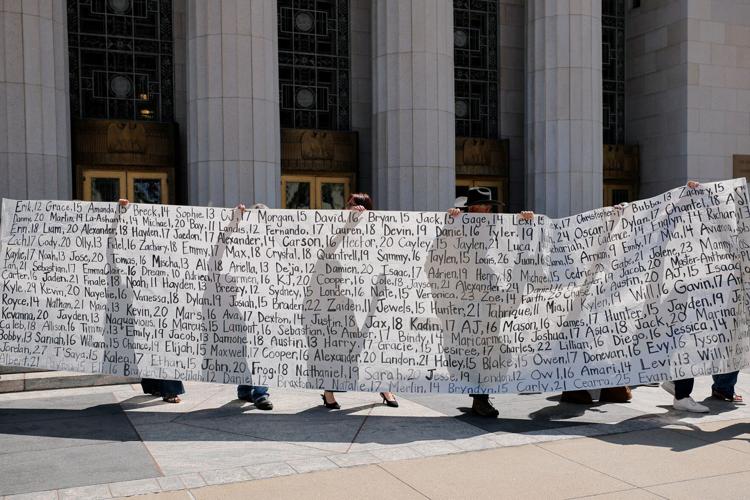
Parents who say they lost their children due to social media hold up a banner with the names of the children March 25 outside the court after the jury found Meta and Google liable in a key test case accusing Meta and Google's YouTube of harming children's mental health through addictive social media platforms in Los Angeles.

U.S. President Donald Trump talks to Meta CEO Mark Zuckerberg next to first lady Melania Trump during UFC Freedom 250 on the South Lawn of the White House in Washington, D.C., U.S., June 14, 2026. REUTERS/Evan Vucci



 101 homes to be built on NW Tucson corner