When Realtor Lisa Paffrath got a request to sell vacant land near Flagstaff in 2023, something about the deal was off.
She backgrounded the supposed owners, searched real estate records and checked their IDs. But she couldn’t get them on the phone to answer questions. Paffrath found another number for the property’s owner and called.
“I talked to the real owner, and he had no idea someone was trying to claim his property and sell it,” she said.
Paffrath helped stop a deed fraud scam, a growing problem that’s put Arizona property owners in jeopardy of losing millions of dollars in homes, land and legal fees.
Scammers are illegally forging signatures and using other deceptive methods, including fake IDs and phone numbers, to fraudulently transfer property ownership without the real owners knowing. The bogus owners then resell the properties for fast profits or mortgage them to drain the equity.
People are also reading…
The frighteningly easy fraud scheme typically targets seniors as well as owners of rental, vacant and recently inherited properties.
Regulators say Arizona homeowners scammed by deed fraud have a legal right to get their homes back. But sometimes the battle is too costly or difficult for property owners, and they give up.
The people trying to steal the Flagstaff land sent Paffrath copies of IDs with the real owner’s California address, but the photos and ages were wrong. After being alerted, the owner took legal action to stop the theft of his land.
Deed fraud has become so prevalent in Arizona that bipartisan legislation was passed at the state Capitol in 2026 to crack down. A new Arizona law that took effect in late July makes deed fraud a felony, requires more property owner alerts and better verification of the identities of buyers and sellers.
But some of those protections will take months or longer to get implemented. All must be in place by January 2027.
And even with these protections, Arizona regulators and housing experts are warning home and land owners to stay vigilant about protecting their properties and to contact law enforcement fast if they think it's happening to them.
Real estate agents across the state have come across multiple cases of the fraud. Both individuals and large international groups are participating the scam, they say. And it has happened for years.
Metro Phoenix real estate agent Debi Gotlieb almost lost her father’s south Scottsdale house to deed fraud in 2019, when someone forged a property deed and sold it to Zillow.

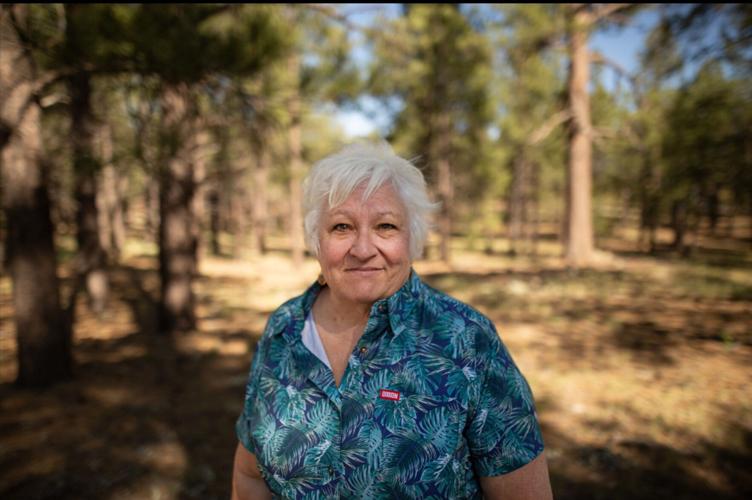
Debi Gotlieb almost lost her father’s Scottsdale home to deed fraud in 2019, when someone forged a property deed and sold it to Zillow.
“I couldn’t find my dad’s house in tax records and then saw it listed on Zillow, so I drove there and saw a ‘for sale’ sign in the front yard. My dad’s stuff was gone,” she said about the house that had been in probate since her dad died in 2018. “It’s unbelievable how easy it is to commit deed fraud.”
Deed fraud has grown to become the latest big real estate scam in Arizona, which has a long and sordid history of land and real estate fraud.
“What shocked me the most about deed fraud was a property owner will not know it happened until their house is literally sold to someone else, and a new owner shows up at the house,” said Maricopa County Assessor Eddie Cook, who worked with Gotlieb and other deed victims to get more protection with the new law.
How houses, land quietly stolen
Deed fraud thieves either impersonate a property owner, like the case Paffrath uncovered, or file very simple quitclaim deed documents with their own names or fake ones that can be fraudulently notarized. In Arizona, quitclaim deeds are legal documents that easily transfer real estate from one person or group to another.
Quitclaim deeds are required to have notarized signatures of property buyers and sellers and be filed with an Arizona county recorder. But the state government agencies aren’t charged with verifying the documents and act more as libraries for filings.
“About 99% of all (deed fraud) cases involve a false ID or stolen notary (number)," said Don Carroll, a criminal investigator for the Arizona Attorney General's Office.
He said during the pandemic, with so many remote signings for home sales, the problem got worse. Carroll found cases of fraud on recorded real estate documents without the required signatures.
Scammers target vacant land and homes without mortgages in areas where real estate sells fast. Arizona’s strong growth and real estate market are draws for con artists trying to illegally profit.
And AI is making deed scams even easier for fraudsters because they can use it to more quickly search public records, create fake documents, voices and images to hide their identities, regulators and real estate agents said.
Hundreds of complaints filed
Scammers have figured out other strategies to expedite property fraud.
“It’s become easier to steal someone’s home than steal their TV,” said Arizona Department of Real Estate Commissioner Susan Nicolson. That agency has been working to help educate real estate agents on catching deed fraud.
Valley real estate agent and investor John Rowan said the scammers will file address changes for properties with the U.S. Postal Service, other government agencies and lenders so that tax bills and bank statements go to them. Those documents can be used to prove ownership, too.
Cold calls to refinance or get reverse loans also are fishing expeditions for fraud, said Rowan, who helped police with a sting operation to catch two women trying to get him to buy a Scottsdale house through deed fraud.
Nationally, criminals stole more than $275 million through online real estate fraud from at least 12,368 victims in 2025, according to the FBI. That jumped from 9,359 victims who lost more than $173 million in 2024.
For cybercrime, including real estate fraud, Arizona ranked No. 6 in the U.S. with more than $631 million in losses, per the 2025 report.
Deed fraud complaints can be filed with the Arizona Department of Real Estate and the Arizona Attorney General's Office.
About 500 Arizona real estate fraud complaints have been submitted since 2024, and most were for deed fraud, according to the state attorney general.

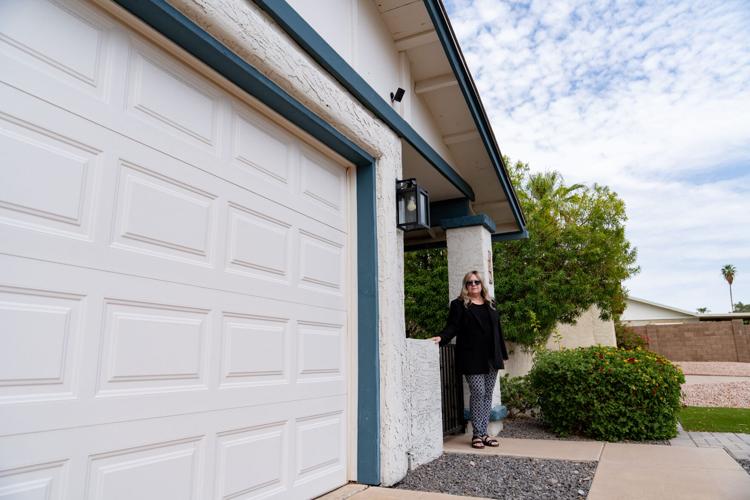
Realtor Lisa Paffrath poses at the Flagstaff, Arizona, parcel she helped California owner Timothy Boicourt save from a deed fraud scam.
Deed fraud victims can lose thousands of dollars
Timothy Boicourt could have lost almost $400,000 on his 5-acre Flagstaff property if Paffrath wasn't suspicious of the people who contacted her about selling it.
“I was in shock when she called me and said someone was trying to sell my land. It gave me a chill up my spine,” Boicourt, who put a lien on it to try to stop the fraud, said. “I served in Vietnam and worked damn hard construction jobs all my life to afford the land.”
He paid cash for the northern Arizona parcel about 20 years ago.
“The people trying to steal my property sent Lisa drivers' licenses with mine and my wife’s names and addresses but their photos,” said Boicourt. “It’s scary and criminal.”
It wasn’t the first time Paffrath discovered the real estate scam, and she’s seen other examples since.
“I tell these scammers to go suck an egg, but they move on to another Realtor, Paffrath, who is president of the Arizona Association of Realtors, said. “So, I immediately send out messages to other Realtors to beware.”
In April, metro Phoenix RETSY real estate agents Mike and Heather Steck had a multimillion-dollar Phoenix home listing that another agent wanted to show to a potential buyer.
But Mike Steck said the agent was concerned the house wasn’t for sale anymore because a quitclaim was filed on the property's deed, changing its ownership the week before.
“We checked real estate records and pulled up a quitclaim showing our client had conveyed the home to someone else for like $500,” he said. “We were shocked.”
They said their client, who was in the process of buying another home, was shocked, too.
The couple researched the record and found the signature didn’t match their client’s, and the notary stamp number couldn’t be traced to anyone.
The same group has recently done similar quitclaims on other Valley houses, Heather Steck said.
It's getting more common for deed fraud to hit several homes in an area, and real estate agents are on the front line to catch it.
The Stecks’ client declined to comment because he’s in the legal process to get the home back.
When Gotlieb saw someone had forged a property deed to sell her dad’s Scottsdale home, she called the police and changed the locks.
It cost her more than $20,000 in legal fees and years of work to get the house back.
In 2023, then 30-year-old Vicente Anzu of California was convicted on counts of theft and forgery in the theft of the home.
Anzu, who was sentenced to five years in prison for the crimes, signed the property records in California, where notaries are required to take thumbprints.
“They caught him by tracking his thumbprint,” Gotlieb said.
Arizona hasn’t required thumbprints for property record notarizations. But under the new law that Gotlieb fought for, that ID verification will be required to clamp down on deed fraud, along with other new rules.
Who's stealing Arizona homes?
Sophisticated international syndicates, multistate groups and individuals with little real estate experience are running deed fraud scams in Arizona and other parts of the United States, according to Don Carroll, a criminal investigator for the Arizona Attorney General's Office.
Bigger groups have been caught fraudulently taking over and selling dozens of properties while solo players often focus on just a few homes.
“Real estate agents have to watch out for sales with too many red flags now,” said Matthew Morrison, RETSY Phoenix-area designated broker. “We are all on alert.”
He said a RETSY agent got a call from a client who said one of their properties was on a real estate listing site showing it was under contract. But it wasn’t for sale. The client’s agent stopped the fraud by contacting the listing agent and the title firm.
A few years ago, Carroll started seeing complaints about a Nigerian-based group sending texts to sell Arizona properties owned by people from out of state.
“They wouldn’t take calls because of their Nigerian accents, and they were using out-of-state bogus notaries to sign,” he said. “They were having money from the sales sent to mule accounts. I started sending letters to them saying we had seized the accounts.”
Then, he said someone with a Nigerian accent called him and demanded to get money from a property sale.
"I told them to send someone to my office for a check,” said Carroll, who worked with California regulators to try and stop the international deed fraud scam. “No one ever came to the office.”
Sting leads to arrest, prison
Rowan said he was contacted by two women who wanted to sell him a Scottsdale house for cash fast in late 2025. They told him the property was inherited.
The real estate agent and investor was interested in buying the home but couldn’t get the owner, per the quitclaim deed, to talk to him on the phone. Instead, her “friend” was doing the negotiating, he said.
Working with a title firm, Rowan found the deed was forged, and the real owner hadn’t listed it for sale. He found the elderly homeowner living in a care home and told him what was going on with his empty house that was paid off. The owner called the police.
In early November 2025, Rowan told the women trying to sell the home to go to a title agency, present their IDs and they would get paid. But in the parking lot of the title firm, the women — Rachael Cossette and Jennifer Greer — were arrested on suspicion of forgery and fraud. In early March, Cossette was sentenced to 1 1/2 years in prison, and Greer was sentenced to 2 1/2 years.
In 2024, an Attorney General's Office case led to the arrest of Brian Gonzalez outside an Avondale Starbucks after he signed paperwork with a notary to sell a Valley house through deed fraud, prosecutors alleged in court.
“Deed fraud is one of the most devastating crimes we see," Arizona Attorney General Kris Mayes, who alerts seniors to the scam when she does consumer events, said. “It’s heartbreaking.”
Unlike Azun, who was tried under California law, Gonzalez entered a plea agreement and received probation for a crime that could have cost a homeowner hundreds of thousands of dollars.
Arizona cracking down
At the beginning of 2025, Arizona launched a statewide county recorder title alert system that’s free for property owners. An alert for any filing on a property’s title goes to its owner days after the record is recorded.
While that helps with tackling deed fraud, the alert can come too late for some property owners because the quitclaim was already filed.
The new Arizona law is one of the strictest on deed fraud in the United States, say its backers.
“Deed fraud is happening in other states too, but now Arizona has one of the toughest laws to stop it,” said Eddie Cook, Maricopa County's assessor.
The law requires people filing property records with an Arizona recorder’s office to present a valid photo ID.
Also, county assessors must create an alert system this year to notify property owners of changes to ownership and any tax mailing address changes. Property owners must sign up for it, though, just like the alert system with county recorders' offices. That move is intended to catch fraud earlier.
Buyers and sellers also must begin providing mailing addresses and phone numbers to track better legitimate transfers.
Filing false or fraudulent property records will become a Class 5 felony, upgraded from a Class 1 misdemeanor, which means stiffer fines and sentences.
And like in California, notaries must now obtain a thumbprint in their recording journal for deeds and other real estate documents.
It took a few attempts during the past few years to get an Arizona bill passed.
And some real estate experts don’t think it goes far enough.
Mark Stapp, director of the master of real estate development program at Arizona State University, said the changes will help, but like with many issues in real estate, it's "chasing the problem."
"The financial reward for deed fraud can be high with very little effort," he said. "People can be lazy and do it too easily."
Stapp said the real estate process — from wiring money to filing documents like quitclaims — needs more scrutiny.
Cook, the Maricopa County assessor, said the protections will help many Arizona homeowners, however.
“Arizona will lead the country with its new law, and hopefully other states will follow us,” he said.


 New starter homes make a comeback in Tucson