

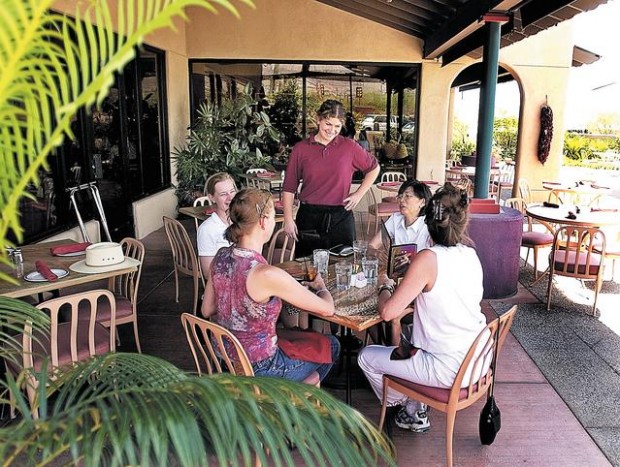
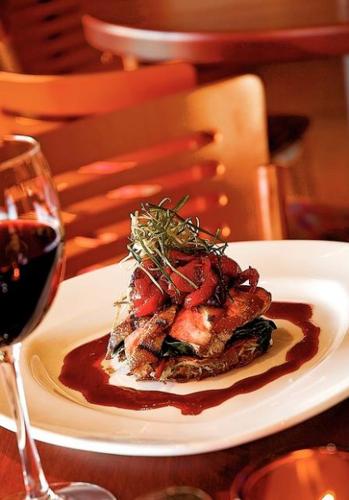
Terra Cotta, the restaurant that put Tucson on the culinary map, will close Jan. 31 after 22 years in business.
The company's 70 employees were told about the closure over the weekend.
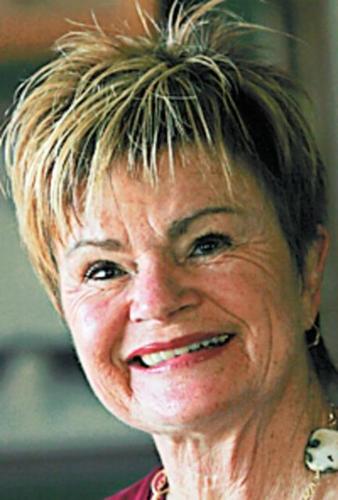
"The economy was the killer," said Don Luria, one of the restaurant's founders. He wife, Donna Nordin, was its first chef. "Restaurants are difficult in good times, and horrendous in bad times."
Son Michael Luria, who has managed the restaurant with his wife, Maya, since 2001, said business has spiraled over the last six to eight months.
"I'd like to think we'll be the last restaurant to close, but I doubt it," he said.
Terra Cotta, 3500 E. Sunrise Drive, opened as Cafe Terra Cotta July 5, 1986, at St. Philip's Plaza. It quickly received good reviews for its then-innovative fare with strong Southwestern touches.
People are also reading…
"The place is a godsend," said the Star's 1986 review. "It's the best and most important restaurant to emerge in Tucson since Janos opened three years ago."
A rave review written within weeks of the restaurant's opening appeared in the Tucson Citizen and caught the eye of television producers.
"It just so happens that the people doing the PBS 'Best of the West' series read the review and they called Donna to see if they could come in and tape a segment," recalled Don Luria.
"They filmed in December, and that gave us national publicity."
Nordin had a reputation before the restaurant opened — she had a cooking school in San Francisco, and traveled around the country giving classes. Her signature chocolate mousse pie was featured on a cover of Bon Appetit Magazine in 1980.
It wasn't long before Terra Cotta became the place to indulge in reasonably priced, casual fare that didn't taste a bit casual.
"They really helped to popularize the foods of the region," said Janos Wilder, owner of the more upscale Janos, 3770 E. Sunrise Drive on the grounds of the Westin La Paloma Resort & Spa. "They got lots of national attention, and they did a lot of business. That was good for everybody, and for the community as a whole."
Don Luria and Nordin, under the corporate umbrella of Southwest Trends, opened and closed several other restaurants here, including Los Mayas and Prima Donna. It operated a Terra Cotta in the Phoenix area for about 10 years, and opened and managed the Tohono Chul Tea Room for about a decade. Through it all, the Tucson Terra Cotta kept its doors open.
In 2001, the restaurant moved from its St. Philip's location to its current, expansive home, which Nordin and Luria had built.
It's had its ups and downs since settling in that home, weathering shaky economic times and a fire in 2004 that closed the restaurant for six months.
"It's easy to look back and say that there are a lot of factors that provided hiccups," said Michael Luria, sitting on the patio of the restaurant Friday night, the sadness of the closing clearly etched on his face.
"The fire was a big blow. When we opened here, there were no other restaurants around this area. But competition has increased faster than the number of customers, so everyone has a smaller piece of the pie.
"The last six to eight months have been increasingly difficult. Gas and food prices rose — that impacted disposable income. By the time the gas prices eased up, people were afraid to spend money. I know we're not alone. Everybody is trying to do what they can to drive traffic."
Terra Cotta leaves a long legacy. Chef and restaurant owners around town and the country got their start there, including Jeff Azersky, chef and one of the founders of Bluefin and Kingfisher restaurants; Pat Connors of Pastiche; pastry chef Marianne Banes; former Cuvee owner Mitch Levy; and Doug Levy, who owns Feast Tasteful Takeout.
Don Luria was founder of the Tucson Culinary Festival, and the founding president of Tucson Originals, a group of locally owned restaurants, which has served as a model for similar groups around the country.
He has also been a strong supporter of the arts in Tucson, serving on boards, filling the restaurant with works by local artists and providing space, food and assistance to raise awareness for local causes.
"It's a loss because it's so much a part of the community," Wilder said.
Terra Cotta's closing also has a wider significance, he said.
He hopes, he said, that "people will take to heart that they should go out to eat at their favorite restaurant, go to the performing arts. If they aren't supported, they'll disappear. We don't want to lose sight of that."