

Boom, bust and controversy.
That has often been the story of Asarco as it marks 100 years of operations in Arizona this year.
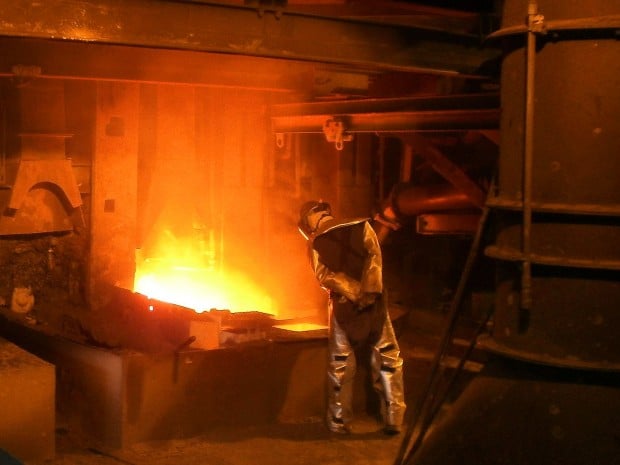
The company started business in Arizona the same year that Arizona gained statehood - in 1912, 13 years after the company was founded - when it fired up its smelter in Hayden, about 70 miles northeast of Tucson.
Like all other Arizona copper operations over the decades, Asarco has been marked by continuous cycles of high and low employment paralleling worldwide copper prices.
Particularly in the past 15 years, the Tucson-based company has also been in a state of near-continuous controversy over issues both economic and environmental. They include a strike, a bankruptcy, a buyout, and contested allegations of illegal dust pollution near Green Valley and smelter pollution in Hayden.
People are also reading…
Here's the chronology of Asarco's first hundred years in Arizona:
1880: Ray mine, near Hayden, starts under the ownership of Ray Copper Co. and later Ray Consolidated Copper Co., both predecessors of Kennecott Copper; the mine will eventually be sold to Asarco.
1899: Asarco, then known by the full name of American Smelting and Refining Company, is founded in New York City.
1910: The Southern Arizona town of Hayden is founded.
1911-12: Asarco Hayden smelter is built and starts operating to process ore from the Ray mine.
1933: Hayden smelter shuts down, to reopen in late 1937.
1954: Asarco starts the Silver Bell mine.
1958: Hayden smelter begins receiving concentrates from Pima, Duval, Bagdad, Cyprus and Silver Bell mines in Arizona. Kennecott, then-owner of the Ray mine, terminates its contract to ship concentrates to Hayden for smelting.
1961: Mission mine is started south of Tucson.
1967: San Xavier mine starts operations just north of original Mission mine and north of Pima Mine Road, on the San Xavier reservation south of Tucson. Mission mine increases production capacity by 50 percent.
1972: Asarco installs an acid plant at its Hayden smelter to remove sulfur dioxide from emissions, as required by passage of the federal Clean Air Act in 1970. A new acid plant would be installed in 1983 to convert more than 95 percent of sulfur dioxide emissions to sulfuric acid.
1984: Silver Bell mine northwest of Tucson shuts down, laying off about 200 employees, down from a peak of about 350 in the late 1970s.
1985: Asarco buys the Pima mine south of the Mission mine from Cyprus Pima Corp. and consolidates it along with the neighboring Eisenhower, San Xavier and Mission mines into the Mission Complex.
1986: Asarco buys the Ray mine from Kennecott.
1990 and 1994: Expansions double Mission's production. When copper prices peak then at nearly $1.40 a pound, Mission employs 975 people.
1995-98: Ten years before Augusta Resource buys the Rosemont mine site in the Santa Rita Mountains, then-owner Asarco proposes a massive land exchange with the Forest Service to allow a similar project. The company ultimately abandons the proposal in the face of public opposition and declining copper prices.
1997: Silver Bell mine resumes production at a new solvent extraction electrowinning facility.
1999: Grupo Mexico, a conglomerate operating Sonora copper mines and a smelter in Nacozari and Cananea, buys Asarco in a deal valued at about $2.25 billion, including Grupo's assumption of more than a billion dollars in Asarco debts.
2002: With copper prices down to the 60-70-cent range, Asarco lays off about 250 workers at Ray and Mission - the third cutback at Mission since 2000, leaving Mission with 350 employees. The number drops to below 200 when an underground mine closes in 2003.
2002: More than 250 current and former residents of Hayden, Winkelman, Kearny and Riverside sign on to class-action lawsuits filed against Asarco, alleging the mining giant's operations have injured them, contaminated the environment and devalued their homes with toxic releases. The company declines to comment directly, but officials say that studies by the University of Arizona and the University of Pittsburgh found no connection between smelter operations and illness.
2002-04: Soil samples taken in Hayden by state and federal environmental agencies find what authorities say are numerous cases of elevated levels of lead, copper and arsenic in peoples' yards and other locations that are high enough to warrant cleanup.
2005: Asarco files for Chapter 11 bankruptcy protection, citing $1.5 billion in environmental and asbestos liabilities, a credit-rating downgrade and a copper strike that ultimately lasts 136 days. In December, Grupo Mexico loses control of the company during bankruptcy proceedings. The Arizona residents' 2002 lawsuit is settled during bankruptcy proceedings for about $4.8 million.
2007-08: After its proposal to designate Hayden a Superfund site draws widespread opposition, the U.S. Environmental Protection Agency signs an agreement with Asarco for the company to pay up to $13.5 million to remove contaminated soil from 265 yards under the oversight of EPA and the Arizona Department of Environmental Quality.
2008: A federal judge rules that Grupo Mexico's 2003 transfer of Asarco's majority interest in a Peruvian mining operation to its own subsidiary was fraudulent and had essentially forced Asarco into bankruptcy by leaving it without enough cash to survive.
2009: Asarco emerges from bankruptcy, with Grupo Mexico regaining control over the company and agreeing to pay creditors $2.2 billion of Grupo's money plus an additional $1.4 billion in cash held by Asarco. This action frees up nearly $1.8 billion to pay for previously approved environmental cleanups at six Arizona Asarco sites and a total of 24 sites in 13 states.
2010: In an out-of-court settlement, Asarco agrees to pay Pima County $450,000 over alleged air quality violations when Mission's tailings dust blew into homes and yards three times. County officials said it was the largest payment they ever received for air quality violations, although Asarco never acknowledged violations.
2011: EPA issues a notice saying that the Hayden smelter has emitted illegal levels of arsenic, lead and eight other hazardous heavy metals since 2005. It warns the company it could face fines totaling millions of dollars. Asarco is contesting the allegations. Some of the dispute centers on how many tons per year of toxic pollutants the smelter is capable of emitting, since regulations are stricter for plants that can emit more.
2011: The EPA notice comes as National Public Radio and the Center for Public Integrity produce a highly critical story on Hayden that accuses state and federal regulators of not acting forcefully enough to control pollution. Even with the soil removed, "emissions from the smelter and dust blown from a 2,000-acre tailings pile - an ever-expanding mountain of mining waste - continue to deposit those same metals and other poisons on this poor, mostly Latino community," the story contends.
Asarco officials say the story is unfair, leaving out many of its detailed responses to the EPA's claims and other allegations. The company says there's no evidence that the smelter has injured people's health, and says the metals removed from people's yards resulted from historical emissions at much higher levels than today's emissions.
Asarco has made numerous upgrades in environmental and production equipment at the smelter "which have allowed it to continue to be competitive in a world market and provide hundreds of jobs for people in Arizona," says Tom Aldrich, the company's vice president for environmental affairs.
2011-12: Asarco's copper production is at capacity and employment at high levels, due to copper prices approaching or exceeding $4 per pound. In the past four months, Asarco has announced plans for $125 million in upgrades and production expansions at Mission.
2012: Employment at Asarco's Arizona facilities totals 2,407. But at Mission, while production equals that of the mid-1990s, employment is less than two-thirds as much because of the underground mine closure and the use of bigger trucks today that reduce numbers of truck drivers.
2012: Asarco holds a 100th anniversary celebration in Hayden.
Source: Asarco.
Mission complex
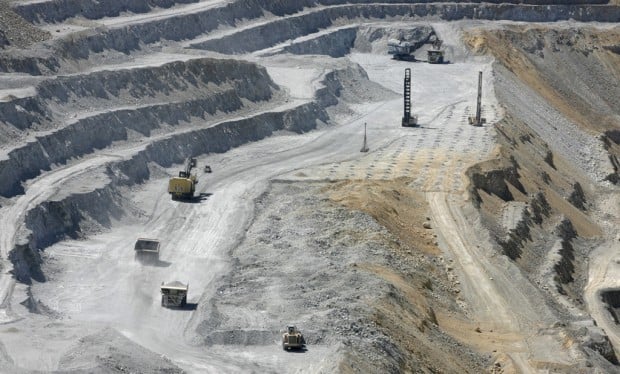
The complex consists of an integrated set of five open pits in Sahuarita, about 18 miles south of Tucson. The entire pit operation is 2.5 miles long by 1.5 miles wide and 1,200 feet deep, and lies on 20,000 acres. The mine produced 183.9 million pounds of copper concentrates in 2010.
619
employees
Asarco Arizona operations today
Silver Bell mine
Operates four open pits and a solvent extraction electrowinning plant on 19,000 acres in Marana, about 23 miles west of Interstate 10. About 1.8 million tons of ore and waste are mined monthly, and the mine produced 46.3 million pounds of high-purity, copper cathodes in 2010.
170
employees
Ray
Has a 250,000-ton-per- day open pit mine, a 30,000-pound-per-day copper concentrator, a 103- million-pound-per-year solvent extraction electrowinning operation and associated facilities. The entire operation lies 18 miles west of Hayden.
832
employees
Hayden
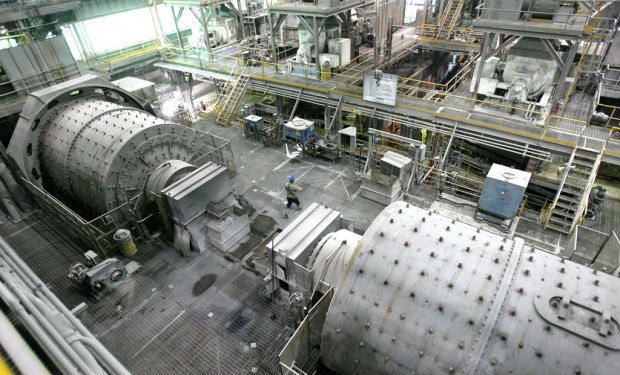
A 27,400 ton/day copper concentrator and a 720,000 ton/year copper smelter in Hayden, about 70 miles northeast of Tucson.
635
employees
Other: Asarco's corporate administrative offices are in Tucson; the company also runs the Copper Basin railroad from Ray to Hayden.
150 employees
DID YOU KNOW?
Asarco is Southern Arizona's 20th-largest employer, according to the Star 200 survey.
Contact reporter Tony Davis at tdavis@azstarnet.com or 806-7746.