

Microsoft Corp. today will release a new version of its Windows operating system, one designed to make desktop and laptop computers work more like tablets. There will be several ways to get it - or avoid it.
Windows 8 represents the software company's effort to address the growing popularity of smartphones and tablet computers, namely the iPad.
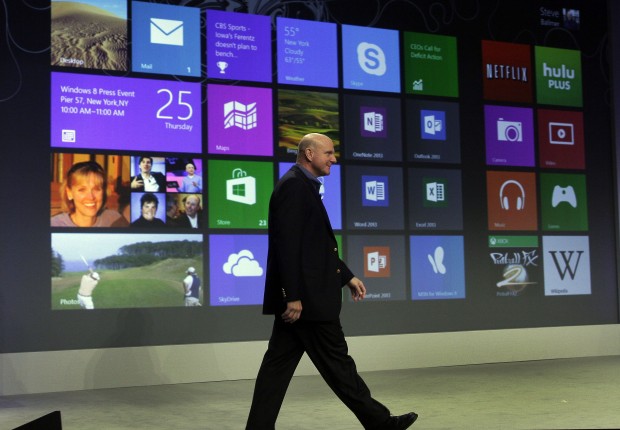
The new software is a radical departure from previous versions of Windows. It may take people time to get used to the changes. The familiar start menu on the lower left corner is gone, and people will have to swipe the edges of the screen to access various settings. There will be a new screen filled with a colorful array of tiles, each leading to a different application, task or collection of files.
Windows 8 is designed especially for touch screens, though it will work with the mouse and keyboard shortcuts, too.
People are also reading…
There will be several versions of Windows 8:
Windows 8
Like its predecessors, Windows 8 will run on computers with processing chips made by Intel Corp. or Advanced Micro Devices Inc. There's a basic version designed for consumers and a Pro version for more tech-savvy users and businesses. The Pro version has such features as encryption and group account management. Large companies with volume-licensing deals with Microsoft will want Windows 8 Enterprise, which has additional tools for information-technology staff to manage machines.
Windows RT
For the first time, there will be a version running on lower-energy chips common in phones and tablets. That version will run on tablets and some devices that marry tablet and PC features. While tablets with Windows 8 can run standard Windows programs, the RT devices will be restricted to applications specifically designed for the system. Borrowing from Apple's playbook, Microsoft is allowing RT to get applications only from its online store, and apps must meet content and other guidelines.
Windows Phone 8
While Windows 8 and RT will be out today, the phone version won't be available until an unspecified date this fall.
Nokia Corp. and Samsung Electronics Co. already have announced plans for new Windows phones.
You can get Windows RT and Windows Phone 8 only by buying devices with the software already installed, while Windows 8 can be purchased as an upgrade.
Here's how you can get - or avoid getting - Windows 8:
Buy a new PC
Desktop, laptop and tablet computers with Windows 8 already installed will go on sale today.
Several PC manufacturers including Samsung, Lenovo Group Ltd., Hewlett-Packard Co. and Dell Inc. already have announced details about their new machines.
Windows chief Steven Sinofsky said there have been 1,000 PCs certified for Windows 8, with the cheapest costing about $300. There will also be new models of slim, lightweight laptops called ultrabooks.
Retailers such as Best Buy Co. have trained staff to explain and demonstrate the new system.
Microsoft will also have its Surface tablet with Windows RT out today, with a Windows 8 version coming later.
Upgrade your PC
Those who have bought a Windows 7 PC (other than the Starter Edition) since June 2 will be able to buy Windows 8 Pro for $14.99. The offer applies to Windows 7 PCs sold until Jan. 31, and the upgrade must be claimed by Feb. 28.
To claim the offer, register the machine at https://windowsupgradeoffer.com
You'll get an email with a promo code, which you can use to get the Windows 8 upgrade online.
Those who bought a Windows PC before June 2 will be able to upgrade for $39.99. You must already have Windows XP with Service Pack 3, Windows Vista or Windows 7.
Those who prefer buying a DVD to upgrade will have to pay $69.99.
Before buying the upgrade, check to make sure your machine is strong enough to run Windows 8. Microsoft lists the system requirements here: http://windowsupgradeoffer.com/en-US/Home/ProgramInfo
Not sure if you have what it takes? Microsoft has an upgrade tool that will stop you if you try to buy Windows 8 without the requirements. The tool will also warn you of software that might need updates to work on Windows 8. Go to http://Windows.com to get started.
If you're upgrading from Windows 7, the tool will let you keep settings, personal files and applications. You can migrate settings and files from Vista and files only from XP. You'll also have the option to start fresh and bring nothing to Windows 8.
Keep older Windows
Do nothing if you do not wish to upgrade to Windows 8. After Windows 8 is out, most machines on sale will have that version of Windows.
It will be possible to buy Windows 7 machines or upgrade to Windows 7, though you may have to order online and your choices may be restricted to gaming or business-oriented machines.
Microsoft hasn't said what the cutoff date for Windows 7 will be, but expect to be able to buy Windows 7 as an upgrade for another year or preinstalled on a new machine for two more years.
Microsoft plans to continue providing technical support for Windows 7 until Jan. 14, 2020.
TABLET, TOO
Microsoft's first self-made tablet computer also goes on sale today in 60 Microsoft stores in North America. Surface starts at $499. It will run Windows RT, a slimmed-down version of the latest operating system, Windows 8. It comes with a fully functioning suite of Office 2013 programs for word processing, spreadsheets and other business tasks.
Microsoft has been taking pre-orders online. The minimum wait time for new online orders is one to two weeks.