The years had not been kind to the Wildcat House, Tucson's longtime college hangout.
Business had been falling since the economy crashed, company officials said, deepening a wound that began in the 1990s when its college-age patrons started migrating to downtown, North Fourth Avenue clubs and the Main Gate Square area.
On top of that, the building at 1801 N. Stone Ave., which has been home to the Wildcat House since 1977, was falling into disrepair.
The final straw, said Norma Jarvis, senior executive director for the California-based parent company The Graduate Restaurants Inc., was a recent order by the city to redo the restaurant's parking lot. Owner William Everett hired an architect and solicited bids for the project; none came in under $500,000, Jarvis said.
"When he found out how much it was going to cost, it kind of surprised him," Jarvis said on Wednesday, the day Everett closed the Wildcat House for good. "That's a lot of money for a parking lot."
People are also reading…
Everett hasn't decided what he's going to do with the building.
Jarvis said Everett, who is 82 and lives in San Luis Obispo, Calif., made the decision on Tuesday and sent a company representative, Mark Quesnel, to Tucson to notify the 30 employees Wednesday morning.
It was a "purely financial" decision, said Quesnel, general manager of the Wildcat House's sister club The Graduate in San Luis Obispo. Everett owns three clubs in California and used to own the former Devil House next to Arizona State University in Tempe. He sold it in 2004 to developers planning to build high-rise condos.
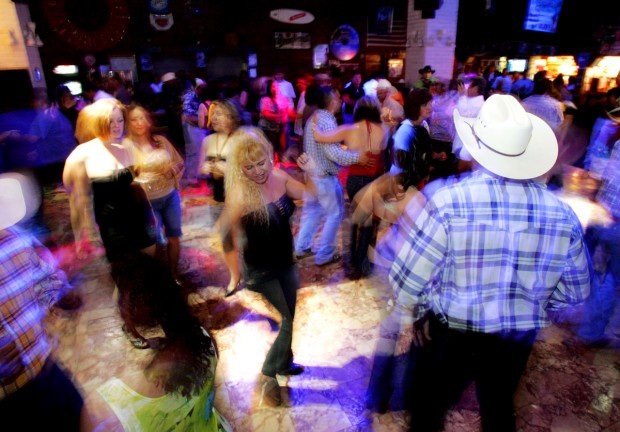
In Tucson, Everett bought what would become the Wildcat House on Stone Avenue in 1974 and spent nearly three years renovating the building. He opened the nightclub in 1977 at a time when Tucson's college crowd had fewer bar and club options close to campus.
"That place was booming. The lot was packed. It looked like a used-car lot," said Tucson comedian Gary Hood, who occasionally did standup at the club throughout the 1980s.
"They used to have the picnic tables and they would push them together and put a piece of wood on them and push it to one end of the room or another as a stage. It was quite the place."
Patrons would cross Stone Avenue and bounce between the Wildcat House and the popular Bum Steer bar, which also is closed.
You could get cheap monster-sized Long Island iced teas on Saturdays and Thirsty Thursdays back in the early 1990s and listen to piped-in dance music of the "three girls and a drum machine genre," the Star reported in 1991.
But that all changed as the '90s progressed.
"So many clubs opened up downtown that it took the business," said Jarvis, who has worked with Everett since he opened his first club, in California, in 1970.
"It started slowing down and when you don't make money, you can't see putting $500,000 into a parking lot and still lose the money. ... He decided it wasn't worth trying at his age to continue on there."
Jarvis said Everett's remaining clubs are doing well and there are no plans to close any of them.
Contact reporter Cathalena E. Burch at cburch@azstarnet.com or 573-4642.