
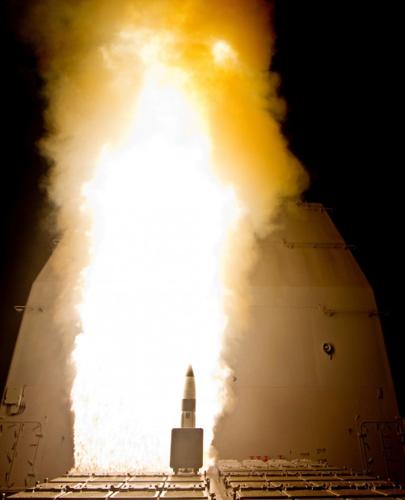
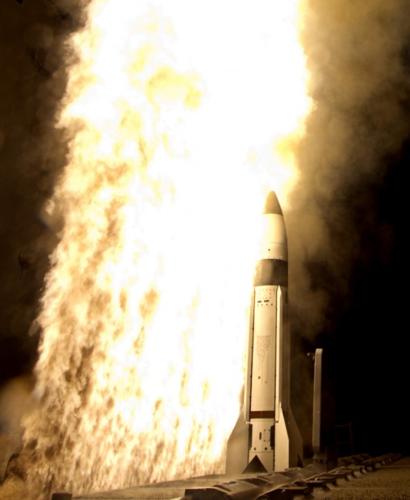
Tucson-based Raytheon Missile Systems has been awarded a $230 million contract to produce 19 Standard Missile-3 interceptors for the nation's emerging missile-defense shield - including five copies of an advanced version whose future looked uncertain a year ago.
The U.S. Missile Defense Agency contract announced by Raytheon on Tuesday is for 14 currently fielded Standard Missile-3 Block IA missiles and five SM-3 Block IB test missiles.
While the SM-3 Block IA has been fielded since 2006, the Block IB version is still in development and appears to have rebounded from a major misstep last year.
The SM-3 Block IB was successful in two back-to-back flight tests in May and June 2012, after failing its first intercept test in September.
One more flight test is scheduled this fall, but the Block IB missiles on order are close to production-ready, a Raytheon official said.
People are also reading…
"The 'pre-production' Block IB fight test missiles are essentially the same design as we intend to deliver in production," Jack Ransbotham, Raytheon's Standard Missile-3 deputy program director, said in an email statement.
The missiles will be made using the same processes, tooling and equipment that Raytheon will use in production, allowing the company to refine its manufacturing processes, Ransbotham said.
The next flight test for the SM-3 Block IB is scheduled for November, he said.
"There are planned decision points in (fiscal year) 2013 that would allow Raytheon to begin initial production," Ransbotham said.
Both SM-3 versions are designed to destroy short- to medium-range ballistic missiles - with ranges of up to about 3,000 kilometers or 1,850 miles - during midflight in space.
The SM-3 Block IA missiles will add to the inventory of missiles deployed aboard U.S and Japanese navy ships as part of the Aegis Ballistic Missile Defense system. It is part of the first phase of the Obama administration's Phased Adaptive Approach to missile defense of Europe.
The next-generation Block IB missile is seen as critical because it can defeat more sophisticated emerging threats. It is part of phase two of the missile-defense plan, set for deployment by 2015.
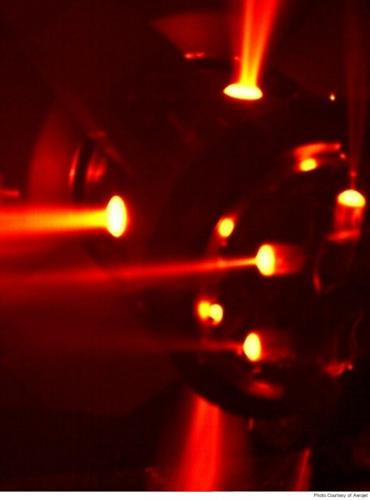
The SM-3 Block IB features an enhanced, two-color infrared seeker for better target discrimination, Raytheon said. It also has a throttleable control system that enables the missile's hit-to-kill kinetic warhead to propel itself toward incoming threats using short bursts of precision propulsion.
The contract announced Tuesday increases the total value of the contract to $1.93 billion from $1.7 billion.
The work will be performed in Tucson through September 2014, the Pentagon said.
Raytheon says it has delivered more than 135 SM-3 missiles to the U.S. and Japanese navies, on time and on budget.
Meanwhile, development of a larger, longer-range version of the SM-3 continues.
In July, the Missile Defense Agency awarded Raytheon a $925 million contract for development of the Standard Missile-3 Block IIA, which is a co-development effort between the U.S. and Japan.
The larger-diameter SM-3 Block IIA is designed to defeat ballistic missiles with up to intermediate ranges (about 5,500 kilometers or 3,400 miles) as part of the third phase of the missile-defense plan by 2018.
Did you know?
The Standard Missile naval defense system was one of six weapons programs Hughes Aircraft Co. moved to Tucson after it acquired them from General Dynamics in 1992, bringing thousands of new jobs.
And in 1997, Raytheon took over development and production of the Standard Missile, along with the Tomahawk cruise missile and other weapons, when the company acquired Hughes Aircraft from General Motors Corp.
Raytheon Missile Systems is now Southern Arizona's largest private employer with about 10,500 local full-time-equivalent workers at the start of 2012, according to the Star 200 survey of the region's top employers.
Contact Assistant Business Editor David Wichner at dwichner@azstarnet.com or 573-4181.