

Faced with the prospect of turning away business, Joe O’Connell went looking for a bigger space for his growing company, sculpture and museum-exhibit maker Creative Machines.
Thanks to good timing and with the help of tax breaks from the city, he wound up with plenty of space for now and into the foreseeable future while turning a space that could have sat vacant for years into a growing asset for the local economy.
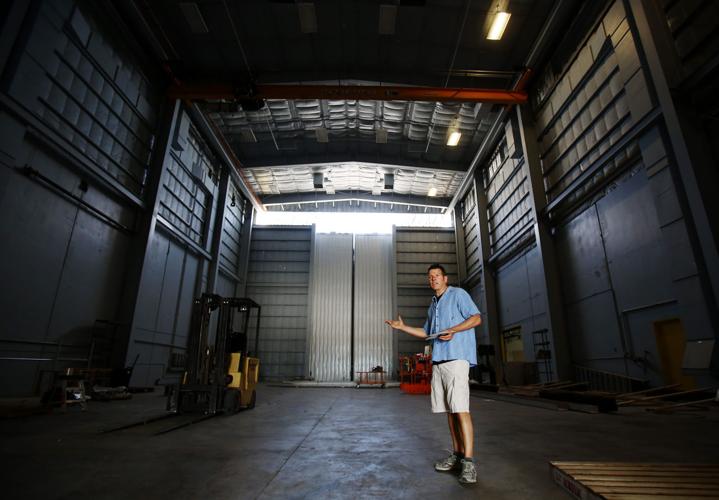
Creative Machines recently moved from a 14,000-square foot shop on East Columbia Street into a 65,000-square foot complex of buildings on 8.3 acres at 4141 E. Irvington Road. The complex was built by Sundt Corp. in the mid-’70s to house its headquarters and operations in Tucson and was last occupied by Southwest Fiberglass.
The company bought the property as a bank-owned property last December for $1.56 million. O’Connell estimates he’ll spend $850,000 to improve the property.
People are also reading…
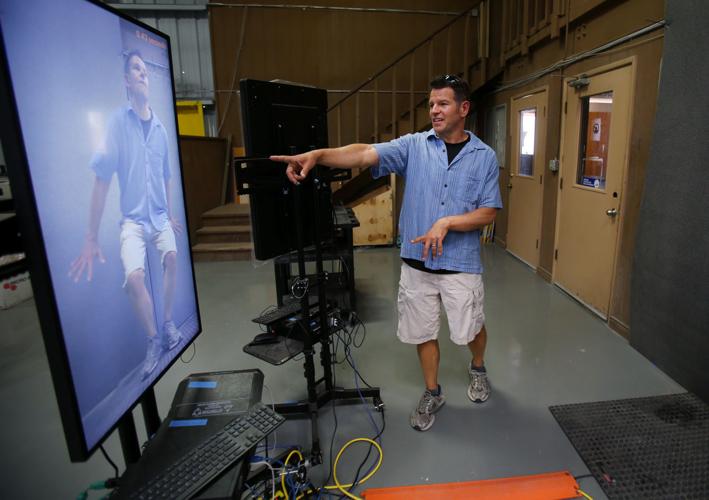
The new property, consisting of a half-dozen industrial buildings plus offices, will allow Creative Machines to do more — and bigger — work, O’Connell said.
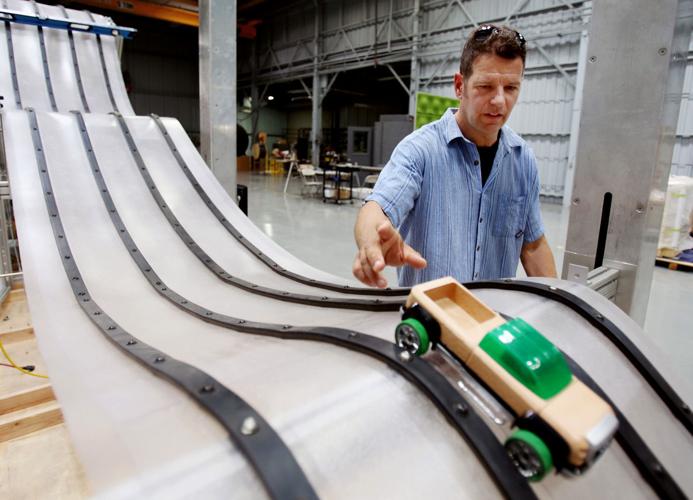
The company, which O’Connell moved to Tucson from Florida in 2000, specializes in making interactive public-art pieces, ball-drop machines and museum exhibits for clients across the globe.
Locally, the company made the “Bike Church” on Granada Avenue, the light-up doughnut “Desert O” on Alameda Street, the walk-through “Cocoon” on Houghton Road and the interactive “Bubble Tubes” at Tucson Medical Center.
One of the tallest spaces at Creative Machines’ new space — built by a previous owner with a 50-foot-tall door and overhead crane that extends outside the building — will help the company build one of its biggest public-art pieces, a 25-by-35 foot kinetic sculpture called “Wings over Water” for the city of Houston.
The company has about 10 other current clients and is working on ball-drop machines and 44 interactive exhibits it’s building for MOXI, The Wolf Museum of Exploration + Innovation in Santa Barbara, California.
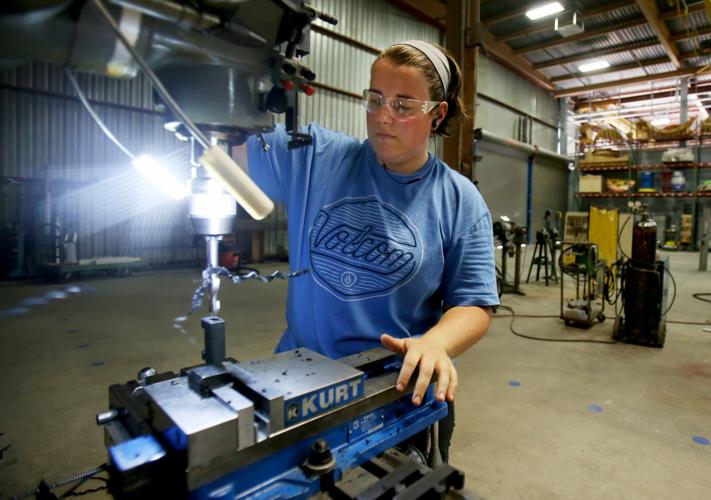
With a steady supply of customers, roughly doubling the space has allowed the company to grow from about 27 workers to about 40 now, including some temporary workers, O’Connell said. The company also subcontracts out some production work, such as cabinetry and millwork, to other local firms.
The bigger space also has allowed the company to segregate different work areas, like the company wood and metal shops, to run more efficiently, he said.
O’Connell figures he’ll end up sinking more than $2 million into the building, not including up to $16,500 in city tax and fee incentives.
“We’ve spent a fortune rehabilitating it,” O’Connell said, adding that much of the expense has been to catch up on maintenance apparently put off for years by previous owners.
Creative Machines is the first company to apply for, and the first to win, fee waivers under the city’s Global Economic Development District incentive program, said Camila Bekat, a city economic development specialist. The program was set up in 2011 to attract small factories to the airport area and interstate corridors.
The City Council on June 21 approved a waiver of a $10,000 city permit fee under the economic-development program, which is available to applicants who invest at least $1.5 million in a property. A formal incentive agreement must still be signed, Bekat said.
Creative Machines also applied to use an estimated $6,500 it would have paid in city construction sales taxes for job training for its employees, including classes at Pima Community College.
The company employs engineers, artists and fabricators, with pay ranging from $35,000 to $72,000 a year.
According to a city economic analysis, the completed project will employ 17 new people, with an average salary of $58,700 and an overall annual economic impact estimated at $1.9 million.
Direct tax revenues are estimated at $118,000 over five years, while indirect tax revenues are estimated at $115,000, the city analysis found. To qualify for approval, an economic analysis must show such deals will provide a net benefit to the city over the agreement period.
In supporting the project in his district, Councilman Richard Fimbres said the project activates an empty building while creating jobs.
O’Connell said he’s not sure he wants the company to grow much bigger, but the larger space will allow his company to take on some of the best and biggest jobs.
“There are only so many good jobs in our field that come along every year, and you want to be be of sufficient size to take able the good jobs,” he said. “Like building a three-story-high climbing structure for a children’s museum — that’s something we couldn’t do in the past, but we could do it pretty easily now.”
Contact Assistant Business Editor David Wichner at dwichner@tucson.com or 573-4181. On Twitter: @dwichner

David Wichner
Reporter

